
Which of the following hormones is responsible for regulating the body's metabolism and energy levels?
Estrogen
Progestin
Thyroxine
Androgen
Correct Answer : C
The correct answer is choice C. Thyroxine.
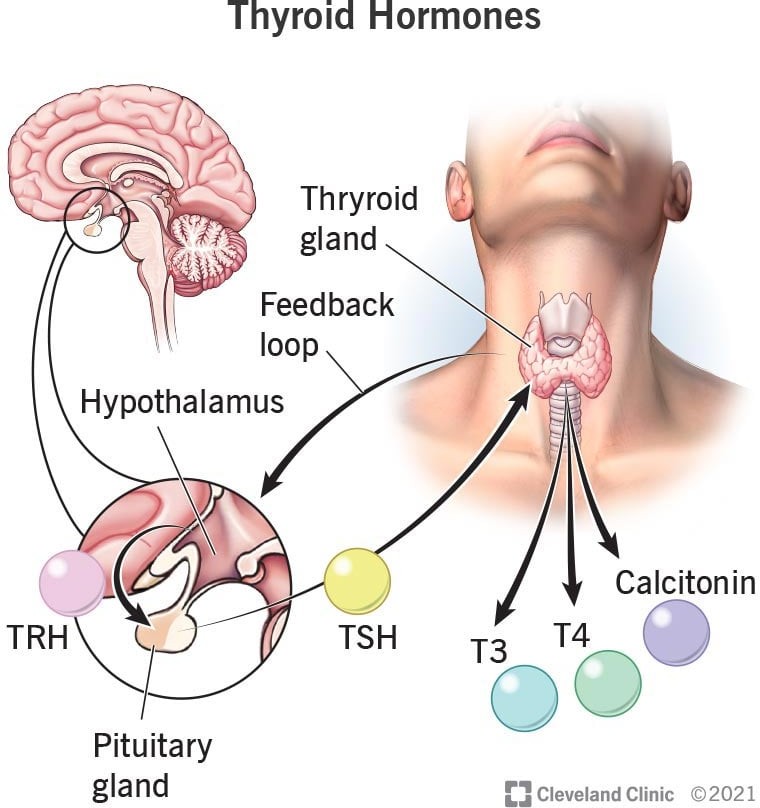
Thyroxine (T4) is a hormone produced by the thyroid gland that controls your body’s metabolism, the process in which your body transforms the food you eat into energy.
Choice A, Estrogen, is not the correct answer because it is a hormone responsible for the development of female secondary sexual characteristics.
Choice B, Progestin, is not the correct answer because it is a synthetic form of progesterone used in hormonal birth control and hormone replacement therapy.
Choice D, Androgen, is not the correct answer because it is a hormone responsible for the development of male secondary sexual characteristics.
TEAS 7 Exam Quiz Bank
HESI A2 Exam Quiz Bank
Find More Questions 📚
Teas 7 Questions: We got the latest updated TEAS 7 questions
100% Money Refund: 100% money back guarantee if you take our full
assessment pass with 80% and fail the actual exam.
Live Tutoring: Fully customized live tutoring lessons.
Guaranteed A Grade: All students who use our services pass with 90%
guarantee.
Related Questions
Correct Answer is B
Explanation
The correct answer is choice B.
It decreases the activation energy required for the reaction.
A catalyst provides a new reaction pathway in which a lower activation energy is offered.
This allows more reactant molecules to collide with enough energy to surmount the smaller energy barrier, increasing the rate of reaction 2.
Choice A, It increases the activation energy required for the reaction, is not the correct answer because it describes the opposite effect of a catalyst.
Choice C, It has no effect on the activation energy required for the reaction, is not the correct answer because a catalyst does have an effect on activation energy.
Choice D, It increases the rate of reaction but has no effect on the activation energy, is not the correct answer because a catalyst increases the rate of reaction by decreasing the activation energy.
Correct Answer is C
Explanation
Bacteria can perform photosynthesis while archaea cannot. Many types of bacteria can generate oxygen from sunlight through photosynthesis, while archaea cannot perform this process.
Choice A is incorrect because neither bacteria nor archaea have a true nucleus. Both are prokaryotic organisms. Choice B is incorrect because archaea reproduce by fission, fragmentation, or budding, while bacteria can produce spores and divide sexually or asexually. Choice D is incorrect because archaeal and bacterial flagella are constructed differently.
Correct Answer is A
Explanation
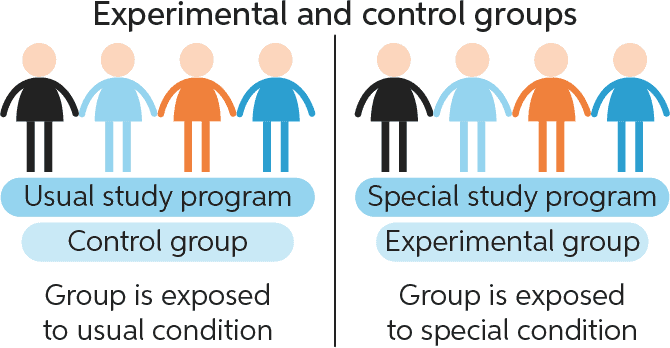
In a well-designed experiment, all variables apart from the treatment should be kept constant between the control group and treatment group.
This means researchers can correctly measure the entire effect of the treatment without interference from confounding variables.
Choice B) Independent variable and dependent variable is incorrect because these are not groups but rather variables.
The independent variable is manipulated by the experimenters while the dependent variable is measured to see if it changes as a result of the manipulation.
Choice C) Experimental group and non-experimental group is incorrect because a non-experimental group is not a term used in experimental design.
The correct term for the group that does not receive the treatment is control group.
Choice D) High level and low level of the independent variable is incorrect because these are levels of the independent variable, not groups.
In an experiment, there can be multiple levels of the independent variable, but they are applied to different groups (e.g.
control group, treatment group).
Correct Answer is B
Explanation
The correct answer is choice B.
Using a placebo group and a double-blind technique for giving the medications is the best way to ensure that the study is valid and reliable.
A placebo group helps control for the placebo effect, which can influence the results of a study.
A double-blind technique means that neither the patients nor the researchers know which medication is being given, reducing bias.
Choice A is not the best answer because while a large sample size and standardized procedure can increase reliability, they do not address validity.
Choice C is not the best answer because a matched-pairs design and crossover technique are useful for reducing variability but do not address validity.
Choice D is not the best answer because a convenience sample may not be representative and a pretest-posttest design does not control for extraneous variables.
Correct Answer is B
Explanation
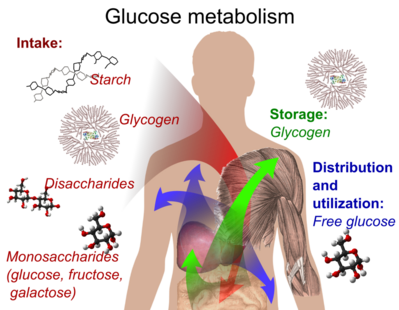
Glycogen is the storage form of glucose in the human body.
It is a polysaccharide that is stored primarily in the liver and muscle tissue and can be broken down into glucose when the body needs energy.
 |
Choice A is incorrect because starch is a storage form of glucose in plants, not in the human body.
Choice C is incorrect because fructose is a simple sugar, not a storage form of glucose.
Choice D is incorrect because cellulose is a structural carbohydrate found in plant cell walls, not a storage form of glucose in the human body.
Correct Answer is B
Explanation
Proximal tubule
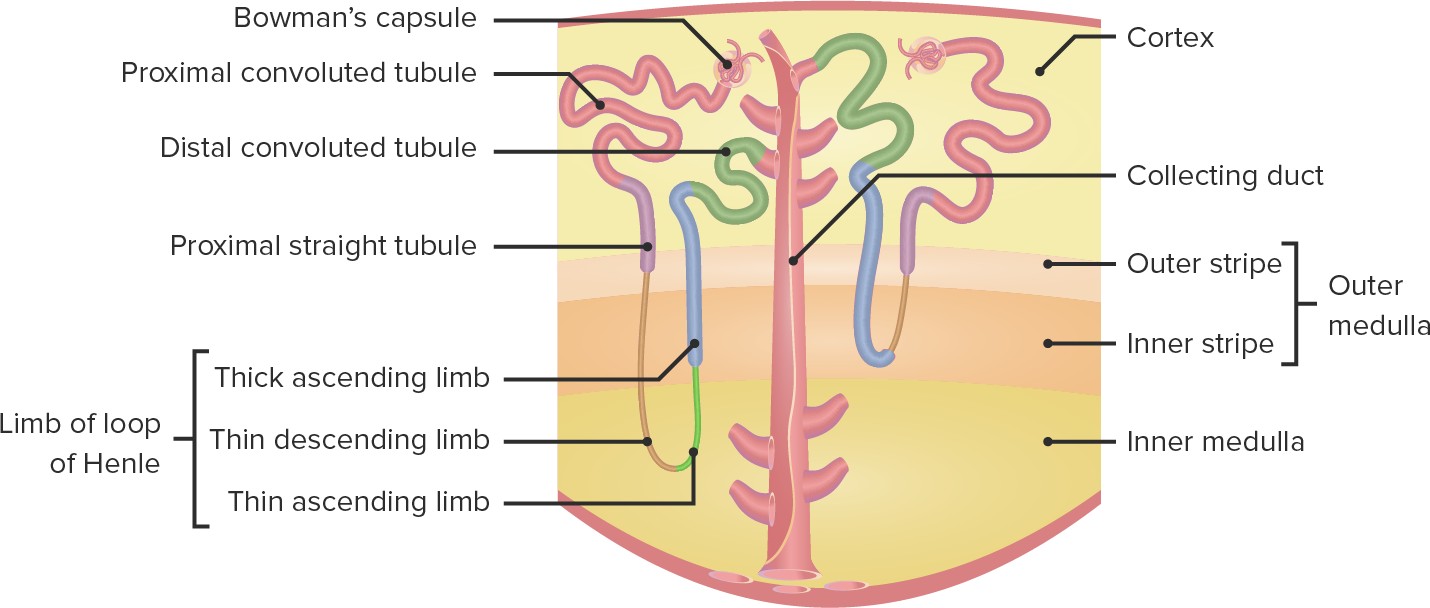
The proximal tubule is responsible for reabsorbing all the nutrients and most of the water.
 |
Choice A is incorrect because the distal tubule is not primarily responsible for reabsorbing ions, water and nutrients.
Choice C is incorrect because the glomerulus is responsible for filtering fluid and solutes out of the blood to form a glomerular filtrate.
Choice D is incorrect because the Loop of Henle is not primarily responsible for reabsorbing ions, water and nutrients.
Correct Answer is A
Explanation
The correct answer is choice A. Hydrogen bonds.
Hydrogen bonds are responsible for the unique properties of water and play a crucial role in the structure of DNA and proteins.
Hydrogen bonds are weak electrostatic attractions between a hydrogen atom covalently bonded to an electronegative atom and another electronegative atom.
Choice B.
Covalent bonds is incorrect because covalent bonds are strong chemical bonds formed by the sharing of electrons between two atoms.
Choice C.
Ionic bonds is incorrect because ionic bonds are chemical bonds formed by the transfer of electrons from one atom to another, resulting in the formation of ions.
Choice D.
Van der Waals forces is incorrect because Van der Waals forces are weak intermolecular forces that arise from temporary dipoles induced in atoms or molecules.
Correct Answer is A
Explanation
The correct answer is choice A.
An increase in viscosity of a fluid results in a decrease in mobility of particles.
Viscosity is the resistance of a fluid to a change in shape or movement of neighboring portions relative to one another.
It denotes opposition to flow and may be thought of as internal friction between the molecules.
Choice B is incorrect because an increase in viscosity does not affect the density of a fluid.
Choice C is incorrect because an increase in viscosity results in a decrease, not an increase, in flow rate.
Choice D is incorrect because an increase in viscosity does not affect the pressure of a fluid.
Correct Answer is D
Explanation
The correct answer is choice D -Enhances glomerular filtration rate.
The medication prescribed to the patient is a diuretic, which removes water and electrolytes from the body by increasing urination 1.
This helps reduce fluid buildup in the body.
Choice A, Inhibits the renin-angiotensin-aldosterone system, is not the correct answer because it describes a different mechanism of action.
Choice B, Blocks beta receptors, is not the correct answer because it describes a different mechanism of action.
Choice C, Increases sodium and water reabsorption, is not the correct answer because it would have the opposite effect of reducing fluid buildup.
Correct Answer is A
Explanation
The correct answer is choice A.
The superior vena cava is the largest vein in the human body that returns deoxygenated blood from the upper half of the body to the right atrium of the heart.
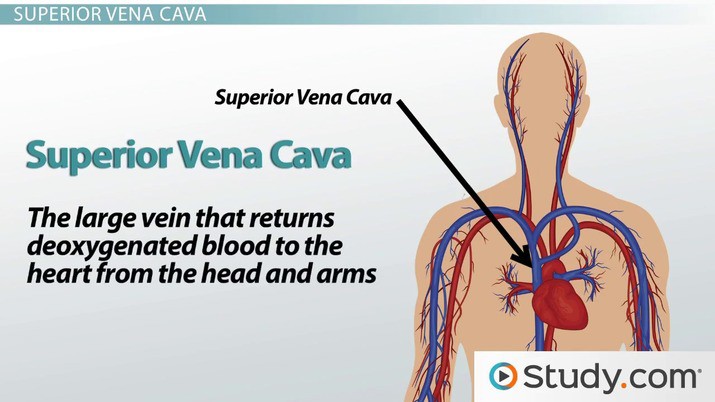
Choice B is incorrect because the inferior vena cava returns deoxygenated blood from the lower half of the body to the right atrium of the heart.
Choice C is incorrect because the pulmonary vein carries oxygenated blood from the lungs to the left atrium of the heart.
Choice D is incorrect because the renal vein carries deoxygenated blood from the kidneys to the inferior vena cava.
This question was extracted from the actual TEAS Exam. Ace your TEAS exam with the actual TEAS 7 questions, Start your journey with us today
Visit Naxlex, the Most Trusted TEAS TEST Platform With Guaranteed Pass of 90%.
Money back guarantee if you use our service and fail the actual exam. Option of personalised live tutor on your area of weakness.