
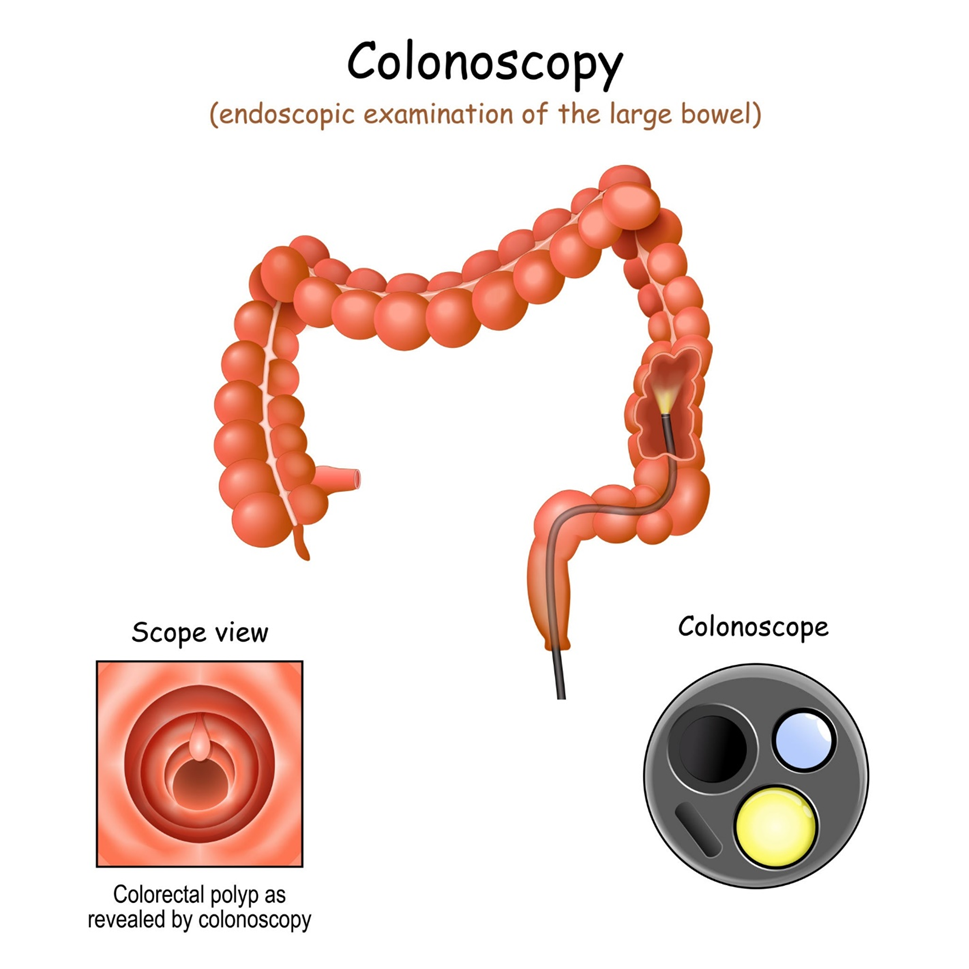
A client's screening colonoscopy revealed the presence of numerous polyps in the large bowel. What principle should guide the subsequent treatment of this client's health problem?
The client's polyps constitute a risk factor for cancer.
The client should be assured that this is a normal, age-related physiologic change.
The presence of polyps is associated with an increased risk of bowel obstruction.
Adopting a high-fiber diet will help the polyps resolve.
The Correct Answer is A
Choice A reason: Most colorectal cancers evolve from adenomatous polyps. While not all polyps are malignant, they are considered precancerous lesions. The principle of colonoscopy screening is to identify and remove these polyps (polypectomy) to prevent the adenoma-to-carcinoma sequence, making their presence a significant risk factor requiring regular surveillance and medical follow-up.
Choice B reason: While the prevalence of polyps increases with age, they are not considered a "normal" or benign physiological change. Labeling them as such would minimize the clinical importance of the finding. Polyps are pathological growths that require monitoring or removal due to their well-documented potential for malignant transformation over time.
Choice C reason: Most colorectal polyps are small and asymptomatic; they rarely grow large enough to cause a mechanical bowel obstruction on their own. Obstruction is more commonly a late-stage symptom of a large, invasive malignant tumor. The primary concern with polyps is their oncogenic potential rather than their physical size or obstructive capacity.
Choice D reason: While a high-fiber diet is excellent for colorectal health and may help prevent the formation of new polyps by reducing transit time and diluting carcinogens, it will not cause existing polyps to "resolve" or disappear. Existing polyps must be mechanically removed during a colonoscopy to eliminate the risk they pose.
Nursing Test Bank
Naxlex Comprehensive Predictor Exams
Related Questions
Correct Answer is A
Explanation
Choice A reason: Calcium acetate is a phosphate binder. In clients with CKD, the kidneys cannot excrete phosphorus, leading to hyperphosphatemia. Phosphate binders are taken with meals to bind phosphorus from food in the intestinal tract, forming an insoluble complex that is excreted in the feces, thereby reducing systemic absorption and serum levels.
Choice B reason: Doxycycline is a broad-spectrum tetracycline antibiotic. It is used to treat various bacterial infections and has no role in the management of phosphorus or electrolyte imbalances in chronic kidney disease. In fact, some tetracyclines must be used with caution in renal impairment due to potential nephrotoxicity or accumulation.
Choice C reason: Lisinopril is an ACE inhibitor used to manage hypertension and provide renal protection by reducing intraglomerular pressure in the early stages of CKD. While it is a common medication for these patients, it does not lower serum phosphorus levels and can actually cause a risk of hyperkalemia in advanced renal failure.
Choice D reason: Magnesium sulfate is an electrolyte replacement or anticonvulsant. It is generally avoided or used with extreme caution in CKD patients because the kidneys are responsible for magnesium excretion. Administering it could lead to magnesium toxicity (hypermagnesemia), and it has no clinical utility in the reduction of serum phosphorus.
Correct Answer is C
Explanation
Choice A reason: While monitoring health status is important for detecting flare-ups, a 21-year-old is generally capable of self-monitoring. For a young adult, the psychological burden of a chronic, often embarrassing gastrointestinal illness is a more significant barrier to long-term coping than the technical aspect of symptom tracking.
Choice B reason: Diet is a component of managing ulcerative colitis, but it is not the most critical factor for psychosocial coping. Most patients can learn to manage their own dietary triggers. Coping involves the emotional resilience to handle a lifelong diagnosis, which is heavily influenced by the patient's immediate social environment.
Choice C reason: Ulcerative colitis is a chronic illness that can be socially isolating and psychologically distressing for a young adult due to symptoms like urgency and fecal incontinence. Strong emotional support from the family facilitates better adjustment, reduces the risk of depression, and improves the patient's overall quality of life and treatment adherence.
Choice D reason: Managing a medication regimen is a task-oriented skill that can be easily taught and supported with tools like pill organizers. While essential for physical health, it does not address the complex emotional and developmental challenges a 21-year-old faces when integrated into life with a chronic inflammatory bowel disease.
Whether you are a student looking to ace your exams or a practicing nurse seeking to enhance your expertise , our nursing education contents will empower you with the confidence and competence to make a difference in the lives of patients and become a respected leader in the healthcare field.
Visit Naxlex, invest in your future and unlock endless possibilities with our unparalleled nursing education contents today