
A nurse is assessing a client who is receiving treatment for psoriasis. Which of the following images depicts what the nurse should expect to observe?
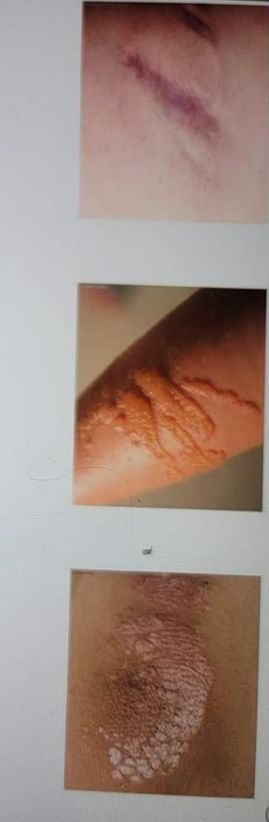
A. Hypertrophic Scar
B. Dermatographia
C. Psoriatic Plaque
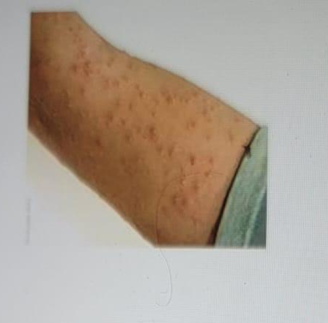
D. Folliculitis
The Correct Answer is C
Rationale:
A. Hypertrophic Scar: This image shows an abnormal, raised scar that is wider and more prominent than a normal healing scar, likely a hypertrophic scar which results from excessive collagen deposition during the healing process.
B. Dermatographia: This image displays urticarial (hive-like) lesions that appear as linear welts or swelling (wheals) on the skin of an arm. This is a common form of physical urticaria (hives). It is an exaggerated local skin response where light pressure, friction, or scratching results in localized vasodilation (redness) and edema (swelling/wheals) along the line of contact.
C. Psoriatic Plaque: This image displays a classic plaque-like lesion characteristic of Psoriasis. The characteristic features, a sharply demarcated, thickened (plaque), silvery-white scale covering a bright red, erythematous base. These plaques are often found symmetrically on the elbows, knees, scalp, and lower back.
D. Folliculitis: The lesions typically present as small, red bumps or pimples that may have a white or yellow center (a pustule) and usually center around a hair. The lesions in the image are discrete, erythematous (reddened), and scattered.
Nursing Test Bank
Naxlex Comprehensive Predictor Exams
Related Questions
Correct Answer is A
Explanation
Rationale
A. Flush the NG tube using a push and pull technique: The push-pull method helps dislodge debris or thick secretions by creating intermittent pressure changes within the tube. This technique is recommended to restore patency without causing excessive force that may damage the tube or gastric mucosa. It is the safest and most effective initial action for a clogged NG tube.
B. Irrigate the NG tube with a carbonated beverage: Carbonated beverages are not recommended because they can damage the tubing material and are ineffective at dissolving clogs. They may also introduce unwanted substances into the gastrointestinal tract. Current best practice favors warm sterile water rather than soda or acidic liquids.
C. Use a 1 mL syringe to flush the NG tube: A 1 mL syringe generates dangerously high pressure that could rupture the tube or injure gastric tissue. Large-volume syringes, typically 30–60 mL, are used to maintain safe, low pressure during flushing. Using a very small syringe creates risk without increasing the likelihood of clearing the obstruction.
D. Place the patient in prone position: Position changes do not clear mechanical obstructions in the NG tube and may compromise comfort or breathing. Safe NG tube management prioritizes flushing techniques rather than altering the client’s position. Changing posture will not resolve the cause of the clog and may delay appropriate intervention.
Correct Answer is C
Explanation
Rationale
A. Educate the client about potential adverse effects: Education is important but is not the immediate priority. Ensuring the client’s physiological stability takes precedence over providing information after an overdose. Education can follow once the client’s condition is assessed.
B. Complete an incident report: Completing an incident report is necessary for documentation and quality improvement, but it does not address the client’s immediate safety. Reporting comes after assessing and stabilizing the client.
C. Obtain the client's vital signs: Assessing vital signs is the first action because it provides critical information about the client’s current physiological status. Monitoring for changes in blood pressure, heart rate, respiratory rate, and oxygen saturation helps identify early signs of adverse reactions and guides urgent interventions.
D. Notify the primary care provider: Notifying the provider is important to determine further medical management, but it should occur after assessing the client’s vital signs to provide accurate and current information about their condition. Immediate assessment ensures timely and appropriate provider guidance.
Whether you are a student looking to ace your exams or a practicing nurse seeking to enhance your expertise , our nursing education contents will empower you with the confidence and competence to make a difference in the lives of patients and become a respected leader in the healthcare field.
Visit Naxlex, invest in your future and unlock endless possibilities with our unparalleled nursing education contents today