
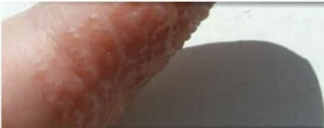
A nurse is assessing a client's finger pictured below. How should the nurse describe these lesions when documenting an assessment?
Hives
Fissures
Petechiae
Vesicles
The Correct Answer is D
A. Hives (urticaria) are raised, irregular, erythematous, itchy welts caused by an allergic reaction. They are not fluid-filled and tend to appear as transient, swollen plaques rather than small blisters. Therefore, this does not match the description.
B. Fissures are linear cracks or splits in the skin that extend into the dermis. They appear as dry, open lines in the skin, not raised or fluid-filled lesions. The image described shows blister-like lesions, not cracks.
C. Petechiae are tiny, non-blanching, red or purple pinpoint spots caused by bleeding under the skin. They are flat and not fluid-filled. The image shows raised lesions with fluid, which rules out petechiae.
D. Vesicles are small, fluid-filled, elevated lesions less than 1 cm in diameter. They contain clear serous fluid and are commonly seen in conditions such as contact dermatitis or viral infections.
The image described shows small, blister-like, fluid-filled lesions on the finger, which matches the definition of vesicles.
Nursing Test Bank
Naxlex Comprehensive Predictor Exams
Related Questions
Correct Answer is C
Explanation
A. A rate of 20 is at the upper limit of normal for adults, which ranges from 12 to 20 breaths per minute. While slightly elevated, it is not classified as tachypnea. Tachypnea specifically refers to a respiratory rate above 20, indicating increased work of breathing or an underlying physiological stress.
B. A rate of 14 is well within the normal adult range and does not represent tachypnea. This rate indicates normal, resting breathing and does not suggest respiratory compromise or increased metabolic demand.
C. A respiratory rate of 26 is above the normal range and represents tachypnea. Tachypnea can occur in response to various conditions, including fever, pain, anxiety, hypoxia, or underlying respiratory or cardiovascular disorders such as pneumonia, chronic obstructive pulmonary disease (COPD) exacerbations, or pulmonary embolism. This increased rate is a compensatory mechanism to meet the body’s oxygen demand or remove carbon dioxide more efficiently. Identifying tachypnea allows the nurse to perform a thorough assessment, including checking oxygen saturation, observing for use of accessory muscles, evaluating breathing pattern, and identifying potential underlying causes. Early recognition of tachypnea is critical to prevent hypoxia or respiratory failure.
D. A rate of 8 indicates bradypnea, which is abnormally slow breathing. Bradypnea may result from respiratory depression due to medications, neurological injury, or metabolic disturbances. It is the opposite of tachypnea and does not match the clinical assessment of rapid breathing.
Correct Answer is A
Explanation
A. Normal adult pupils measure 3 to 5 mm in diameter in ambient light. Pupils are round, equal, and reactive to light and accommodation.
B. Pupils in this range are considered miosis (abnormally constricted) and may result from opioid use, neurologic disorders, or bright light exposure.
C. While partially overlapping with the normal range, 2 mm is slightly below the typical adult baseline. This range is less precise than 3–5 mm and may include abnormal constriction.
D. Pupils in this range are considered mydriasis (abnormally dilated) and can indicate neurologic injury, drug effects, or low-light conditions.
Whether you are a student looking to ace your exams or a practicing nurse seeking to enhance your expertise , our nursing education contents will empower you with the confidence and competence to make a difference in the lives of patients and become a respected leader in the healthcare field.
Visit Naxlex, invest in your future and unlock endless possibilities with our unparalleled nursing education contents today