
A nurse is caring for a client who had a vaginal delivery and is experiencing postpartum hemorrhage due to uterine atony.
Which of the following actions should the nurse take first?
Administer oxytocin as prescribed
Massage the uterine fundus gently
Start an intravenous line with a large bore catheter
Place the client in a side lying position
The Correct Answer is B
Massaging the uterine fundus gently is the first action that the nurse should take to stimulate uterine contractions and control bleeding due to uterine atony. Uterine atony is the most common cause of postpartum hemorrhage and occurs when the uterus fails to contract after delivery.
Choice A is wrong because administering oxytocin as prescribed is a secondary action that can be taken after massaging the uterine fundus if bleeding persists. Oxytocin is a medication that promotes uterine contraction and reduces blood loss.
Choice C is wrong because starting an intravenous line with a large bore catheter is a tertiary action that can be taken after massaging the uterine fundus and administering oxytocin if bleeding continues. An intravenous line can provide fluid replacement and blood transfusion if needed.
Choice D is wrong because placing the client in a side lying position is not a priority action for postpartum hemorrhage due to uterine atony. This position may help reduce pressure on the vena cava and improve blood flow, but it does not address the underlying cause of bleeding.
Nursing Test Bank
Naxlex Comprehensive Predictor Exams
Related Questions
Correct Answer is B
Explanation
Massaging the uterine fundus gently is the first action that the nurse should take to stimulate uterine contractions and control bleeding due to uterine atony.Uterine atony is the most common cause of postpartum hemorrhage and occurs when the uterus fails to contract after delivery.
Choice A is wrong because administering oxytocin as prescribed is a secondary action that can be taken after massaging the uterine fundus if bleeding persists.Oxytocin is a medication that promotes uterine contraction and reduces blood loss.
Choice C is wrong because starting an intravenous line with a large bore catheter is a tertiary action that can be taken after massaging the uterine fundus and administering oxytocin if bleeding continues.An intravenous line can provide fluid replacement and blood transfusion if needed.
Choice D is wrong because placing the client in a side lying position is not a priority action for postpartum hemorrhage due to uterine atony.This position may help reduce pressure on the vena cava and improve blood flow, but it does not address the underlying cause of bleeding.
Correct Answer is ["A","C","D","E"]
Explanation
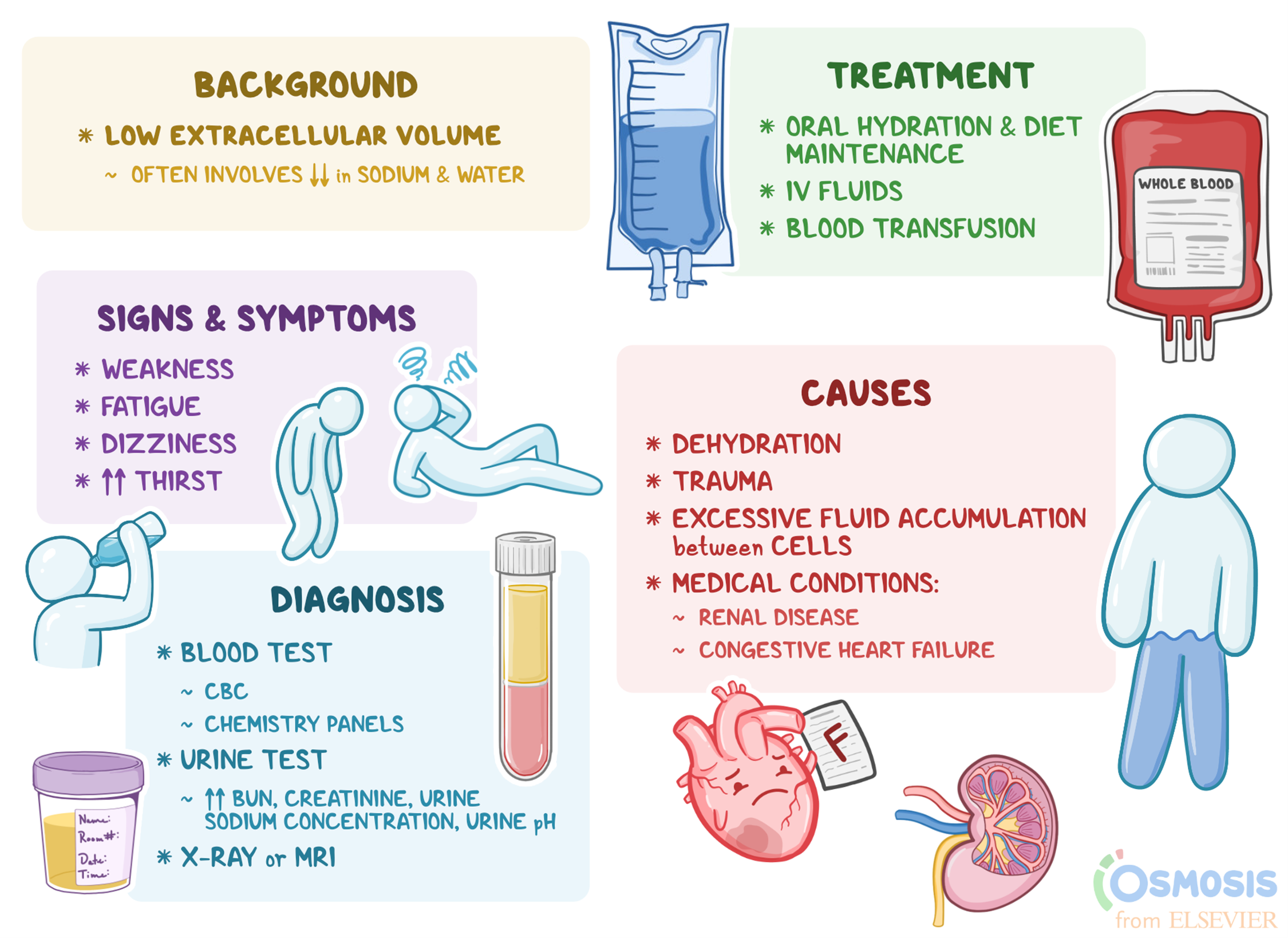
The correct answer is choice A, C, D and E.These are the signs and symptoms of hypovolemic shock, which is a life-threatening condition caused by severe blood loss.Hypovolemic shock can occur in postpartum women who have postpartum hemorrhage (PPH), which is excessive bleeding after childbirth.
Choice B is wrong because hypertension is not a sign of hypovolemic shock.In fact, hypotension (low blood pressure) is one of the signs of hypovolemic shock.
Normal ranges for vital signs in postpartum women are:
• Heart rate: 60 to 100 beats per minute
• Blood pressure: 110/70 to 140/90 mmHg
• Respiratory rate: 12 to 20 breaths per minute
• Urine output: at least 30 mL per hour
Question 34.
Whether you are a student looking to ace your exams or a practicing nurse seeking to enhance your expertise , our nursing education contents will empower you with the confidence and competence to make a difference in the lives of patients and become a respected leader in the healthcare field.
Visit Naxlex, invest in your future and unlock endless possibilities with our unparalleled nursing education contents today