
A nurse is reinforcing teaching with an adolescent about subdermal progesterone contraception devices. Which of the following statements by the client indicates an understanding of the teaching?
"I will need to have this device replaced every 3 years.”
"This device will protect me from STIs.”
"I should call my provider if I notice thick white discharge in my underwear.”
"I need to decrease the amount of milk I drink while I have this device.”
The Correct Answer is C
"I should call my provider if I notice thick white discharge in my underwear.”
Choice A reason:
The client stating, "I will need to have this device replaced every 3 years,” is incorrect. Subdermal progesterone contraception devices, such as Nexplanon, can typically last for up to 3 years, not needing replacement within that time frame. The rationale behind this is that these devices release a steady amount of progesterone to prevent pregnancy, and they are designed to be effective for the specified duration.
Choice B reason:
The statement, "This device will protect me from STIs,” in Choice B is incorrect. Subdermal progesterone contraception devices do not provide protection against sexually transmitted infections (STIs). Their primary function is to prevent pregnancy by inhibiting ovulation, thickening cervical mucus, and altering the uterine lining, but they do not offer any defense against STIs. It is essential for the client to understand that barrier methods, such as condoms, are necessary for STI protection.
Choice C reason:
The correct answer, "I should call my provider if I notice thick white discharge in my underwear,” is an accurate statement. Thick white discharge could be indicative of a vaginal infection, such as yeast infection, which might require medical attention. It is crucial for the client to report any changes in vaginal discharge to their healthcare provider for proper evaluation and treatment.
Choice D reason:
The statement in Choice D, "I need to decrease the amount of milk I drink while I have this device,” is incorrect. There is no association between subdermal progesterone contraception devices and milk consumption. The device does not interfere with dairy intake or affect its metabolism. This information is unrelated to the proper use or management of the contraception device.
Nursing Test Bank
Naxlex Comprehensive Predictor Exams
Related Questions
Correct Answer is B
Explanation
Choice A reason:
Ibuprofen - Ibuprofen belongs to the nonsteroidal anti-inflammatory drugs (NSAIDs) class, which includes aspirin. Since the client reports an allergy to aspirin, there is a risk of cross- reactivity, leading to a potential allergic reaction. Therefore, Ibuprofen should be avoided.
Choice B reason:
Acetaminophen - Acetaminophen is not an NSAID, and it works differently from aspirin. It is a safe option for the client in the postpartum period to manage pain without causing a cross- reaction with their aspirin allergy. Acetaminophen primarily acts on the central nervous system to reduce pain and fever, making it suitable for the client.
Choice C reason:
Naproxen - Naproxen is also an NSAID, and like Ibuprofen, it carries the risk of cross-reactivity in someone allergic to aspirin. Therefore, Naproxen should be avoided in this client.
Choice D reason:
Celecoxib - Celecoxib is a type of NSAID known as a selective cyclooxygenase-2 (COX-2) inhibitor. Although it is a bit more selective and generally considered to have a lower risk of causing cross-reactions, it is still an NSAID and not recommended for someone with a known aspirin allergy. Hence, Celecoxib should not be administered to the client in this scenario.
Correct Answer is B
Explanation
Choice A reason:
The nurse should prioritize Choice B over Choice A as it is essential to first confirm the correct placement of the NG tube before proceeding with any other actions. If the tube is not correctly positioned, administering the enteral feeding can lead to potential complications, such as aspiration, which can be life-threatening. Therefore, it is crucial to ensure the NG tube's proper placement before moving forward with the feeding
Choice B reason:
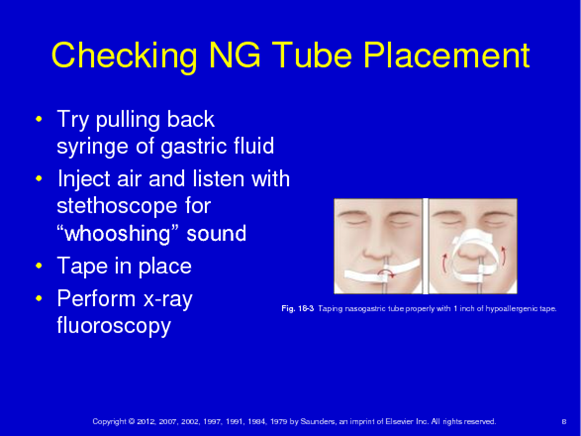
This option takes precedence as verifying the NG tube's position is a fundamental step in the enteral feeding process. The nurse must use appropriate methods, such as X-ray or pH testing, to confirm that the tube is in the stomach and not in the respiratory tract or elsewhere. This verification ensures the safety and effectiveness of the feeding procedure and prevents potential harm to the child.
Choice C reason:
While checking the gastric residual volume (GRV) is an important step in some cases, it should be done after confirming the NG tube's proper placement (Choice B). GRV provides information about the amount of feeding left in the stomach and helps in assessing tolerance to the feeding. However, if the NG tube is misplaced, determining GRV becomes irrelevant as the feeding would not be going to the intended location.
Choice D reason:
Flushing the child's NG tube with sterile water is an appropriate step during the enteral feeding process but should be done after verifying the tube's position (Choice B). Flushing ensures that the tube is patent and free from any obstructions, allowing the feeding to pass through smoothly. However, again, if the NG tube is incorrectly positioned, flushing it would not address the underlying issue.
Whether you are a student looking to ace your exams or a practicing nurse seeking to enhance your expertise , our nursing education contents will empower you with the confidence and competence to make a difference in the lives of patients and become a respected leader in the healthcare field.
Visit Naxlex, invest in your future and unlock endless possibilities with our unparalleled nursing education contents today