
A patient begins a new program to assist with building social skills In which part of the plan of care should a nurse record the item, "Encourage patent to attend one psycho-educational group daily"?
Implementation
Assessment
Evaluation
Planning
The Correct Answer is D
Reasoning:
Choice A reason: Implementation refers to the actual carrying out of the nursing actions. Recording the instruction to encourage a patient is setting the strategy for the shift; the act of actually speaking to the patient and facilitating their attendance would be the implementation phase of the nursing process.
Choice B reason: Assessment involves the collection of data, such as observing social withdrawal or poor communication skills. The statement provided is an action-oriented goal or intervention, which is developed after the data has been analyzed and the nursing diagnosis has been established, not during the data collection phase.
Choice C reason: Evaluation is the phase where the nurse determines if the intervention worked. This would involve recording whether the patient actually attended the group and if their social skills improved, rather than documenting the initial intent or the specific instruction to provide encouragement for the daily activity.
Choice D reason: Planning involves developing a strategy to achieve a goal. Stating "Encourage patient to attend one psycho-educational group daily" is a specific nursing intervention formulated during the planning phase to address the patient's social skill deficit. It serves as a directive for the nursing staff to follow during care.
Nursing Test Bank
Naxlex Comprehensive Predictor Exams
Related Questions
Correct Answer is D
Explanation
Reasoning:
Choice A reason: Implementation refers to the actual carrying out of the nursing actions. Recording the instruction to encourage a patient is setting the strategy for the shift; the act of actually speaking to the patient and facilitating their attendance would be the implementation phase of the nursing process.
Choice B reason: Assessment involves the collection of data, such as observing social withdrawal or poor communication skills. The statement provided is an action-oriented goal or intervention, which is developed after the data has been analyzed and the nursing diagnosis has been established, not during the data collection phase.
Choice C reason: Evaluation is the phase where the nurse determines if the intervention worked. This would involve recording whether the patient actually attended the group and if their social skills improved, rather than documenting the initial intent or the specific instruction to provide encouragement for the daily activity.
Choice D reason: Planning involves developing a strategy to achieve a goal. Stating "Encourage patient to attend one psycho-educational group daily" is a specific nursing intervention formulated during the planning phase to address the patient's social skill deficit. It serves as a directive for the nursing staff to follow during care.
Correct Answer is A
Explanation
Reasoning:
Choice A reason: Fetal Alcohol Syndrome (FAS) is caused entirely by the maternal ingestion of ethanol during pregnancy. Since ethanol is a known teratogen that crosses the placental barrier, total abstinence from alcohol during gestation eliminates the risk of developing the syndrome, making it 100% preventable through public health education.
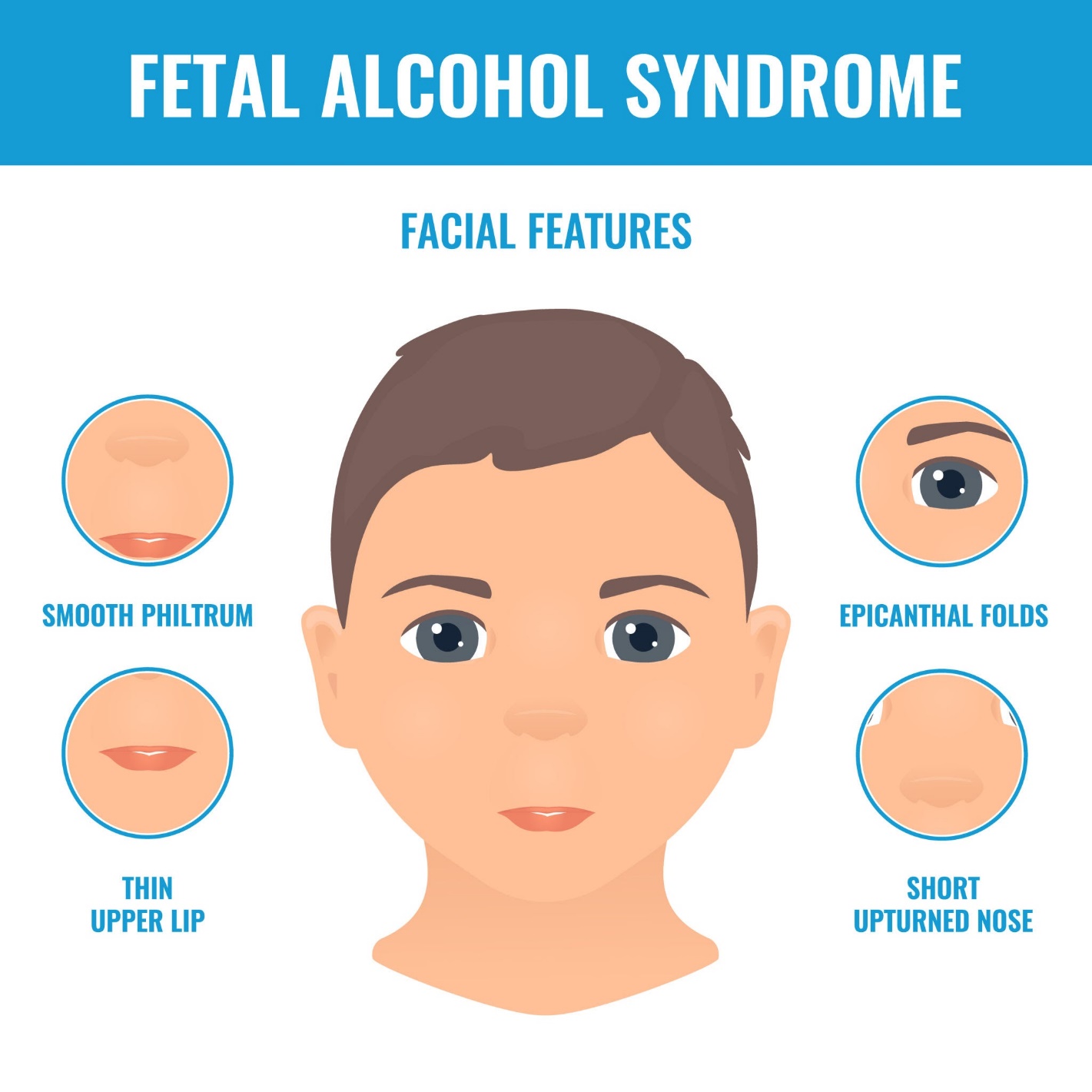
Choice B reason: This statement is medically incorrect. FAS is characterized by highly specific dysmorphic facial features, including a smooth philtrum, thin upper lip, and short palpebral fissures. These distinctive physical markers are essential diagnostic criteria used by clinicians to distinguish FAS from other neurodevelopmental disorders or genetic conditions.
Choice C reason: Fetal Alcohol Syndrome involves permanent structural brain damage and central nervous system deficits caused by prenatal ethanol exposure. While early intervention and behavioral therapies can improve functional outcomes and quality of life, the underlying neurological and physical damage is organic and remains irreversible throughout the individual's lifespan.
Choice D reason: This description more accurately reflects the diagnostic timeline and criteria for Autism Spectrum Disorder (ASD). While children with FAS certainly face social and communication challenges, their diagnosis is based on maternal alcohol history, growth retardation, and specific facial dysmorphology, rather than a specific 30-month onset of social deficits.
Whether you are a student looking to ace your exams or a practicing nurse seeking to enhance your expertise , our nursing education contents will empower you with the confidence and competence to make a difference in the lives of patients and become a respected leader in the healthcare field.
Visit Naxlex, invest in your future and unlock endless possibilities with our unparalleled nursing education contents today