
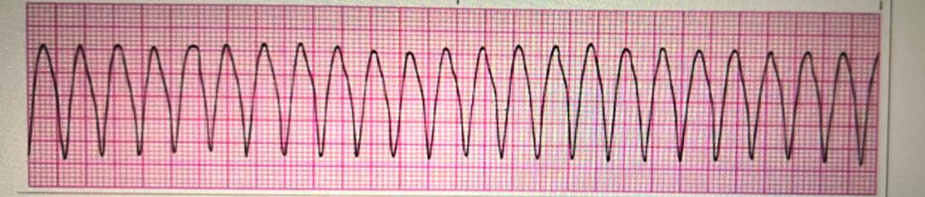
An ICU client's cardiac monitor displays the following rhythm. The crash cart is at the bedside. The nurse's first action should be
check for a pulse.
IV administration of epinephrine.
immediate cardioversion..
IV administration of Adenosine.
The Correct Answer is A
A. Check for a pulse: The first action in any dysrhythmia is to assess whether the client has a pulse, as this determines the next interventions. Identifying the presence or absence of a pulse differentiates between pulseless rhythms requiring immediate defibrillation and unstable rhythms with a pulse that may require synchronized cardioversion.
B. IV administration of epinephrine: Epinephrine is indicated for pulseless cardiac arrest rhythms but should be administered only after confirming the client is pulseless. Giving epinephrine without assessing the pulse could result in inappropriate treatment and delay appropriate interventions for a perfusing rhythm.
C. Immediate cardioversion: Cardioversion is performed for unstable tachydysrhythmias in clients with a pulse. Administering cardioversion without first checking for a pulse could be inappropriate and potentially harmful if the client is pulseless and requires defibrillation instead.
D. IV administration of adenosine: Adenosine is used specifically for terminating certain supraventricular tachycardias, but its use depends on the rhythm and the presence of a pulse. Administering it without pulse assessment may delay critical interventions and is not the immediate priority in a potentially unstable rhythm.
Nursing Test Bank
Naxlex Comprehensive Predictor Exams
Related Questions
Correct Answer is A
Explanation
A. Increases the cardiac workload: Shivering significantly increases metabolic demand and oxygen consumption, which in turn raises heart rate and blood pressure. After coronary artery bypass graft surgery, the heart is vulnerable, and increased workload can precipitate ischemia or other cardiac complications, making slow rewarming essential.
B. Increases the amount of oxygen available to the heart: Shivering does not increase oxygen availability; in fact, it increases oxygen consumption by skeletal muscles, which can reduce the oxygen supply available to the myocardium.
C. Is uncomfortable to the client: While shivering is uncomfortable, the primary concern post-CABG is the physiological stress it places on the heart, not just discomfort.
D. Promotes diuresis and volume depletion: Shivering does not directly cause significant diuresis or volume depletion. The main risk is increased myocardial oxygen demand rather than fluid loss.
Correct Answer is D
Explanation
A. A client with an open femur fracture: While a femur fracture is serious due to risk of blood loss and fat embolism, it is not immediately life-threatening compared with a compromised airway or chest injury.
B. A client with 1+ pedal pulses: Weak but palpable pedal pulses indicate some distal perfusion. While this requires monitoring, it is not immediately life-threatening compared with a major chest injury.
C. A client with bleeding of scalp lacerations: Scalp lacerations can bleed significantly but are generally controllable with pressure and are not as immediately life-threatening as thoracic injuries.
D. A client with an open chest wound: An open chest wound poses a risk of tension pneumothorax or impaired ventilation, which can quickly become fatal. Airway and oxygenation take priority, making this client the highest treatment priority.
Whether you are a student looking to ace your exams or a practicing nurse seeking to enhance your expertise , our nursing education contents will empower you with the confidence and competence to make a difference in the lives of patients and become a respected leader in the healthcare field.
Visit Naxlex, invest in your future and unlock endless possibilities with our unparalleled nursing education contents today