
An individual has type B, Rh-positive blood. The individual has
The Correct Answer is {"dropdown-group-1":"B","dropdown-group-2":"B"}
A. A and D: B - This option claims the person has A and Rh(D) antigens and makes anti-B antibodies. That describes someone with type A, Rh-positive blood (who would not make anti-B); it is not type B, Rh-positive.
B. B and D: A - Type B, Rh-positive individuals have B and D (Rh) antigens on RBCs and can produce anti-A antibodies.
C. A: B and D - This says the person has A antigen and makes anti-B and anti-D antibodies - incompatible with type B, Rh-positive (and anti-D is produced only after Rh sensitization in Rh-negative people).
D. B: A and D - This says the person has B antigen and makes anti-A and anti-D antibodies; a Rh-positive person with B antigen wouldn’t make anti-D (they have D).
E. A and B - This indicates AB blood (A and B antigens) - AB individuals do not make anti-A or anti-B antibodies, so this does not describe type B, Rh-positive.
Nursing Test Bank
Naxlex Comprehensive Predictor Exams
Related Questions
Correct Answer is {"dropdown-group-1":"B","dropdown-group-2":"A","dropdown-group-3":"C"}
Explanation
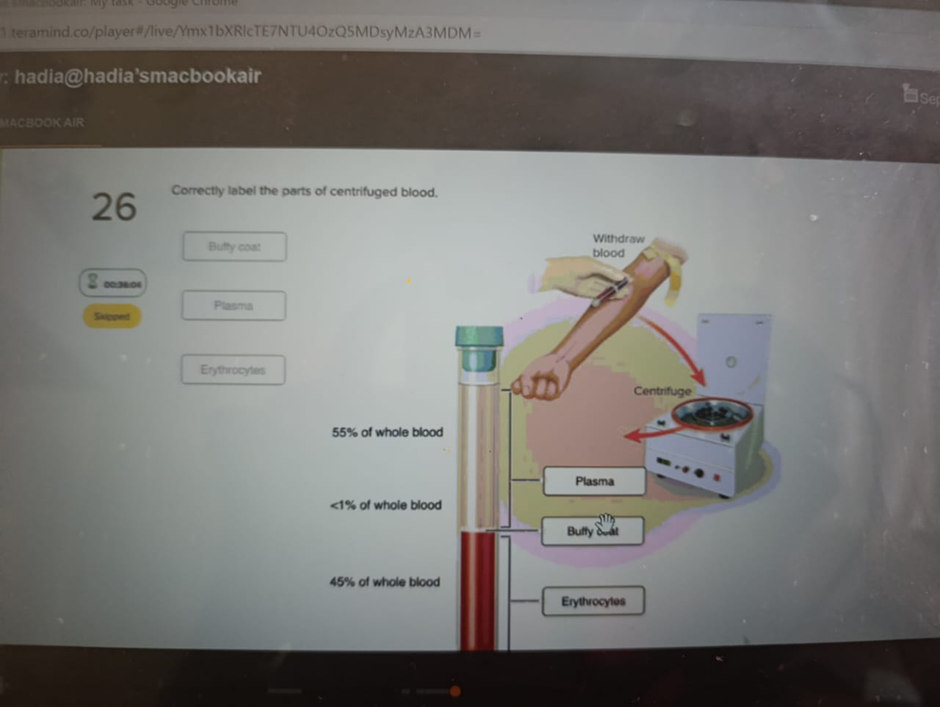
A. Plasma: The pale, straw-colored fluid at the top after centrifugation; it contains water, dissolved proteins (albumin, clotting factors), nutrients, hormones and electrolytes and is about ~55% of whole blood.
B.Buffy coat: The thin, whitish layer that sits between the top plasma and the bottom red cell layer after centrifugation; it contains leukocytes (WBCs) and platelets and makes up <1% of whole blood.
C. Erythrocytes: The dense red layer that settles at the bottom (the hematocrit); composed of red blood cells containing hemoglobin, typically about ~45% of whole blood and responsible for O₂/CO₂ transport.
Correct Answer is A
Explanation
A. Produces plasma hormones: blood does not produce hormones; endocrine organs secrete hormones into the blood. This statement is not a function of blood.
B. Transports a variety of nutrients: this is a function of blood (plasma carries nutrients to tissues).
C. Helps to stabilize the pH of extracellular fluids: this is a function; blood buffers (bicarbonate, proteins) help stabilize pH.
D. Helps to regulate body temperature: this is a function; blood redistributes heat and helps maintain temperature.
E. Participates in the initiation of blood clotting: this is a function; platelets and plasma clotting factors in blood participate in clot formation.
Whether you are a student looking to ace your exams or a practicing nurse seeking to enhance your expertise , our nursing education contents will empower you with the confidence and competence to make a difference in the lives of patients and become a respected leader in the healthcare field.
Visit Naxlex, invest in your future and unlock endless possibilities with our unparalleled nursing education contents today