
Based on the picture, in what position is the fetal presenting part?
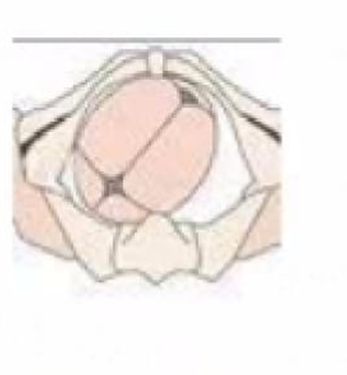
Left Occiput Posterior
Right Occiput Anterior
Right Occiput Posterior
Left Occiput Anterior
The Correct Answer is D
Fetal position is typically determined by the relationship of the fetal presenting part (usually the back of the head, or occiput) to the maternal pelvis. The baby's head is presenting, and the occiput (the small, diamond-shaped posterior fontanelle) is pointed toward the front. The occiput is pointed toward the mother's left side, toward the anterior (front) quadrant of the mother's pelvis. Therefore, the position is Left Occiput Anterior (LOA)
Nursing Test Bank
Naxlex Comprehensive Predictor Exams
Related Questions
Correct Answer is B
Explanation
A. "This probably means that you're pregnant.": A rise in basal body temperature occurs after ovulation due to progesterone release, not pregnancy itself. If temperature has not increased, ovulation likely did not occur, making pregnancy improbable in this cycle.
B. "You probably didn't ovulate during this cycle.": The BBT method tracks ovulation by detecting a 0.3–0.6°C (0.5–1.0°F) temperature rise after ovulation. If no rise is noted before menstruation, it suggests an anovulatory cycle in which ovulation did not take place.
C. "Have you been sick this month?": Illness can temporarily affect BBT readings, but the absence of any rise throughout the cycle more strongly indicates lack of ovulation. Asking about illness may be useful but does not directly explain a consistently low temperature pattern.
D. "Don't worry: it's probably nothing.": Dismissing the concern is inappropriate and nontherapeutic. The nurse should provide education on possible anovulatory cycles and encourage continued charting or further evaluation if irregular patterns persist.
Correct Answer is ["16062025"]
Explanation
The estimated due date (EDD) can be calculated using Nägele’s rule: add 1 year, subtract 3 months, and add 7 days to the first day of the last menstrual period (LMP). For an LMP of September 9, 2024: adding 1 year gives September 9, 2025; subtracting 3 months gives June 9, 2025; adding 7 days results in a due date of June 16, 2025.
Whether you are a student looking to ace your exams or a practicing nurse seeking to enhance your expertise , our nursing education contents will empower you with the confidence and competence to make a difference in the lives of patients and become a respected leader in the healthcare field.
Visit Naxlex, invest in your future and unlock endless possibilities with our unparalleled nursing education contents today