
Identify this rhythm:
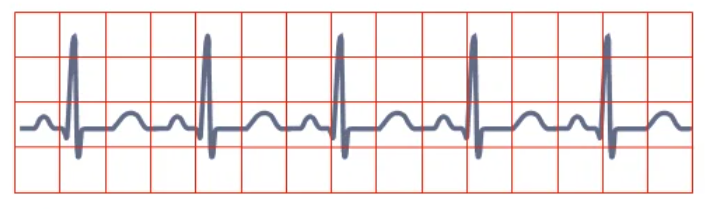
SVT.
NSR.
Sinus Tachycardia.
Bigeminy.
The Correct Answer is C
Choice A rationale
Supraventricular tachycardia (SVT) is characterized by a regular, very rapid heart rate that typically exceeds 150 beats per minute. In SVT, the P waves are often buried in the preceding T waves because the rate is so fast that the electrical activity overlaps. While this rhythm involves a rapid rate, it does not match the specific criteria for SVT if the rate is lower or if distinct P waves are clearly visible before every QRS complex.
Choice B rationale
Normal sinus rhythm (NSR) is the standard electrical activity of the heart, originating from the sinoatrial node. It must have a regular rate between 60 and 100 beats per minute in an adult. Each QRS complex must be preceded by a normal P wave with a consistent PR interval. If the rate exceeds 100 beats per minute, it no longer meets the definition of NSR and must be classified as a tachycardia, even if all other waves look normal.
Choice C rationale
Sinus tachycardia is defined as a sinus rhythm with a heart rate greater than 100 beats per minute in an adult, typically ranging from 101 to 180 beats per minute. It maintains a regular rhythm where each QRS complex is preceded by a visible P wave, indicating the sinoatrial node is still the primary pacemaker. This occurs due to increased sympathetic stimulation, exercise, fever, or pain, reflecting a normal physiological response to various stressors on the body.
Choice D rationale
Bigeminy is a specific type of arrhythmia characterized by a repeating pattern where every second beat is a premature contraction, most commonly a premature ventricular contraction (PVC). This results in a "grouped beating" appearance on the EKG strip rather than a continuous, fast, regular rate. Because bigeminy involves an irregular rhythm with alternating beat morphologies, it is distinctly different from a sinus-driven tachycardia where all the QRS complexes appear uniform and regular.
Nursing Test Bank
Naxlex Comprehensive Predictor Exams
Related Questions
Correct Answer is ["1"]
Explanation
1 Step 1 is (500 mg ÷ 500 mg/ml) × 1 ml.
Answer is 1 ml.
Correct Answer is D
Explanation
Choice A rationale
Coughing and deep breathing are nursing interventions typically used to prevent atelectasis and pneumonia, but they are contraindicated in patients with increased intracranial pressure. The act of coughing causes a sudden, sharp increase in intrathoracic and intra-abdominal pressure, which is transmitted to the cranial vault through the venous system. This transient spike in pressure can further compromise cerebral perfusion and potentially lead to brain herniation in a patient who is already neurologically vulnerable.
Choice B rationale
Hyperthermia increases the cerebral metabolic rate and oxygen demand, which can exacerbate brain injury. However, applying a warming blanket is generally not indicated unless the patient is hypothermic. In the context of increased intracranial pressure, maintaining a cool or normothermic environment is preferred to reduce metabolic requirements. Using a warming blanket unnecessarily could lead to vasodilation and increased cerebral blood flow, which may inadvertently raise the pressure within the rigid confines of the skull.
Choice C rationale
Positioning a client in a supine position is detrimental when intracranial pressure is elevated. A flat position hinders venous drainage from the brain through the jugular veins, leading to venous congestion and a subsequent rise in intracranial volume. The standard of care is to elevate the head of the bed to at least 30 degrees. This utilize gravity to enhance venous outflow, thereby helping to reduce the overall pressure and improve the clinical status of the patient.
Choice D rationale
Log rolling is the safest method to reposition a patient with a head or spinal injury because it maintains the head and neck in a neutral, midline alignment. Maintaining midline alignment is crucial because extreme neck flexion or rotation can obstruct the jugular veins and impede venous return from the brain. By ensuring the head does not turn independently of the body, the nurse prevents unnecessary increases in intracranial pressure while attending to the patient's skin integrity.
Whether you are a student looking to ace your exams or a practicing nurse seeking to enhance your expertise , our nursing education contents will empower you with the confidence and competence to make a difference in the lives of patients and become a respected leader in the healthcare field.
Visit Naxlex, invest in your future and unlock endless possibilities with our unparalleled nursing education contents today