
Match the following letters to their structures.
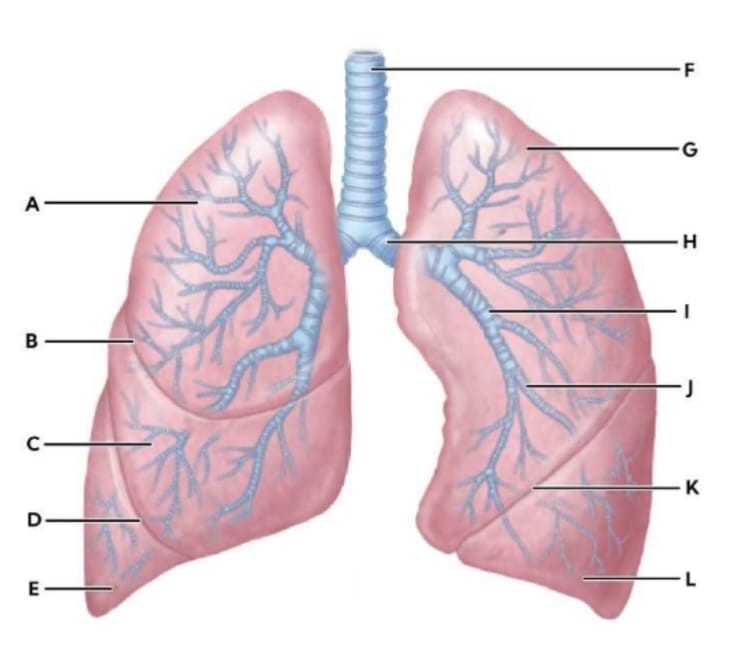
I
K
B
The Correct Answer is {"dropdown-group-1":"A","dropdown-group-2":"B","dropdown-group-3":"C"}
I: Lobar bronchus- The lobar (secondary) bronchi branch from the primary bronchi, with one serving each lobe of the lung—three on the right and two on the left. They are supported by cartilage and lined with ciliated epithelium, distributing inhaled air to specific lobes and aiding in filtration and mucus clearance.
K: Left oblique fissure- The left oblique fissure is a deep groove that separates the left lung’s superior and inferior lobes. It provides structural division for the lung lobes, helping compartmentalize airflow and facilitating independent expansion and contraction of each lobe during respiration.
B: Horizontal fissure- The horizontal (minor) fissure is found only in the right lung and separates the superior and middle lobes. Like the oblique fissure, it helps define lung lobes anatomically, directing airflow appropriately and allowing for efficient ventilation and surgical orientation.
Nursing Test Bank
Naxlex Comprehensive Predictor Exams
Related Questions
Correct Answer is A
Explanation
A. Heme: Heme is the iron-containing component of hemoglobin responsible for binding oxygen molecules. Each hemoglobin molecule contains four heme groups, and the iron ion at the center of each heme binds one oxygen molecule, allowing hemoglobin to transport oxygen efficiently from the lungs to peripheral tissues.
B. Collagen: Collagen is a structural protein found in connective tissues, skin, and bones. It does not participate in oxygen transport or bind oxygen and is unrelated to hemoglobin function.
C. Myosin: Myosin is a motor protein in muscle tissue responsible for contraction and movement. It has no role in oxygen transport or hemoglobin structure.
D. Globin: Globin refers to the protein chains (alpha and beta) of hemoglobin that provide structural support and influence hemoglobin’s shape and function. While essential for hemoglobin stability, globin does not directly bind oxygen; that role is performed by the heme groups.
Correct Answer is C
Explanation
A. It acts as a nutrient source: Oxygen is not a nutrient and does not provide calories or structural substrates for the body. Nutrients such as glucose, fatty acids, and amino acids supply the carbon skeletons and energy used in cellular respiration, while oxygen plays a distinct role in the electron transport process.
B. It forms carbonic acid: Carbonic acid is formed when carbon dioxide combines with water, not oxygen. While oxygen participates in oxidative metabolism that produces carbon dioxide, it is not directly responsible for carbonic acid formation in cellular respiration.
C. It is the final electron acceptor: In aerobic cellular respiration, oxygen serves as the terminal electron acceptor in the electron transport chain within the mitochondria. It accepts electrons and hydrogen ions to form water, allowing oxidative phosphorylation to continue and enabling efficient ATP production. Without oxygen, the electron transport chain halts.
D. It directly generates ATP: Oxygen does not directly synthesize ATP. ATP is produced through oxidative phosphorylation by ATP synthase, which uses the proton gradient generated by electron transport. Oxygen’s role is indirect but essential in sustaining the gradient by accepting electrons at the end of the chain.
Whether you are a student looking to ace your exams or a practicing nurse seeking to enhance your expertise , our nursing education contents will empower you with the confidence and competence to make a difference in the lives of patients and become a respected leader in the healthcare field.
Visit Naxlex, invest in your future and unlock endless possibilities with our unparalleled nursing education contents today