
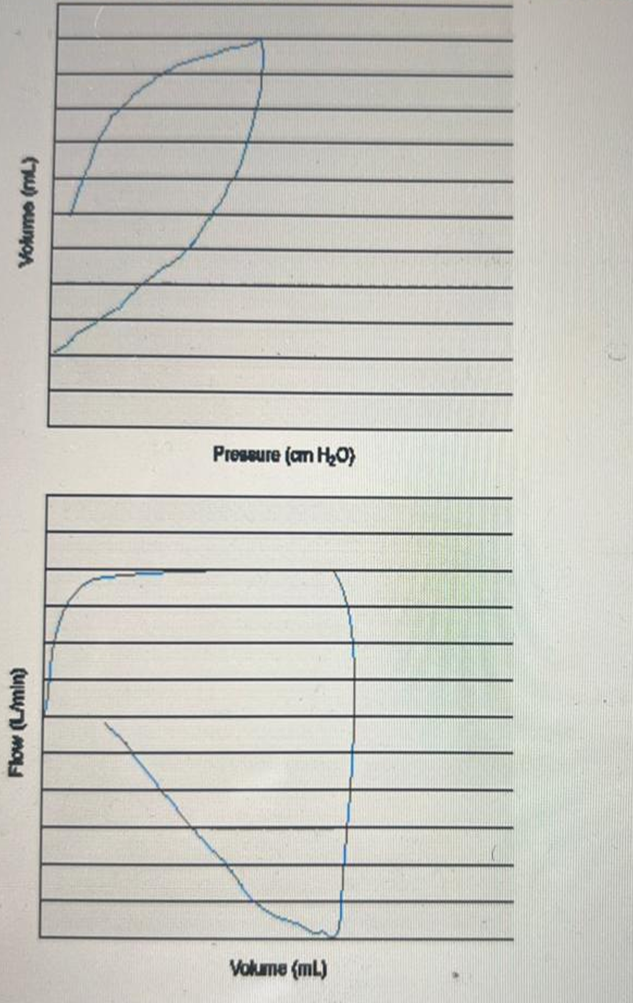
The following two graphic loops show which of the following conditions?
COPD
Atelectasis
Pneumothorax
Pulmonary oedema
The Correct Answer is A
The pressure–volume loop shows a "beaking" pattern (upper inflection point, where the loop flattens and bends back). This indicates overdistention of the alveoli from excessive tidal volume or high inspiratory pressure. The flow–volume loop shows a scooped-out appearance during expiration, which is typical of airflow obstruction such as COPD or asthma. These loops are most consistent with obstructive lung disease with overdistention such as in COPD.
Nursing Test Bank
Naxlex Comprehensive Predictor Exams
Related Questions
Correct Answer is C
Explanation
A. "I think you should call your friends to comfort you.": This deflects the client’s feelings and shifts responsibility to others, rather than addressing the client’s immediate emotional needs.
B. "Things are not as bad as they seem right now.": This minimizes the client’s fear and invalidates their feelings, which can prevent open communication about their concerns.
C. "It must be a very difficult time for you.": This is a therapeutic, empathetic response that acknowledges the client’s emotions and encourages them to share their fears in a supportive manner.
D. "Why are you afraid that you are going to die?": Asking "why" can sound judgmental or probing, which may make the client defensive instead of fostering trust and open discussion.
Correct Answer is C
Explanation
A. Pull the visible part of the suture through the underlying tissue: Pulling the external portion of the suture through the tissue can introduce surface bacteria into the wound. This increases the risk of infection and should be avoided.
B. Cleanse the wound with sterile water prior to removing the sutures: Wounds are typically cleansed with sterile normal saline or an antiseptic solution, not sterile water. Normal saline is isotonic and safe for wound irrigation, whereas sterile water can damage tissue.
C. Cut the sutures as close to the skin as possible: Cutting close to the skin ensures only the buried portion of the suture is pulled through the tissue, reducing contamination and promoting proper healing.
D. Remove the sutures in a consecutive order: Sutures are usually removed every other one first to prevent wound dehiscence. Removing them consecutively can place stress on the wound edges and increase the risk of reopening.
Whether you are a student looking to ace your exams or a practicing nurse seeking to enhance your expertise , our nursing education contents will empower you with the confidence and competence to make a difference in the lives of patients and become a respected leader in the healthcare field.
Visit Naxlex, invest in your future and unlock endless possibilities with our unparalleled nursing education contents today