
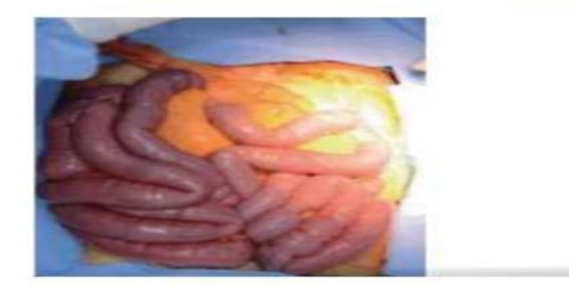
The nurse is assessing the abdominal wound of an obese patient. The nurse discovers the following finding:
Dehiscence
Evisceration
Fistula
Hernia
The Correct Answer is B
A. Dehiscence: Dehiscence refers to the partial or total separation of a surgical incision or wound edges, usually without protrusion of internal organs. While serious and requiring prompt attention, dehiscence does not involve visible extrusion of abdominal contents, distinguishing it from evisceration.
B. Evisceration: Evisceration occurs when the wound completely opens and internal organs, typically intestines, protrude through the incision. It is a surgical emergency that requires immediate intervention, including covering the organs with sterile, moist dressings and notifying the surgeon promptly to prevent infection and tissue damage.
C. Fistula: A fistula is an abnormal connection between two epithelialized surfaces, such as between an organ and the skin or between two organs. Fistulas do not involve visible extrusion of abdominal contents through a surgical wound.
D. Hernia: A hernia is the protrusion of an organ or tissue through a weakened area of muscle or fascia, often covered by skin. Unlike evisceration, a hernia usually presents as a bulge rather than an open wound with exposed intestines, differentiating it from the image.
Nursing Test Bank
Naxlex Comprehensive Predictor Exams
Related Questions
Correct Answer is B
Explanation
A. Administer a sleep medication to help the patient rest: Administering a sleep aid does not address the patient’s acute chest pain, which could indicate myocardial ischemia or another serious cardiac event. Sedation without pain assessment and intervention may mask critical symptoms, delaying life-saving care and putting the patient at risk for complications.
B. Educate the patient about the importance of reporting chest pain immediately: Prompt recognition and reporting of chest pain are essential for timely intervention, particularly to prevent myocardial damage or cardiac arrest. The nurse’s priority is to ensure the patient understands that early reporting can save lives, while also assessing and managing the pain.
C. Respect the patient's wishes and wait for the patient to ask for help: While patient autonomy is important, delaying assessment or intervention for severe chest pain compromises patient safety. Pain rated 8/10, especially in the chest, is a potentially emergent symptom that requires immediate evaluation regardless of the patient’s reluctance to “complain.”
D. Document the patient is not a complainer in the medical record: Documentation of patient personality traits does not address the urgent clinical situation. Proper documentation should reflect the severity of the pain, patient statements about symptoms, and the nursing interventions performed, focusing on safety rather than subjective characterizations.
Correct Answer is C
Explanation
A. one drop to both eyes four times a day: Administering the drops four times daily exceeds the prescribed frequency. Overmedication can increase the risk of local irritation, systemic absorption, or toxicity, and does not align with the provider’s intended dosing schedule. Accurate adherence to the order is essential for safe and effective therapy.
B. one drop to both eyes as needed: "As needed" (PRN) dosing allows for patient- or symptom-driven administration, which differs from a scheduled prescription. The order specifies a fixed schedule (tid), so administering PRN would not ensure therapeutic effectiveness or consistency of drug levels in the eyes.
C. one drop to both eyes three times a day: "Tid" stands for three times a day, and administering one drop to each eye at this frequency follows the provider’s instructions. Proper timing ensures consistent therapeutic drug levels, maximizes efficacy, and minimizes complications or missed doses.
D. one drop to both eyes two times a day: Administering the drops twice daily would underdose the patient, potentially reducing the treatment’s effectiveness. It does not meet the prescribed "tid" schedule, which is necessary for achieving the intended clinical outcome.
Whether you are a student looking to ace your exams or a practicing nurse seeking to enhance your expertise , our nursing education contents will empower you with the confidence and competence to make a difference in the lives of patients and become a respected leader in the healthcare field.
Visit Naxlex, invest in your future and unlock endless possibilities with our unparalleled nursing education contents today