
The nurse notes that a client has ataxia. Which test does the nurse use to gain more information about this client's gait?
Plantar flexion
Romberg
Achilles reflex
Patellar reflex
The Correct Answer is B
Choice A reason: Plantar flexion is the movement of the foot that points the toes downward. It is not a test for gait, but rather a test for muscle strength and nerve function in the lower leg.
Choice B reason: Romberg is a test for balance and coordination that involves asking the client to stand with their feet together and arms at their sides, first with their eyes open and then with their eyes closed. If the client sways or falls when their eyes are closed, it indicates a problem with their proprioception, which is the sense of position and movement of the body. Ataxia is a condition that affects proprioception and causes impaired gait, so Romberg is an appropriate test for it.
Choice C reason: Achilles reflex is the contraction of the calf muscle when the Achilles tendon is tapped. It is not a test for gait, but rather a test for spinal cord function and nerve damage in the lower leg.
Choice D reason: Patellar reflex is the extension of the lower leg when the patellar tendon is tapped. It is not a test for gait, but rather a test for spinal cord function and nerve damage in the upper leg.

Nursing Test Bank
Naxlex Comprehensive Predictor Exams
Related Questions
Correct Answer is C
Explanation
Choice A reason: A negative-pressure isolation room is not a suitable room for a client who has scabies. A negative-pressure isolation room is used for clients who have airborne infections, such as tuberculosis or chickenpox. It prevents the contaminated air from escaping the room and infecting other people.
Choice B reason: A positive-pressure isolation room is not a suitable room for a client who has scabies. A positive-pressure isolation room is used for clients who have compromised immune systems, such as those undergoing bone marrow transplants or chemotherapy. It prevents the outside air from entering the room and exposing the client to germs.
Choice C reason: A private room is a suitable room for a client who has scabies. Scabies is a skin infection caused by tiny mites that burrow under the skin and cause intense itching and rash. Scabies can spread easily through direct skin-to-skin contact or sharing personal items, such as clothing or bedding. A private room can prevent the transmission of scabies to other clients or staff.
Choice D reason: A semi-private room with a client who has pediculosis capitis is not a suitable room for a client who has scabies. Pediculosis capitis is an infestation of head lice that feeds on human blood and causes itching and irritation on the scalp. Pediculosis capitis can also spread easily through direct contact or sharing personal items, such as combs or hats. Sharing a room with another client who has pediculosis capitis can increase the risk of cross-infection and complicate the treatment of both conditions.
Correct Answer is D
Explanation
Choice A reason: Natural history of disease is not an approach that explains the factors that allow the reproduction and spread of infectious disease. Natural history of disease is a concept that describes the progression and outcome of disease in the absence of any intervention. It includes stages such as susceptibility, exposure, incubation, prodrome, clinical, recovery, disability, or death.
Choice B reason: Health promotion is not an approach that explains the factors that allow the reproduction and spread of infectious diseases. Health promotion is a process that enables people to increase control over and improve their health. It involves strategies such as education, advocacy, policy, or community development.
Choice C reason: Levels of prevention is not an approach that explains the factors that allow the reproduction and spread of infectious disease. Levels of prevention is a framework that classifies different types of interventions based on their timing and purpose. It includes primary prevention (before disease occurs), secondary prevention (early detection and treatment), and tertiary prevention (reducing complications and disabilities).
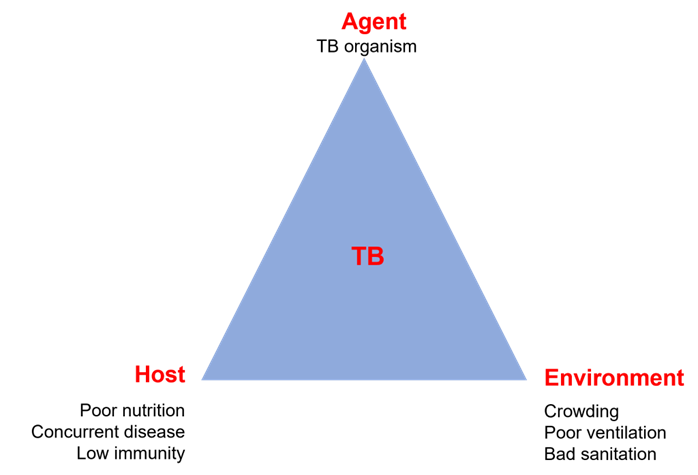
Choice D reason: Epidemiologic triangle is an approach that explains the factors that allow the reproduction and spread of infectious disease. Epidemiologic triangle is a model that identifies three essential components of an infectious disease: agent (the microorganism that causes the disease), host (the person or animal that is infected), and environment (the physical, biological, or social factors that influence the transmission). The interaction and balance among these components determine the occurrence and spread of an infectious disease.
Whether you are a student looking to ace your exams or a practicing nurse seeking to enhance your expertise , our nursing education contents will empower you with the confidence and competence to make a difference in the lives of patients and become a respected leader in the healthcare field.
Visit Naxlex, invest in your future and unlock endless possibilities with our unparalleled nursing education contents today