
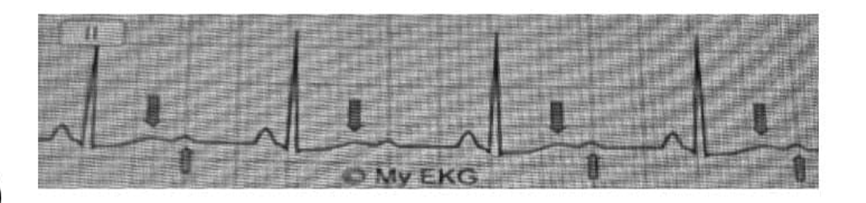
The nurse observes the following EKG. Which tab would the nurse correlate with this finding?
Na+ 134
K+ 6.1
K+ 2.1
Mg+ 1.8
The Correct Answer is C
A. Na+ 134 mEq/L is slightly low but generally within the acceptable range and not strongly correlated with these EKG findings.
C. K+ 2.1 mEq/L is a critically low potassium level, representing severe hypokalemia. This value is highly consistent with the pronounced U waves and T wave flattening and inversion
B. K+ 6.1mEq/L is hyperkalemia (high potassium), which typically presents with tall, peaked T waves and a widened QRS complex, which is the opposite of the rhythm shown.
D. Mg+ 1.8 mg/dL is within the normal range.
Nursing Test Bank
Naxlex Comprehensive Predictor Exams
Related Questions
Correct Answer is B
Explanation
A. Monitor the pulses every 2 hours: While frequent monitoring is important, the sudden decrease in pulse strength and numbness indicates possible compartment syndrome, which is an emergency. Simply monitoring without intervention could delay necessary treatment and result in tissue necrosis.
B. Notify the health care provider: Weak distal pulses, numbness, and pain in the toes are signs of impaired circulation due to circumferential burns. Immediate notification is required, as the provider may need to perform a escharotomy or other interventions to restore perfusion and prevent permanent damage.
C. Elevate both legs above heart level with pillows: Elevation can help reduce edema but may further compromise arterial blood flow in the presence of vascular compression from circumferential burns. It is not the priority intervention in this emergency.
D. Encourage the patient to flex and extend the toes on both feet: Active movement may help circulation in mild cases but is insufficient for restoring blood flow when pulses are diminished and numbness is present. This does not address the urgent vascular compromise.
Correct Answer is C
Explanation
A. “I will go out and buy some warm, heavy socks to wear”: Keeping the feet warm is important in PAD to promote circulation and prevent cold-induced vasoconstriction. This demonstrates correct understanding of self-care measures.
B. “It’s going to be really hard but I will stop smoking”: Smoking cessation is crucial for managing PAD, as nicotine causes vasoconstriction and worsens arterial disease. This reflects appropriate understanding of self-management.
C. “I can use a heating pad on my legs if it’s set on low”: Using a heating pad is unsafe in PAD because impaired circulation reduces sensation, increasing the risk of burns. This statement reflects a misunderstanding of safe self-care practices.
D. “I should not cross my legs when sitting or lying down”: Avoiding leg crossing helps maintain proper blood flow in PAD. This indicates correct understanding of lifestyle modifications to prevent worsening ischemia.
Whether you are a student looking to ace your exams or a practicing nurse seeking to enhance your expertise , our nursing education contents will empower you with the confidence and competence to make a difference in the lives of patients and become a respected leader in the healthcare field.
Visit Naxlex, invest in your future and unlock endless possibilities with our unparalleled nursing education contents today