
Which heart sound is produced by the closure of the atrioventricular (AV) valves and signals the beginning of systole?
S2
S1
S4
S3
The Correct Answer is B
correct answer is: b) S1.
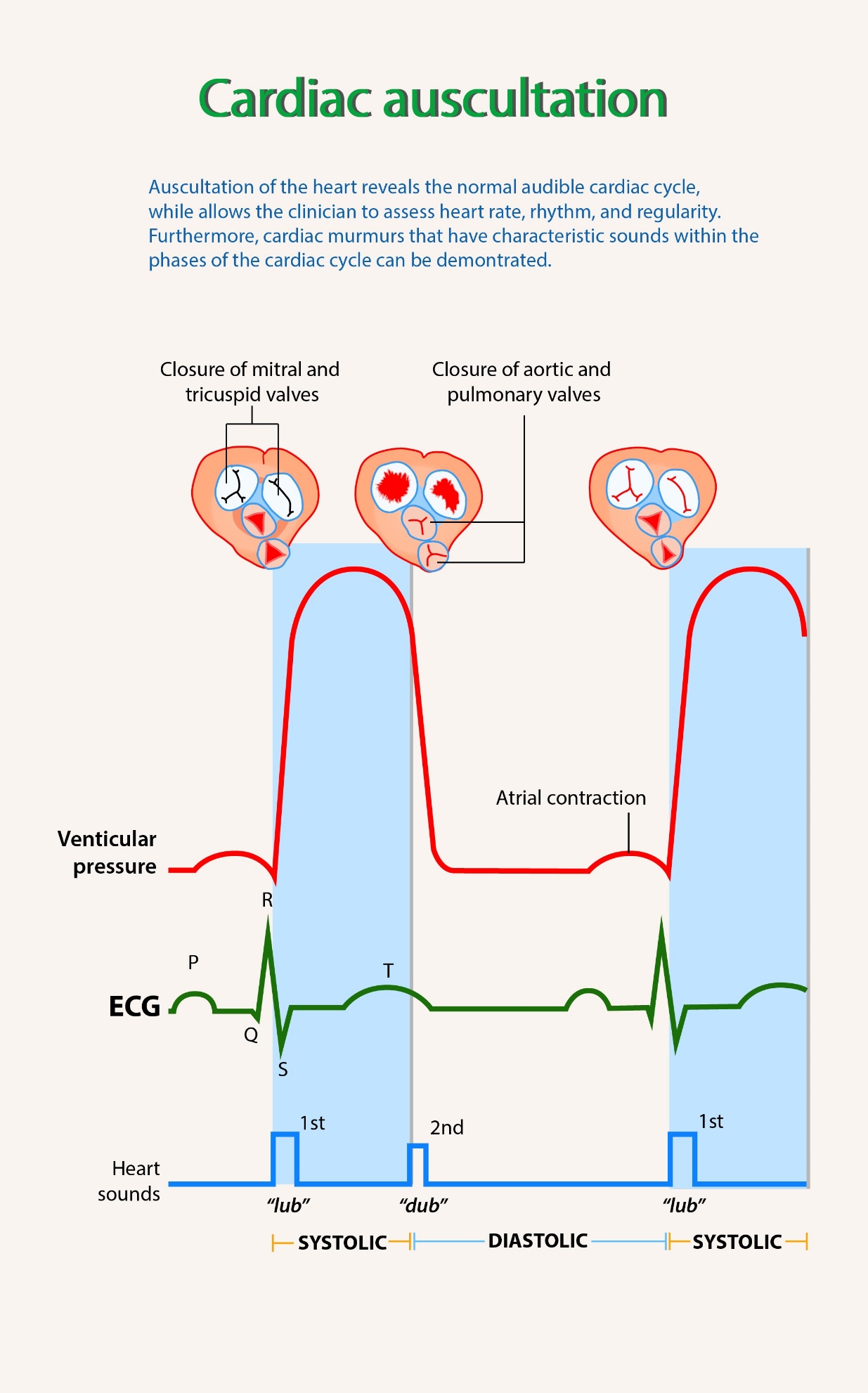
Shutterstock
Reasoning: Choice A reason: The S2 heart sound, often described as "dub," is produced by the closure of the semilunar valves (aortic and pulmonic) at the end of ventricular systole. It marks the beginning of diastole, which is the period when the ventricles relax and fill with blood before the next contraction. Choice B reason: The S1 heart sound, or "lub," is created by the simultaneous closure of the mitral and tricuspid valves. This occurs when ventricular pressure exceeds atrial pressure at the start of ventricular contraction, effectively signaling the onset of systole and the pumping of blood into the systemic and pulmonary circuits. Choice C reason: S4 is an abnormal diastolic sound, also known as an atrial gallop, that occurs just before S1. It is caused by the atria contracting and pushing blood into a stiff or non-compliant ventricle, which is often a sign of long-standing hypertension or left ventricular hypertrophy. Choice D reason: S3 is a diastolic sound, often called a ventricular gallop, that occurs early in the filling phase. It results from a large volume of blood hitting a compliant or dilated ventricle, which is a classic clinical finding in patients with fluid volume overload or congestive heart failure.
Nursing Test Bank
Naxlex Comprehensive Predictor Exams
Related Questions
Correct Answer is C
Explanation
Choice A reason: Checking for a diaper rash requires undressing the infant and manipulating their limbs, which is highly likely to wake them. In pediatric assessment, intrusive or potentially uncomfortable procedures should always be delayed until the end of the examination to maintain the infant's cooperation and physiological baseline.
Choice B reason: Measuring length involves stretching the infant out on a measuring board, which is a stimulating and often upsetting procedure for a baby. Performing this first would cause the infant to cry, making it impossible to accurately assess heart and lung sounds due to the resulting respiratory and vocal noise.
Choice C reason: The nurse should always perform the least invasive and quietest assessments first while an infant is sleeping. Auscultating the heart, lungs, and abdomen while the child is still allows the nurse to hear clear sounds without the interference of crying, movement, or increased heart and respiratory rates.
Choice D reason: Assessing muscle tone involves manipulating the infant's extremities to check for resistance and recoil. This physical contact is stimulating and will likely disturb the infant's sleep. Like measuring and diaper checks, this should be deferred until the nurse has completed the "quiet" portions of the physical assessment.
Correct Answer is A
Explanation
Choice A reason: Hypotension (82/53 mmHg) combined with new-onset confusion indicates inadequate cerebral perfusion and potential cardiogenic shock. This is a critical medical emergency requiring immediate fluid resuscitation or vasopressor support to prevent multi-organ failure. Confusion is a primary sign of end-organ hypoperfusion that demands the highest priority.
Choice B reason: A heart murmur and a heart rate of 89 beats per minute are relatively stable findings. Many cardiac patients have chronic valvular issues that produce murmurs. A heart rate under 100 is within normal limits, suggesting this client is currently hemodynamically compensated and does not require emergency intervention.
Choice C reason: Stable angina is characterized by predictable chest pain that occurs with exertion and is specifically relieved by rest or nitroglycerin. Since the client reports the pain is relieved, they are not currently experiencing acute myocardial ischemia, making them a lower priority than someone with active hypotension.
Choice D reason: Worsening edema in a heart failure patient indicates fluid volume overload and a gradual decline in cardiac compensation. While this requires a change in diuresis or medication, it is typically a chronic progression rather than an acute, life-threatening event like the hypoperfusion seen in shock.
Whether you are a student looking to ace your exams or a practicing nurse seeking to enhance your expertise , our nursing education contents will empower you with the confidence and competence to make a difference in the lives of patients and become a respected leader in the healthcare field.
Visit Naxlex, invest in your future and unlock endless possibilities with our unparalleled nursing education contents today