
Which lab value would be most likely to cause the following dysthymia?
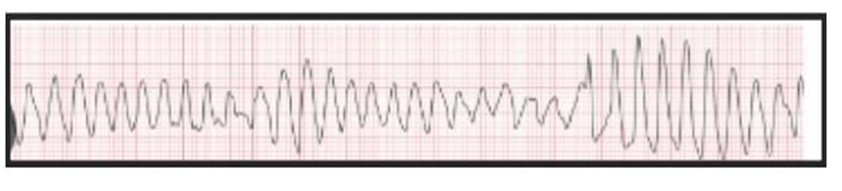
Ca 12
K+ 26
Mag 1.1
Mag 3.1
The Correct Answer is C
The provided heart rhythm strip shows a distinctive, life-threatening arrhythmia called Torsades de Pointes TdP). This rhythm is a type of ventricular tachycardia where the main complexes appear to twist or spiral around the baseline. TdP is triggered by a severe prolongation of the QT interval.
A. Ca 12 (Hypercalcemia): High calcium usually shortens the QT interval, which does not cause TdP.
B. K + 2.6 (Hypokalemia): Low potassium can also cause TdP. However, magnesium imbalance is often considered the primary and definitive trigger for this specific rhythm.
C. Mag 1.1 mg/dL: This value represents severe Hypomagnesemia (the normal range is 1.5 to 2.5 mg/dL) which is the most common and significant electrolyte cause of prolonged QT and Torsades de Pointes. Critically low magnesium levels make the heart muscle electrically unstable.
D. Mag 3.1(Hypermagnesemia): High magnesium levels are not a direct cause of Torsades de Pointes.
Nursing Test Bank
Naxlex Comprehensive Predictor Exams
Related Questions
Correct Answer is A
Explanation
A. Place on cardiac monitor: Electrical burns can cause life-threatening cardiac arrhythmias, including ventricular fibrillation and asystole, even if external injuries appear minor. Continuous cardiac monitoring is the highest priority to detect and manage immediate cardiac complications.
B. Assess oral temperature: Monitoring temperature is important for detecting infection or hyperthermia but is not an immediate life-saving intervention in electrical burn injuries.
C. Assess for pain at contact points: Pain assessment is necessary, particularly at entry and exit sites, but it does not take priority over monitoring for potentially fatal cardiac arrhythmias.
D. Check a potassium level: Electrical burns may cause cellular injury leading to hyperkalemia, which can precipitate arrhythmias. While important, checking potassium is secondary to initiating continuous cardiac monitoring to detect arrhythmias in real time.
Correct Answer is A
Explanation
A. “I am glad that these tubes will fall out at home when I finally shower.”: Drainage tubes do not fall out on their own and must be removed by a healthcare professional. Believing otherwise indicates a lack of understanding of proper postoperative care and could lead to complications if the client attempts to remove them independently.
B. “I should be careful how I lie in bed so that I will not kick the tubing.”: Proper positioning to avoid dislodging or kinking the drainage tubes demonstrates correct understanding of tube care and the importance of maintaining patency.
C. “I should measure the drainage each day to make sure it is less than an ounce (30 mL).”: Monitoring and recording drainage volume is appropriate and helps the healthcare provider determine when it is safe to remove the tubes.
D. “If there is a foul odor from the drainage, I will contact my primary health care provider.”: Notifying the provider about a foul odor indicates awareness of potential infection and is an appropriate and necessary action for safe postoperative care.
Whether you are a student looking to ace your exams or a practicing nurse seeking to enhance your expertise , our nursing education contents will empower you with the confidence and competence to make a difference in the lives of patients and become a respected leader in the healthcare field.
Visit Naxlex, invest in your future and unlock endless possibilities with our unparalleled nursing education contents today