
Which of the following is not contained in the buffy coat?
Granulocytes
Lymphocytes
Erythrocytes
Agranulocytes
The Correct Answer is C
A. Granulocytes: granulocytes (neutrophils, eosinophils, basophils) are white blood cells that are part of the buffy coat.
B. Lymphocytes: lymphocytes (T cells, B cells, NK cells) are white blood cells found in the buffy coat.
C. Erythrocytes: erythrocytes (red blood cells) form the red cell layer below the buffy coat; the buffy coat contains white cells and platelets, not RBCs.
D. Agranulocytes: agranulocytes (lymphocytes and monocytes) are included in the buffy coat.
Nursing Test Bank
Naxlex Comprehensive Predictor Exams
Related Questions
Correct Answer is {"dropdown-group-1":"B","dropdown-group-2":"A","dropdown-group-3":"C"}
Explanation
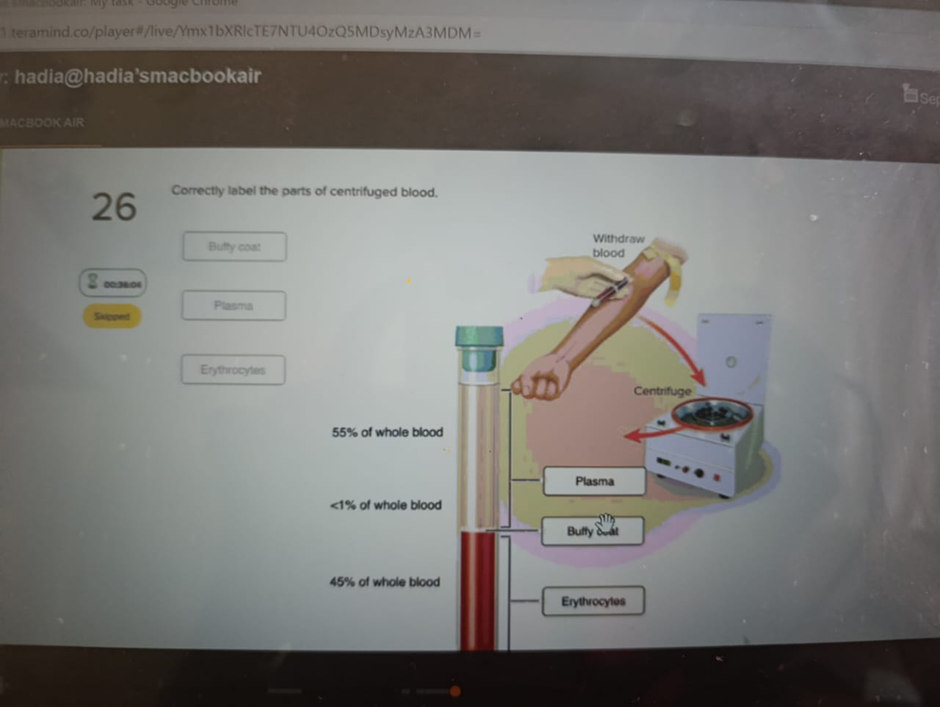
A. Plasma: The pale, straw-colored fluid at the top after centrifugation; it contains water, dissolved proteins (albumin, clotting factors), nutrients, hormones and electrolytes and is about ~55% of whole blood.
B.Buffy coat: The thin, whitish layer that sits between the top plasma and the bottom red cell layer after centrifugation; it contains leukocytes (WBCs) and platelets and makes up <1% of whole blood.
C. Erythrocytes: The dense red layer that settles at the bottom (the hematocrit); composed of red blood cells containing hemoglobin, typically about ~45% of whole blood and responsible for O₂/CO₂ transport.
Correct Answer is B
Explanation
A. It is a cause of anemia: Sickle cells are fragile and hemolyze prematurely, producing a chronic hemolytic anemia.
B. It is cause of malaria: Malaria is caused by Plasmodium parasites; sickle-cell disease does not cause malaria (in fact, sickle-cell trait provides some protection against severe malaria).
C. It is due to a hereditary hemoglobin defect: Sickle-cell disease is inherited and results from a mutation in the β-globin (HBB) gene producing hemoglobin S.
D. It is advantageous in that it can protect carriers against malaria: Heterozygous carriers (sickle-cell trait) have relative resistance to severe forms of Plasmodium falciparum malaria.
E. It is caused by excessive allele that modifies the structure of hemoglobin: The disease is caused by a point mutation (a single nucleotide change) in the β-globin allele that alters hemoglobin structure (Glu→Val at position 6). Saying “excessive allele” is misleading -the cause is a specific mutant allele, not an “excessive” one.
Whether you are a student looking to ace your exams or a practicing nurse seeking to enhance your expertise , our nursing education contents will empower you with the confidence and competence to make a difference in the lives of patients and become a respected leader in the healthcare field.
Visit Naxlex, invest in your future and unlock endless possibilities with our unparalleled nursing education contents today