
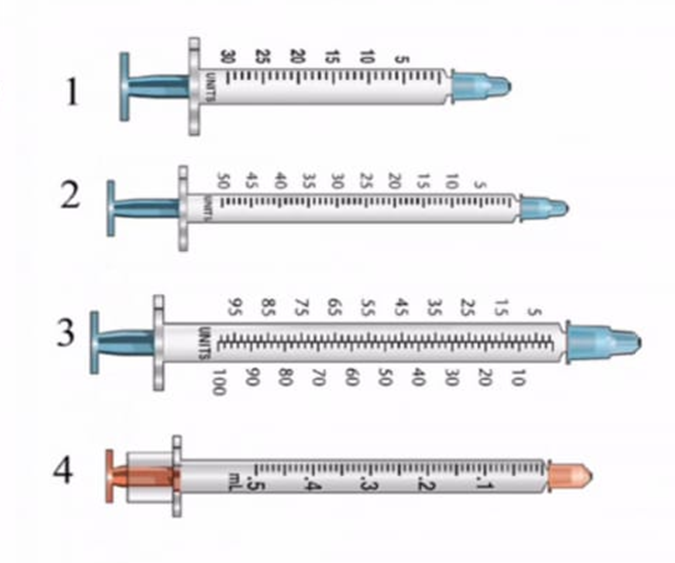
Which of the syringes would be the best choice to administer 10 units of insulin?
The Correct Answer is ["1"]
A. Syringe 1: This syringe is the best choice because it has a 30-unit capacity and is calibrated in fine, single-unit increments. The 10-unit dose occupies a substantial portion of the syringe's total volume, making the markings clear and easy to read. This ensures the most accurate and precise measurement of the small 10-unit dose, thereby minimizing the risk of a medication error.
B. Syringe 2: This syringe is a U-100 insulin syringe with a 50-unit capacity, which is an acceptable device for insulin administration. However, for a small dose of 10 units, a syringe with a smaller total capacity is preferred.
C. Syringe 3: This syringe is an inappropriate choice for a dose of only 10 units because its capacity is far greater than the required dose. The markings are spaced widely apart, which makes it difficult to accurately and safely measure a small amount of insulin, increasing the risk of a dosing error.
D. Syringe 4: This syringe is not an insulin syringe. It is a tuberculin syringe, which is calibrated in milliliters (mL), not units. Insulin must be measured in units to ensure a safe and accurate dose.
Nursing Test Bank
Naxlex Comprehensive Predictor Exams
Related Questions
Correct Answer is C
Explanation
A. ASA gr v q4h prn pain: This order uses outdated terminology ("gr v" for grain 5) and lacks a specified route. Current standards require metric units and a clearly defined route to reduce errors.
B. ASA 325 mg po prn fever: While the dosage, route, and indication are present, the frequency is missing. "prn" must be accompanied by a frequency (e.g., q4h) to be a complete and actionable order.
C. Aspirin 325 mg po q4h prn headache: This order includes the drug name, dosage, route, frequency, and specific indication. It uses current, safe prescribing standards and is a complete and appropriately written PRN medication order.
D. Aspirin po q4h prn toothache: This order is missing the dosage, which is critical for safe medication administration. Without the amount to administer, the order is incomplete and not acceptable for execution.
Correct Answer is C
Explanation
Total volume = 150 mL.
- Convert the amount of medication administered from tablespoons (Tbsp) to milliliters (mL).
1 Tbsp = 15 mL.
Administered volume:
= 3 Tbsp × 15 mL/Tbsp
= 45 mL.
- Calculate the remaining volume of medication in the bottle.
Remaining volume = Total volume - Administered volume
= 150 mL - 45 mL
= 105 mL.
Whether you are a student looking to ace your exams or a practicing nurse seeking to enhance your expertise , our nursing education contents will empower you with the confidence and competence to make a difference in the lives of patients and become a respected leader in the healthcare field.
Visit Naxlex, invest in your future and unlock endless possibilities with our unparalleled nursing education contents today