
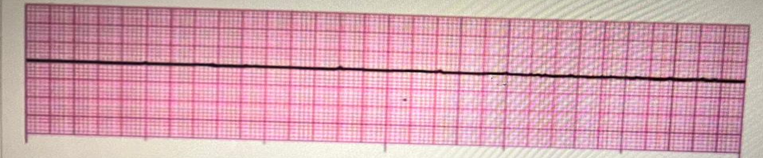
You observe the following dysrhythmia on the monitor of a hospitalized, pulseless client. Following the initiation of CPR your next nursing action would be
administer epinephrine 1 mg IV push.
defibrillation.
cardioversion.
administer amiodarone 300 mg IV push.
The Correct Answer is A
A. Administer epinephrine 1 mg IV push: In asystole—shown as a flat line—defibrillation is ineffective because there is no organized electrical activity to reset. After starting CPR, epinephrine is the first medication given to improve coronary perfusion pressure and increase the chance of return of spontaneous circulation.
B. Defibrillation: Defibrillation is only used for shockable rhythms (ventricular fibrillation and pulseless ventricular tachycardia). Asystole is not shockable, so delivering a shock will not change the rhythm.
C. Cardioversion: Cardioversion is synchronized and requires a pulse. Asystole has no pulse and no organized rhythm; cardioversion is not indicated.
D. Administer amiodarone 300 mg IV push: Amiodarone is used for shock-refractory VF/pulseless VT, not for asystole. Giving it in asystole has no benefit because the rhythm lacks electrical activity.
Nursing Test Bank
Naxlex Comprehensive Predictor Exams
Related Questions
Correct Answer is A
Explanation
A. Prevents overinflation of the cuff which can lead to tracheoesophageal fistula: Maintaining cuff pressure between 15 to 25 cm H₂O prevents excessive pressure on the tracheal mucosa, which can cause ischemia, necrosis, and complications such as tracheoesophageal fistula. Proper cuff inflation balances the need to seal the airway while minimizing tissue injury, ensuring safe long-term tracheostomy care.
B. Allows the client to speak without aspirating: While cuff deflation or use of a speaking valve enables phonation, cuff pressure maintenance is primarily for airway protection rather than facilitating speech. Speaking is a secondary concern and is managed separately from strict cuff pressure monitoring.
C. Allows for passage of oxygen around the cuff: The cuff is designed to create a seal and prevent air leaks; maintaining appropriate pressure does not intentionally allow oxygen to pass around it. Allowing oxygen to leak around the cuff would compromise ventilation and increase aspiration risk.
D. Allows for more effective suctioning: Suctioning is performed either through an open or closed system and is independent of cuff pressure. The cuff’s main role is to protect the lower airway and prevent aspiration, not to enhance suctioning effectiveness.
Correct Answer is D
Explanation
A. The client has likely developed a systemic infection: Systemic infections typically develop later in the course of burn injuries, often after the first 48–72 hours, and present with fever, tachycardia, and other systemic signs. While infection is a concern, it is less likely to explain acute airway obstruction at 36 hours post-burn.
B. The client is likely experiencing an anaphylactic reaction to a medication: Anaphylaxis usually occurs immediately or shortly after exposure to an allergen or new medication. The delayed development of airway obstruction 36 hours after burn injury makes anaphylaxis less likely.
C. The client's respiratory complications are likely related to psychosocial stress: Psychological stress can affect breathing patterns, but it does not cause physical airway obstruction or progressive respiratory compromise. The client’s airway changes are physiological rather than psychosocial in origin.
D. The client is likely experiencing a delayed onset of respiratory complications: Inhalation injuries can cause progressive airway edema that worsens hours after the initial burn. Swelling of the upper airway and bronchial mucosa can lead to obstruction, making this a delayed but serious respiratory complication that requires immediate intervention.
Whether you are a student looking to ace your exams or a practicing nurse seeking to enhance your expertise , our nursing education contents will empower you with the confidence and competence to make a difference in the lives of patients and become a respected leader in the healthcare field.
Visit Naxlex, invest in your future and unlock endless possibilities with our unparalleled nursing education contents today