
Causes and Risk Factors
Causes and Risk Factors of Aneurysms:
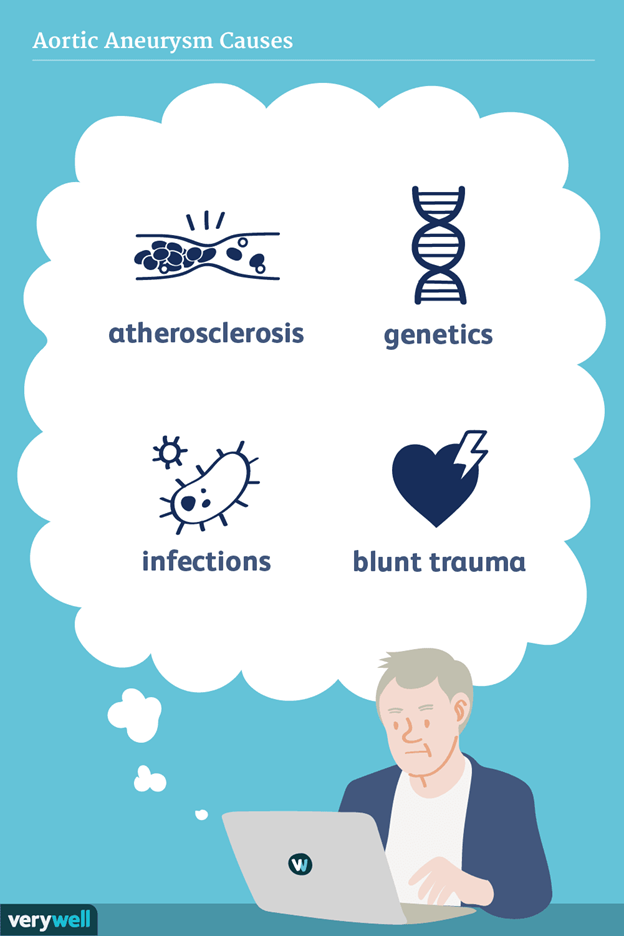
- Atherosclerosis: The buildup of fatty deposits and plaque in the arteries can weaken the arterial walls and increase the risk of aneurysm formation.
- Genetic Factors: A family history of aneurysms can predispose individuals to develop aneurysms, suggesting a genetic component to the condition.
- High Blood Pressure (Hypertension): Chronic hypertension can put extra stress on arterial walls, making them more susceptible to developing aneurysms.
- Smoking: Tobacco use is a significant risk factor for aneurysms, as it contributes to arterial wall damage and inflammation.
- Age: Aneurysms are more common in older individuals, as arterial walls tend to weaken with age.
- Gender: Men are at a higher risk of developing aneurysms compared to women.
- Trauma: Physical injury or trauma to blood vessels can lead to the formation of an aneurysm.
- Connective Tissue Disorders: Certain inherited connective tissue disorders, such as Marfan syndrome and Ehlers-Danlos syndrome, can increase the risk of aneurysm development.
Causes and Risk Factors of Peripheral Vascular Disorders:
- Atherosclerosis: The buildup of plaque in the arteries, which narrows and hardens the blood vessels, is a common cause of peripheral vascular disorders.
- Diabetes: Uncontrolled diabetes can damage blood vessels and nerves, leading to peripheral vascular complications like peripheral artery disease (PAD) and peripheral neuropathy.
- Hypertension: High blood pressure can strain and damage blood vessels, contributing to peripheral vascular diseases.
- Smoking: Tobacco use is a significant risk factor for peripheral vascular disorders, as it damages blood vessels and increases the risk of atherosclerosis.
- Sedentary Lifestyle: Lack of physical activity can contribute to poor circulation and increase the risk of peripheral vascular diseases.
- Obesity: Excess weight puts additional stress on the circulatory system, increasing the likelihood of developing vascular problems.
- Family History: A family history of peripheral vascular disorders can indicate a genetic predisposition to these conditions.
- Age: Peripheral vascular disorders become more common with advancing age, as blood vessels naturally lose some elasticity and become more prone to damage.
- Hyperlipidemia: Elevated levels of cholesterol and triglycerides in the blood can contribute to the formation of plaque and atherosclerosis, increasing the risk of peripheral vascular diseases.
- Autoimmune Conditions: Some autoimmune diseases, such as vasculitis, can cause inflammation and damage to blood vessels in the peripheral circulation.
Nursing Test Bank
Test Bank #1: RN Pharmacology Exams
Test Bank #2: RN Medical-Surgical Exams
Test Bank #3: RN Fundamentals Exams
Test Bank #4: RN Maternal-Newborn Exams
Test Bank #5: RN Anatomy and Physiology Exams
Test Bank #6: RN Obstetrics and Pediatrics Exams
Test Bank #7: RN Fluid and Electrolytes Exams
Test Bank #9: RN Adult Health
Test Bank #10: RN Dosage Calculation
Test Bank #11: RN Community Health Exams
Test Bank #12: RN Psychology Exams
Test Bank #13: RN Nursing Care Of Children
Test Bank #14: RN Foundations of Nursing Exams
Naxlex Comprehensive Predictor Exams
Exam #1: RN Comprehensive predictor 2023 proctored exam
Exam #2: Ati rn vati comprehensive predictor proctored exam
Exam #3: Ati Rn Comprehensive Predictor Proctored Exam 2023
Exam #4: Rn Comprehensive Predictor 2023 Proctored Exam - St. Joseph
Exam #5: RN Comprehensive Predictor Proctored Exam (National U CA San Diego)
Exam #6: Ati rn comprehensive predictor 2023 retake proctored exam
Exam #7: RN Hesi Exit Proctored Exam
Exam #8: Hesi RN Exit proctored exam
Exam #9: Hesi rn exit proctored exam
Exam #10: Hesi Rn compass exit B proctored exam
Questions on Causes and Risk Factors
Correct Answer is B
Explanation
Incorrect - Taking hot baths is not recommended after peripheral artery bypass surgery. Heat may dilate blood vessels and increase blood flow, potentially causing complications at the surgical site.
Correct Answer is D
Explanation
Correct - Medical management with lifestyle changes, such as quitting smoking, controlling blood pressure and cholesterol levels, and regular exercise, is often the first-line treatment for PAD. This approach aims to improve blood flow and manage symptoms before considering more invasive interventions.
Correct Answer is A
Explanation
Incorrect - Reducing physical activity is not recommended as a way to reduce the risk of peripheral vascular disorders. Regular physical exercise is essential for maintaining cardiovascular health and reducing the risk of many vascular conditions.
Correct Answer is D
Explanation
<p>Correct - After the procedure, the client is typically advised to lie flat and keep the leg straight for several hours to prevent bleeding and promote vessel healing. This position helps to apply pressure at the site of the angioplasty.</p>
Correct Answer is B
Explanation
<p>Incorrect - Endovascular repair may be an option for some AAAs, but it is not the best treatment for all cases, especially small, asymptomatic ones. The appropriate treatment plan will depend on the client's specific circumstances.</p>
Correct Answer is C
Explanation
Incorrect - A sedentary lifestyle is a behavioral risk factor for aneurysms, not a genetic one. Lack of physical activity can contribute to hypertension and other risk factors.
Correct Answer is C
Explanation
No explanation
Correct Answer is B
Explanation
Incorrect - Smoking, even in small amounts, is a significant risk factor for aneurysms. Any amount of smoking should be strongly discouraged for individuals interested in preventing aneurysms and peripheral vascular disorders.Questions
Correct Answer is B
Explanation
Incorrect - Waiting until fully recovered before engaging in any physical activity is unnecessary and may delay the client's recovery process. Controlled and gradual activity resumption is usually preferred.
Correct Answer is C
Explanation
Incorrect - A lumbar puncture is not used to assess blood flow in the lower extremities. It is a procedure for obtaining cerebrospinal fluid for diagnostic purposes in certain neurological conditions.
Correct Answer is C
Explanation
Incorrect - While elevated blood pressure can be a concern after some procedures, it is not a specific complication of femoral artery catheterization. The primary focus after the procedure is on monitoring the insertion site.
Correct Answer is A
Explanation
Incorrect - It is essential to stay hydrated after cerebral angiography to help flush out the contrast dye from the system. The client should be encouraged to drink fluids, unless contraindicated for another reason.
Correct Answer is B
Explanation
Incorrect - A vegetarian diet is not a risk factor for aneurysms. In fact, a diet rich in fruits, vegetables, and whole grains may reduce the risk of cardiovascular diseases, including aneurysms.
Correct Answer is C
Explanation
<p>Incorrect - Sudden onset of chest pain is not directly related to the AAA repair and may indicate a different medical emergency that requires immediate attention.</p>
Correct Answer is B
Explanation
Incorrect - Checking vital signs every 4 hours is a standard nursing intervention, but it is not the priority in the immediate postoperative period after EVAR, especially when graft occlusion may pose a more immediate threat.Questions
Correct Answer is D
Explanation
No explanation
Correct Answer is C
Explanation
Incorrect - Atherosclerosis (build-up of plaque within the artery) is a general complication of many peripheral vascular disorders, not unique to popliteal artery aneurysms.Questions