
Clinical Features and Symptoms
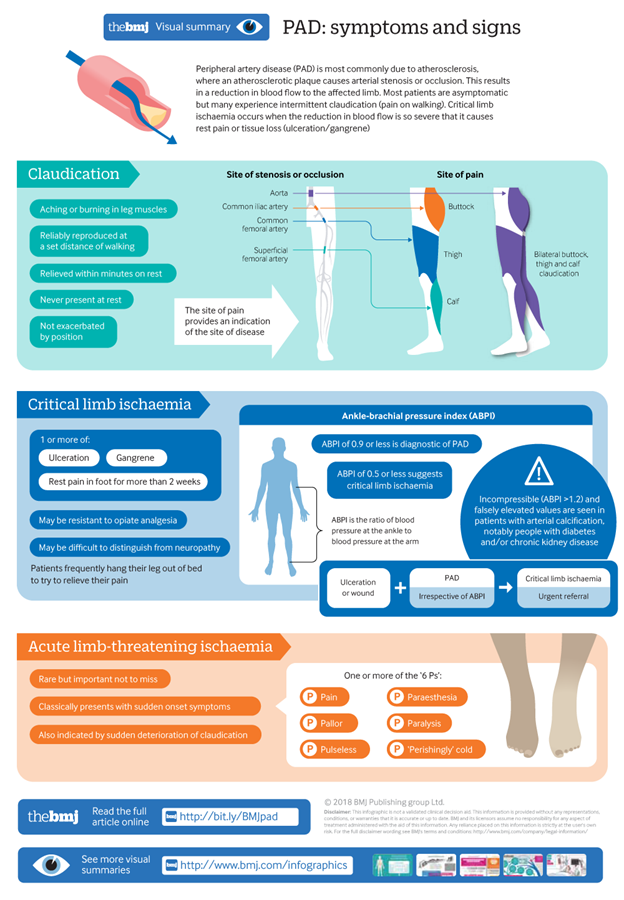
The symptoms of PVD depend on the location and severity of the blood vessel narrowing or blockage. Some people with PVD may not have any symptoms at all. Others may experience one or more of the following symptoms:
- Painful leg cramping that occurs with exercise and is relieved by rest (intermittent claudication)
- Numbness, weakness, or heaviness in the muscles
- Burning or aching pain at rest, especially in the toes and at night while lying flat
- Changes in the skin color or temperature of the legs or feet (pale, bluish, or reddish)
- Hair loss on the legs
- Thickened, brittle, or opaque toenails
- Wounds that do not heal over pressure points such as heels or ankles
- Gangrene (dead tissue due to lack of blood flow)
- Impotence (erectile dysfunction)
Nursing Test Bank
Test Bank #1: RN Pharmacology Exams
Test Bank #2: RN Medical-Surgical Exams
Test Bank #3: RN Fundamentals Exams
Test Bank #4: RN Maternal-Newborn Exams
Test Bank #5: RN Anatomy and Physiology Exams
Test Bank #6: RN Obstetrics and Pediatrics Exams
Test Bank #7: RN Fluid and Electrolytes Exams
Test Bank #9: RN Adult Health
Test Bank #10: RN Dosage Calculation
Test Bank #11: RN Community Health Exams
Test Bank #12: RN Psychology Exams
Test Bank #13: RN Nursing Care Of Children
Test Bank #14: RN Foundations of Nursing Exams
Naxlex Comprehensive Predictor Exams
Exam #1: RN Comprehensive predictor 2023 proctored exam
Exam #2: Ati rn vati comprehensive predictor proctored exam
Exam #3: Ati Rn Comprehensive Predictor Proctored Exam 2023
Exam #4: Rn Comprehensive Predictor 2023 Proctored Exam - St. Joseph
Exam #5: RN Comprehensive Predictor Proctored Exam (National U CA San Diego)
Exam #6: Ati rn comprehensive predictor 2023 retake proctored exam
Exam #7: RN Hesi Exit Proctored Exam
Exam #8: Hesi RN Exit proctored exam
Exam #9: Hesi rn exit proctored exam
Exam #10: Hesi Rn compass exit B proctored exam
Questions on Clinical Features and Symptoms
Correct Answer is D
Explanation
This choice is correct. Hypercholesterolemia, characterized by high levels of cholesterol in the blood, is a significant risk factor for atherosclerosis, which is the buildup of plaque in the arterial walls. Atherosclerosis is a common cause of peripheral vascular disease, leading to reduced blood flow to the extremities and various cardiovascular complications.
Correct Answer is C
Explanation
This choice is incorrect because using a donut-shaped cushion for sitting is generally not recommended for preventing skin breakdown. Donut cushions can increase pressure on the area around the coccyx and may cause more harm than good. Clients at risk of skin breakdown should be repositioned regularly and encouraged to shift their weight to relieve pressure on vulnerable areas.Questions
Correct Answer is C
Explanation
This choice is incorrect because varicose veins are typically caused by weakened or damaged valves in the veins, leading to the pooling of blood and the development of enlarged and twisted veins. Smoking, diabetes, and hypertension are not primary risk factors for varicose veins.
Correct Answer is A
Explanation
This choice is incorrect because while gender and ethnicity can influence the risk of certain conditions, age is a significant independent risk factor for the development of peripheral vascular diseases. The age-related changes in blood vessels apply to individuals of all genders and ethnicities.Questions
Correct Answer is C
Explanation
This choice is incorrect because consuming high amounts of caffeine can lead to increased heart rate and blood pressure, which may be detrimental for clients with PAD. Moderate caffeine intake is generally recommended.
Correct Answer is A
Explanation
This choice is incorrect because an ankle-brachial index (ABI) test does not evaluate blood flow through the heart's chambers. It focuses on assessing blood pressure and blood flow in the arms and legs to diagnose peripheral vascular disease.
Correct Answer is D
Explanation
This choice is correct. Avoiding exposure to cold temperatures is a recommended self-care measure for individuals with peripheral vascular disease (PAD) experiencing cold feet. Cold temperatures can further constrict blood vessels and reduce blood flow to the extremities. Clients should keep their feet warm and protect them from cold weather using appropriate footwear and clothing.
Correct Answer is C
Explanation
This choice is incorrect because magnetic resonance imaging (MRI) is a diagnostic imaging technique that provides detailed images of the body's internal structures using a magnetic field and radio waves. While it can be used to assess blood vessels, it is not the primary test for evaluating blood flow in peripheral vascular diseases.
Correct Answer is B
Explanation
This choice is incorrect because promoting regular foot inspections is essential for clients with peripheral vascular diseases, but in this case, the non-healing ulcer requires immediate attention. Proper wound care, including assessment, cleaning, and dressing, should be part of the client's plan of care, but antibiotic therapy is the priority in this situation.
Correct Answer is D
Explanation
This choice is correct. Dizziness is a significant adverse effect of cilostazol and should be reported immediately. Cilostazol can cause a drop in blood pressure, leading to dizziness, lightheadedness, and a risk of falls. If a client experiences severe dizziness or fainting, they should seek medical attention promptly.
Correct Answer is B
Explanation
This choice is incorrect because encouraging long periods of standing can worsen symptoms in clients with CVI. Prolonged standing increases venous pressure in the legs and can lead to further swelling and discomfort.
Correct Answer is B
Explanation
<p>This choice is incorrect because peripheral vascular diseases do not primarily affect the gastrointestinal system. The gastrointestinal system involves the digestion and absorption of nutrients, which is not directly related to peripheral vascular diseases.</p>
Correct Answer is A
Explanation
This choice is incorrect because limiting physical activity is not recommended for individuals with peripheral vascular disease. Regular physical activity, such as walking, can actually improve blood circulation and overall vascular health. However, individuals with peripheral vascular disease should be cautious not to overexert themselves and should consult with their healthcare provider regarding appropriate levels of physical activity.Questions
Correct Answer is D
Explanation
This choice is correct. Gradually increasing walking distance over time is a recommended approach for individuals with PAD to improve exercise tolerance and manage intermittent claudication. The goal is to push the limits of walking distance without causing severe pain, allowing the individual to gradually build endurance and improve blood flow.
Correct Answer is A
Explanation
This choice is incorrect because chronic venous insufficiency involves symptoms such as leg swelling, skin changes, and the development of venous ulcers, but it is not characterized by pain that occurs with walking and is relieved by rest.
Correct Answer is C
Explanation
This choice is incorrect because Raynaud's disease primarily affects the fingers and toes, causing them to spasm and change color in response to cold or stress. It is not directly related to the development of venous insufficiency.
Correct Answer is B
Explanation
This choice is incorrect because while wearing compression stockings is a recommended intervention for individuals with CVI, tight-fitting compression stockings can impede blood flow and cause discomfort. Compression stockings should be fitted appropriately by a healthcare professional to ensure optimal efficacy.
Correct Answer is D
Explanation
<p>This choice is correct. Walking is a low-impact exercise that can be beneficial for individuals with peripheral vascular disease. It promotes blood flow in the legs, increases circulation, and helps manage intermittent claudication (pain during walking) associated with PAD. Gradually increasing walking distance and duration can improve cardiovascular fitness and overall health.</p>