
naxlex image logo

Naxlex

  • Nursing School Content
  • TEAS Content
  • HESI Content
  • Register
  • Sign Up
How it Works
Naxlex
  • Fundamentals
  • End-of-life Care and Palliative Care
  • Communication and Advance Care Planning
Try Naxlex NCLEX-RN (14-day Free-Trial)

Communication and Advance Care Planning

  • Communication is a key component of end-of-life care and palliative care, as it helps to establish trust, rapport, and understanding between the patient, the family, and the health care team.

  • Communication skills that are essential for end-of-life care and palliative care include:

    • Active listening

    • Empathy

    • Open-ended questions

    • Reflection

    • Clarification

    • Summarization

    • Validation

    • Silence

    - Communication challenges that may arise in end-of-life care and palliative care include:

    • Language barriers

    • Cultural differences

    • Emotional distress

    • Cognitive impairment

    • Conflicting values or beliefs

    • Family dynamics or conflicts

    - Strategies to overcome communication challenges include:

    • Using interpreters or translators when needed

    • Being respectful and sensitive to cultural diversity

    • Providing emotional support and reassurance

    • Assessing the patient's mental status and capacity to make decisions

    • Exploring the patient's and the family's values, goals, and preferences

    • Resolving or mediating conflicts in a respectful and collaborative manner

    - Advance care planning is the process of discussing and documenting the patient's wishes and preferences for future medical care, especially in the event that the patient becomes unable to communicate or make decisions.

    - Advance care planning involves:
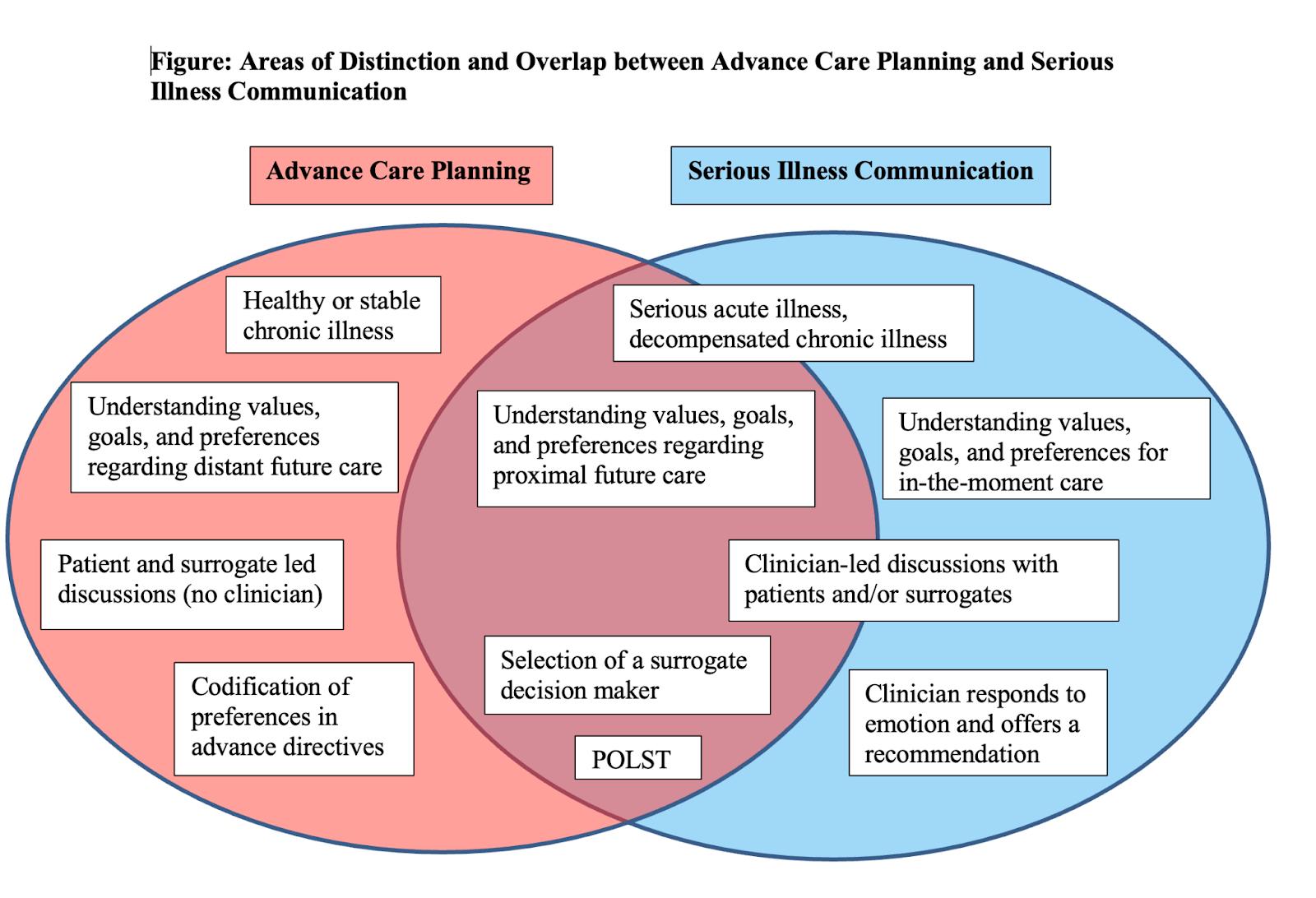
      • Identifying a health care proxy or surrogate decision maker who can act on behalf of the patient if needed

      • Completing an advance directive or living will that specifies the patient's preferences for life-sustaining treatments, such as cardiopulmonary resuscitation (CPR), mechanical ventilation, artificial nutrition and hydration, dialysis, etc.

      • Completing a do-not-resuscitate (DNR) order or a do-not-intubate (DNI) order if the patient does not want CPR or mechanical ventilation in case of cardiac or respiratory arrest

      • Completing a physician orders for life-sustaining treatment (POLST) form that summarizes the patient's wishes for medical interventions in various scenarios, such as comfort measures only, limited interventions, or full treatment

Nursing Test Bank

Test Bank #1: RN Pharmacology Exams Test Bank #2: RN Medical-Surgical Exams Test Bank #3: RN Fundamentals Exams Test Bank #4: RN Maternal-Newborn Exams Test Bank #5: RN Anatomy and Physiology Exams Test Bank #6: RN Obstetrics and Pediatrics Exams Test Bank #7: RN Fluid and Electrolytes Exams Test Bank #9: RN Adult Health Test Bank #10: RN Dosage Calculation Test Bank #11: RN Community Health Exams Test Bank #12: RN Psychology Exams Test Bank #13: RN Nursing Care Of Children Test Bank #14: RN Foundations of Nursing Exams

Naxlex Comprehensive Predictor Exams

Exam #1: RN Comprehensive predictor 2023 proctored exam Exam #2: Ati rn vati comprehensive predictor proctored exam Exam #3: Ati Rn Comprehensive Predictor Proctored Exam 2023 Exam #4: Rn Comprehensive Predictor 2023 Proctored Exam - St. Joseph Exam #5: RN Comprehensive Predictor Proctored Exam (National U CA San Diego) Exam #6: Ati rn comprehensive predictor 2023 retake proctored exam Exam #7: RN Hesi Exit Proctored Exam Exam #8: Hesi RN Exit proctored exam Exam #9: Hesi rn exit proctored exam Exam #10: Hesi Rn compass exit B proctored exam

Questions on Communication and Advance Care Planning

Correct Answer is D

Explanation

<p>The nurse should inform the health care provider of the discrepancy between the client&#39;s advance directive and the spouse&#39;s consent, and request clarification on how to proceed. The health care provider should then discuss the situation with the spouse and explain their role and responsibilities as a surrogate decision-maker, as well as the benefits and burdens of dialysis for the client. The health care provider should also try to resolve any conflicts or misunderstandings that may exist between the client&#39;s wishes and the spouse&#39;s beliefs or values.</p>

Correct Answer is B

Explanation

<p>It may make the client feel abandoned, isolated, or betrayed, and it does not facilitate communication or continuity of care.</p>

Correct Answer is B

Explanation

<p>It violates the client&#39;s legal and ethical rights, and may cause resentment or anger from the client.</p>

Correct Answer is B

Explanation

<p>The nurse should not refer the client and the family to a social worker or a chaplain for counseling without first assessing their needs and preferences, as this may imply that the nurse is avoiding or delegating the issue, or imposing unwanted services on them. The nurse should provide emotional support and reassurance to the client and the family, and offer referrals to other professionals or resources as appropriate.</p>

<p>It may suggest that the nurse thinks that there is something wrong with the client&#39;s decision, or that they need to be convinced otherwise.</p>

<p>The nurse should not increase fluid intake as tolerated for a client who has COPD and develops signs of a respiratory infection, as this may worsen dyspnea or cause fluid overload. Fluid intake should be individualized</p> <p></p>

<p>Advance care planning can be revised or updated at any time by the client or their designated surrogate, as long as they have decision-making capacity and communicate their wishes clearly. This allows for flexibility and adaptation to changing circumstances or preferences.</p> <p></p>
Try Naxlex NCLEX-RN
(14 Day Free-Trial)

Search Here

More on Nursing

  • Mobility, Immobility and Positioning
  • Critical Thinking and Nursing Process
  • Oxygen Therapy and Respiratory Care (Oxygenation and Perfusion)
  • Care of Patients with Chronic Illnesses
  • Patient Assessment and Documentation
  • Vital Signs Measurement
  • Safety Fall
  • Skin integrity and Basic wound care and dressing changes
  • Nursing Ethics and Professionalism

Free Nursing Study Materials

Access to all study guides and practice questions for nursing for free.

  • Free Nursing Study Trials
  • Free Nursing Video tutorials
  • Free Nursing Practice Tests
  • Free Exam and Study Modes
  • Free Nursing Revision Quizlets
Join Us Today
naxlex-logo-footer

Designed to assess a student's preparedness for entering the health science fields.

Email Address: [email protected]

Phone No: +18175082244

Company

  • Contact us
  • How it Works
  • Blog

Resources

  • Privacy Policy
  • Terms of use
  • Help Center

© 2026 Naxlex.com