
naxlex image logo

Naxlex

  • Nursing School Content
  • TEAS Content
  • HESI Content
  • Register
  • Sign Up
How it Works
Naxlex
  • Medical Surgical
  • Blood and Cardiovascular Disorders
  • Diagnostic Evaluation
Try Naxlex NCLEX-RN (14-day Free-Trial)

Diagnostic Evaluation

- The diagnostic evaluation of hemorrhage involves various laboratory tests and imaging studies to confirm the presence,  source, extent, and effects of bleeding. Some common tests include:

- Complete blood count (CBC), including hemoglobin, hematocrit, red blood cell (RBC) count, white blood cell (WBC) count, and platelet count. These tests measure the amount and quality of blood cells and indicate the degree of blood loss and anemia.

- Coagulation studies, including prothrombin time (PT),  international normalized ratio (INR),       activated partial thromboplastin time (aPTT), fibrinogen level, D-dimer test,  and thrombin time (TT). These tests measure the ability of blood to clot and indicate the presence of coagulation disorders or anticoagulant therapy.

- Blood type and crossmatch. This test determines the compatibility of blood for transfusion and prevents transfusion reactions.

- Serum electrolytes, blood urea nitrogen (BUN), creatinine, and liver function tests (LFTs). These tests measure the levels of electrolytes and metabolic waste products in the blood and indicate the effects of bleeding on the kidney and liver function.

- Arterial blood gas (ABG) analysis. This test measures the levels of oxygen, carbon dioxide, and pH in the blood and indicates the effects of bleeding on the acid-base balance and tissue perfusion.

- Urinalysis. This test detects the presence of blood, protein, glucose, ketones, or bacteria in the urine and indicates the effects of bleeding on the urinary system.

- Endoscopy. This procedure involves inserting a flexible tube with a camera and light into the gastrointestinal tract to visualize the source and extent of bleeding and perform interventions such as cauterization, clipping, or banding.

- Colonoscopy. This procedure involves inserting a flexible tube with a camera and light into the colon to visualize the source and extent of bleeding and perform interventions such as polypectomy, cauterization, or injection.

- Angiography. This procedure involves injecting a contrast dye into the blood vessels and taking X-rays to visualize the source and extent of bleeding and perform interventions such as embolization or stenting.

- Ultrasound. This procedure involves using sound waves to create images of the internal organs and structures and detect the presence of fluid, masses, or abnormalities.

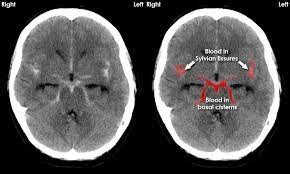
- Computed tomography (CT) scan. This procedure involves using X-rays and a computer to create cross-sectional images of the body and detect the presence of fluid, masses, or abnormalities.

- Magnetic resonance imaging (MRI) scan. This procedure involves using a magnetic field and radio waves to create detailed images of the body and detect the presence of fluid, masses, or abnormalities.
Nursing Test Bank

Test Bank #1: RN Pharmacology Exams Test Bank #2: RN Medical-Surgical Exams Test Bank #3: RN Fundamentals Exams Test Bank #4: RN Maternal-Newborn Exams Test Bank #5: RN Anatomy and Physiology Exams Test Bank #6: RN Obstetrics and Pediatrics Exams Test Bank #7: RN Fluid and Electrolytes Exams Test Bank #9: RN Adult Health Test Bank #10: RN Dosage Calculation Test Bank #11: RN Community Health Exams Test Bank #12: RN Psychology Exams Test Bank #13: RN Nursing Care Of Children Test Bank #14: RN Foundations of Nursing Exams

Naxlex Comprehensive Predictor Exams

Exam #1: RN Comprehensive predictor 2023 proctored exam Exam #2: Ati rn vati comprehensive predictor proctored exam Exam #3: Ati Rn Comprehensive Predictor Proctored Exam 2023 Exam #4: Rn Comprehensive Predictor 2023 Proctored Exam - St. Joseph Exam #5: RN Comprehensive Predictor Proctored Exam (National U CA San Diego) Exam #6: Ati rn comprehensive predictor 2023 retake proctored exam Exam #7: RN Hesi Exit Proctored Exam Exam #8: Hesi RN Exit proctored exam Exam #9: Hesi rn exit proctored exam Exam #10: Hesi Rn compass exit B proctored exam

Questions on Diagnostic Evaluation

Correct Answer is B

Explanation

Incorrect. Decreased urine output is a later sign of hypovolemia when the body's compensatory mechanisms are no longer effective in maintaining blood flow to the kidneys.

Correct Answer is C

Explanation

Incorrect. DIC is associated with decreased platelet count due to the consumption of platelets in the formation of multiple small clots.Questions

Correct Answer is C

Explanation

Correct. Carrying a medical alert card indicating anticoagulant use is crucial to inform healthcare providers about the client's medication regimen in case of emergency.Questions

Correct Answer is D

Explanation

<p>Incorrect. Exclusive breastfeeding is not a risk factor for postpartum hemorrhage. In fact, breastfeeding can help stimulate uterine contractions, which may reduce bleeding after childbirth.</p>

Correct Answer is A

Explanation

Incorrect. Nonsteroidal anti-inflammatory drugs (NSAIDs) can increase the risk of bleeding and should be avoided by clients with bleeding disorders.

Correct Answer is B

Explanation

Incorrect. A respiratory assessment is important for assessing oxygenation and respiratory status, but it is not the primary assessment to identify bleeding sources.Questions

Correct Answer is C

Explanation

Incorrect. Taking aspirin daily is not recommended for clients with bleeding disorders as it can increase the risk of bleeding due to its antiplatelet effects.

Correct Answer is C

Explanation

Incorrect. Monitoring platelet levels daily is not a preventive action but a method of assessing the client's clotting status.Questions

Correct Answer is B

Explanation

Incorrect. Dark-colored stools are not an expected outcome after a blood transfusion. It is important for the client to be aware of any unusual changes in stool color or other potential side effects.

Correct Answer is B

Explanation

Incorrect. Obtaining consent for the blood transfusion is essential, but verifying the client's identification is more critical before administering the transfusion.

Correct Answer is A

Explanation

Incorrect. Elevated liver enzymes are indicative of liver damage, but they do not directly impact the client's risk of hemorrhage.

Correct Answer is C

Explanation

Incorrect. Elevating the head of the client's bed may be helpful in managing respiratory distress, but it is not the priority when there is a potential adverse reaction to the blood transfusion.

Correct Answer is C

Explanation

Incorrect. Monitoring blood glucose levels is important for clients with diabetes but is not directly related to preventing hemorrhage.

Correct Answer is A

Explanation

Incorrect. Anticoagulant therapy does not increase blood viscosity (thickness); instead, it reduces the blood's ability to form clots.

Correct Answer is A

Explanation

Incorrect. Although heart rate can be affected by hemorrhage, being within the normal range doesn't necessarily warrant immediate intervention. Other signs and symptoms should be considered as well.

Correct Answer is C

Explanation

Incorrect. Fecal Occult Blood Test (FOBT) is used to detect hidden blood in stool, which is indicative of lower gastrointestinal bleeding, but it does not confirm internal bleeding in other areas of the body.

Correct Answer is B

Explanation

Incorrect. Deep breathing exercises are not the priority when the client is experiencing massive hemorrhage and requires urgent interventions to stabilize their condition.

Correct Answer is C

Explanation

Correct. Recent major surgery can be a risk factor for hemorrhage due to potential surgical site bleeding or complications.

Correct Answer is B

Explanation

Incorrect. Encouraging active range of motion exercises can worsen joint bleeding and is contraindicated in a client with acute joint bleeding due to hemophilia.Questions

Correct Answer is C

Explanation

No explanation

Incorrect. An ultrasound is not relevant to a bone marrow aspiration procedure and is not used to assess bleeding disorders. It is typically used for imaging soft tissues and organs.Questions

Incorrect. While educating the client about contraceptive methods is essential for family planning, it is not the immediate priority when managing postpartum hemorrhage.

Incorrect. Dairy products do not significantly impact iron intake and can be included in the diet unless the client has specific dietary restrictions.

Incorrect. Obtaining a detailed health history is valuable for understanding the client's overall health, but it is not the priority when the client is actively bleeding and requires immediate intervention.

Incorrect. Visible blood clot formation at the wound site is a normal part of the body's hemostatic response to control external bleeding and does not directly suggest internal bleeding.

Incorrect. A complete blood count (CBC) provides valuable information about the client's red blood cells and hemoglobin levels but does not directly identify the exact location and cause of bleeding.

Incorrect. Elevating the affected limb above the heart level is not typically necessary for minor bleeding episodes and may not be practical for all bleeding sites.

Incorrect. Stool culture is used to detect gastrointestinal infections but is not specific to diagnosing upper gastrointestinal bleeding.

Correct. Monitoring the hemoglobin level is crucial to determine if the blood transfusion has been effective in increasing the client's red blood cell count and improving oxygen-carrying capacity.

Incorrect. Clay-colored stools are pale and occur with problems in the biliary system, not with gastrointestinal bleeding.

Incorrect. Magnetic Resonance Imaging (MRI) is helpful in diagnosing various conditions but is not the primary test for identifying the cause and source of bleeding in a client with suspected hemorrhage.Questions

Correct. Restlessness and anxiety are early manifestations of hemorrhage, reflecting the body's compensatory response to maintain perfusion in the early stages of blood loss.

Incorrect. While taking vital signs is important, obtaining consent is more critical before starting a blood transfusion.

Incorrect. Blood glucose level is not directly related to clotting function and is more indicative of a client's metabolic status.

Incorrect. Elevated liver enzymes are not a typical finding in acute blood loss. They are more indicative of liver injury or dysfunction.

Incorrect. Neurological assessments are essential but may not be the immediate priority during the initial resuscitation phase of hypovolemic shock.

Incorrect. Hemophilia does not affect the number of red blood cells, which are responsible for oxygen transport.

Incorrect. Having a balanced diet is essential for overall health, but it is not a specific risk factor for hemorrhage.

Correct. Hematocrit levels represent the proportion of red blood cells in the blood. During early stages of hemorrhage, there is a loss of red blood cells, leading to decreased hematocrit levels.

Incorrect. Excessive intake of vitamin K-rich foods can promote blood clotting and is not a cause of duodenal ulcers.
Try Naxlex NCLEX-RN
(14 Day Free-Trial)

Search Here

More on Nursing

  • Medico-Surgical Procedures
  • Immunological System
  • Genito-Urinary System Disorders
  • Digestive System Disorders
  • Perioperative Nursing
  • Endocrine Systems
  • Communicable Diseases
  • Introduction
  • Musculoskeletal System

Free Nursing Study Materials

Access to all study guides and practice questions for nursing for free.

  • Free Nursing Study Trials
  • Free Nursing Video tutorials
  • Free Nursing Practice Tests
  • Free Exam and Study Modes
  • Free Nursing Revision Quizlets
Join Us Today
naxlex-logo-footer

Designed to assess a student's preparedness for entering the health science fields.

Email Address: [email protected]

Phone No: +18175082244

Company

  • Contact us
  • How it Works
  • Blog

Resources

  • Privacy Policy
  • Terms of use
  • Help Center

© 2026 Naxlex.com