
Introduction (Pathophysiology of the Gastrointestinal System)
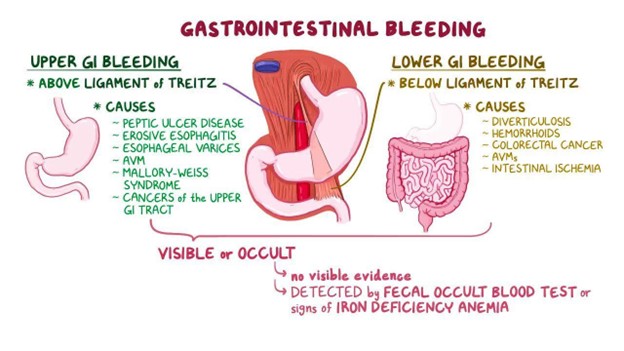
- Gastrointestinal bleeding refers to any bleeding that occurs in the digestive tract, from the mouth to the rectum.
- It can be caused by various conditions, ranging from minor irritation to severe, life-threatening conditions.
- Gastrointestinal bleeding can present as either overt bleeding (visible in vomit or stool) or occult bleeding (not immediately visible).
- It requires prompt evaluation and intervention to identify the source and prevent complications.
- Understanding the risk factors and underlying pathophysiology is crucial for effective management.
Nursing Test Bank
Test Bank #1: RN Pharmacology Exams
Test Bank #2: RN Medical-Surgical Exams
Test Bank #3: RN Fundamentals Exams
Test Bank #4: RN Maternal-Newborn Exams
Test Bank #5: RN Anatomy and Physiology Exams
Test Bank #6: RN Obstetrics and Pediatrics Exams
Test Bank #7: RN Fluid and Electrolytes Exams
Test Bank #9: RN Adult Health
Test Bank #10: RN Dosage Calculation
Test Bank #11: RN Community Health Exams
Test Bank #12: RN Psychology Exams
Test Bank #13: RN Nursing Care Of Children
Test Bank #14: RN Foundations of Nursing Exams
Naxlex Comprehensive Predictor Exams
Exam #1: RN Comprehensive predictor 2023 proctored exam
Exam #2: Ati rn vati comprehensive predictor proctored exam
Exam #3: Ati Rn Comprehensive Predictor Proctored Exam 2023
Exam #4: Rn Comprehensive Predictor 2023 Proctored Exam - St. Joseph
Exam #5: RN Comprehensive Predictor Proctored Exam (National U CA San Diego)
Exam #6: Ati rn comprehensive predictor 2023 retake proctored exam
Exam #7: RN Hesi Exit Proctored Exam
Exam #8: Hesi RN Exit proctored exam
Exam #9: Hesi rn exit proctored exam
Exam #10: Hesi Rn compass exit B proctored exam
Questions on Introduction
Correct Answer is A
Explanation
Incorrect. Antibiotics may be prescribed if there is evidence of bacterial infection, but they are not used specifically to prevent further bleeding in cases of gastroesophageal bleeding.
Correct Answer is D
Explanation
Correct. A barium swallow study, or upper GI series, involves swallowing a contrast material (barium) that coats the inside of the esophagus and stomach, allowing for better visualization during X-rays.
Correct Answer is D
Explanation
Correct. Incorporating iron-rich foods in the diet is important for supporting recovery from anemia, which can occur due to blood loss from gastroesophageal bleeding.
Correct Answer is A
Explanation
Incorrect. Allowing the client to self-administer medications without supervision may not be safe, especially in cases of gastroesophageal bleeding where careful medication management is essential.
Correct Answer is A
Explanation
Incorrect. Chewing on ice chips is not a recommended intervention for managing gastroesophageal bleeding. It is important to seek immediate medical attention.
Correct Answer is C
Explanation
Incorrect. Engaging in high-intensity exercise is not specifically indicated for preventing further bleeding in individuals with gastroesophageal bleeding. It may even exacerbate the bleeding.
Correct Answer is B
Explanation
Incorrect. Increasing alcohol consumption can contribute to gastroesophageal bleeding, so it is important to avoid alcohol in this situation.
Correct Answer is C
Explanation
Incorrect. Migraine headaches are not a direct complication of gastroesophageal bleeding. They are unrelated conditions.
Correct Answer is A
Explanation
Incorrect. Previous surgery for a broken bone is not related to the risk of gastroesophageal bleeding.
Correct Answer is B
Explanation
Incorrect. Consuming a diet rich in fruits and vegetables is generally considered healthy and is not a significant risk factor for gastroesophageal bleeding.
Correct Answer is A
Explanation
Incorrect. Elevated blood pressure and heart rate are not typical signs of shock in gastroesophageal bleeding. In fact, blood pressure may decrease as a result of blood loss.
Correct Answer is C
Explanation
Incorrect. Skin rash and itching are not typical signs of gastroesophageal bleeding. These symptoms may be associated with other conditions.
Correct Answer is B
Explanation
Incorrect. High intake of vitamin C-rich foods is not a significant risk factor for gastroesophageal bleeding.
Correct Answer is A
Explanation
Incorrect. Elevated blood glucose levels are not directly related to gastroesophageal bleeding. They may be indicative of other health issues.
Correct Answer is B
Explanation
Incorrect. Seeking medical attention for minor aches and pains is important for overall health and well-being and is not a risk factor for gastroesophageal bleeding.
Correct Answer is A
Explanation
Incorrect. While a diet high in fiber and roughage is generally beneficial for digestive health, it is not directly related to preventing further bleeding in cases of gastroesophageal bleeding.
Correct Answer is B
Explanation
Incorrect. Seeking immediate medical attention for any symptoms of gastroesophageal bleeding is crucial for timely evaluation and treatment. Delaying medical care can lead to complications.
Correct Answer is B
Explanation
Incorrect. Excessive physical activity and strenuous exercise are not common causes of gastroesophageal bleeding. The erosion of blood vessels and underlying medical conditions are more relevant factors.