
Introduction (Homeostasis)
-
Body works best when some conditions are kept within normal. e.g. body temperature, blood electrolytes values as (sodium, potassium & calcium), blood pH, & blood volume.
-
To keep the condition as close to normal as possible is called Homeostasis:
-
Homeostasis means keeping everything normal
-
Diseases and daily factors can create imbalances such as:
-
Excessive temperatures
-
Vigorous activity
-
Use of diuretics.
-
-
Fluids and Electrolytes Necessary for organs to perform work
-
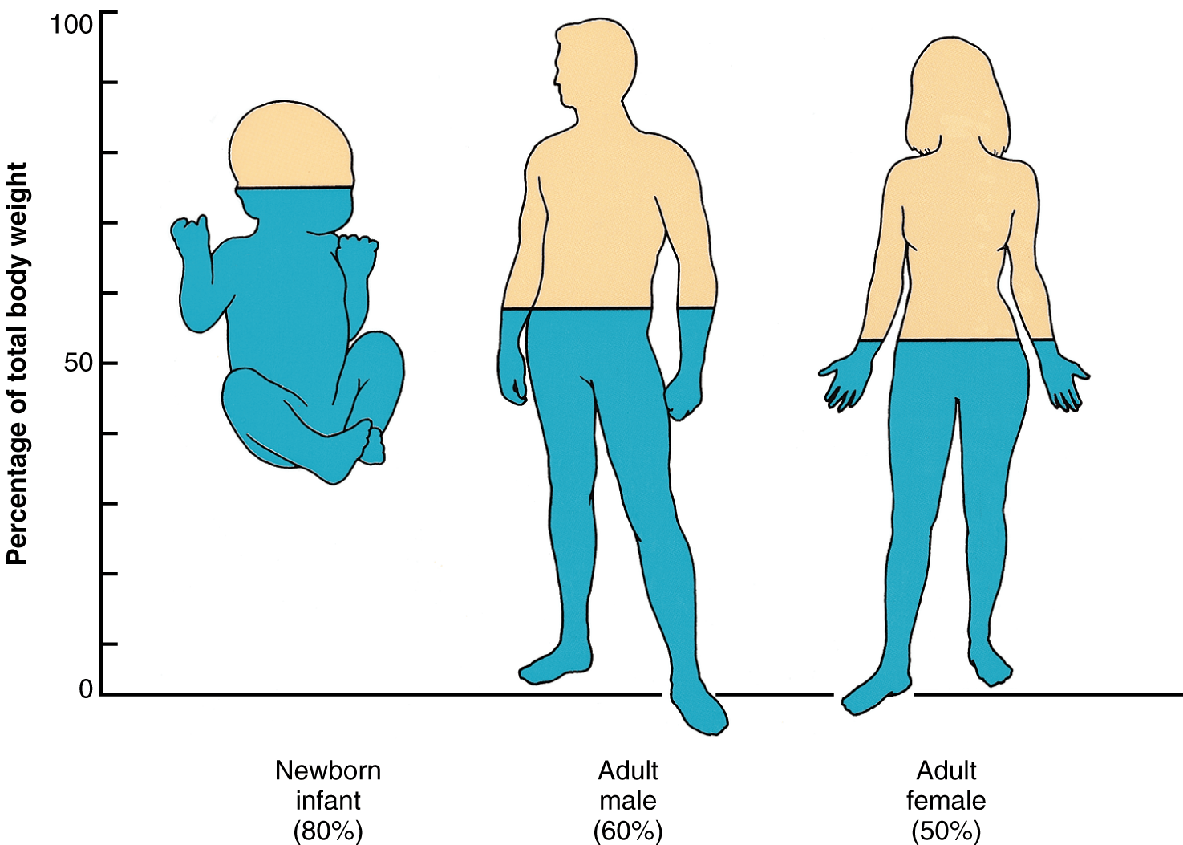
50% to 60% of healthy adult weight
-
An infant has considerably more body fluid and ECF than an adult.
-
Age, Sex, and amount of fat cells affect body water.
-
Women and obese people have less body water
-
Transport nutrients, electrolytes, and O2 to the cells
-
Excretion of wastes
-
Regulates body temperature
-
Lubricates joints and membranes
-
Medium for food digestion
Water
Total Body Fluids in Human Body
Functions of body water:
Nursing Test Bank
Naxlex Comprehensive Predictor Exams
Questions on Introduction (Homeostasis)