
Introduction (Gestational Hypertension)
- Gestational hypertension is a type of high blood pressure that develops after 20 weeks of pregnancy and goes away after delivery.
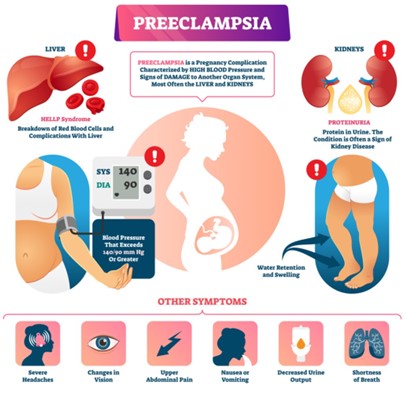
- High blood pressure is defined as a systolic pressure of 140 mmHg or higher or a diastolic pressure of 90 mmHg or higher.
- Gestational hypertension can affect the blood flow to the placenta and the fetus, leading to growth restriction, low birth weight, preterm delivery or stillbirth.
- Gestational hypertension can also increase the risk of preeclampsia, a serious condition that causes high blood pressure, proteinuria, edema and organ damage.
- Gestational hypertension can also increase the risk of maternal complications such as stroke, heart failure, kidney failure or placental abruption.
Nursing Test Bank
Test Bank #1: RN Pharmacology Exams
Test Bank #2: RN Medical-Surgical Exams
Test Bank #3: RN Fundamentals Exams
Test Bank #4: RN Maternal-Newborn Exams
Test Bank #5: RN Anatomy and Physiology Exams
Test Bank #6: RN Obstetrics and Pediatrics Exams
Test Bank #7: RN Fluid and Electrolytes Exams
Test Bank #9: RN Adult Health
Test Bank #10: RN Dosage Calculation
Test Bank #11: RN Community Health Exams
Test Bank #12: RN Psychology Exams
Test Bank #13: RN Nursing Care Of Children
Test Bank #14: RN Foundations of Nursing Exams
Naxlex Comprehensive Predictor Exams
Exam #1: RN Comprehensive predictor 2023 proctored exam
Exam #2: Ati rn vati comprehensive predictor proctored exam
Exam #3: Ati Rn Comprehensive Predictor Proctored Exam 2023
Exam #4: Rn Comprehensive Predictor 2023 Proctored Exam - St. Joseph
Exam #5: RN Comprehensive Predictor Proctored Exam (National U CA San Diego)
Exam #6: Ati rn comprehensive predictor 2023 retake proctored exam
Exam #7: RN Hesi Exit Proctored Exam
Exam #8: Hesi RN Exit proctored exam
Exam #9: Hesi rn exit proctored exam
Exam #10: Hesi Rn compass exit B proctored exam
Questions on Introduction
Correct Answer is A
Explanation
Correct Answer is B
Explanation
Correct Answer is ["A","B","C","E"]
Explanation
These are all possible symptoms of preeclampsia, a condition that can occur in the second half of pregnancy and cause high blood pressure, proteinuria and organ damage.
Preeclampsia can be dangerous for both the mother and the baby if not treated promptly.