
Hypoglycemia
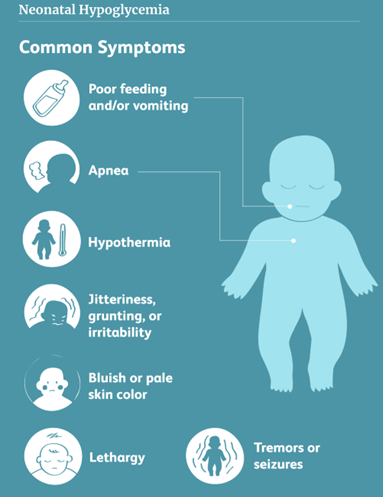
- Definition: Blood glucose level less than 40 mg/dL in a newborn
- Causes: Maternal diabetes, intrauterine growth restriction (IUGR), prematurity, birth asphyxia, cold stress, sepsis
- Signs and symptoms: Jitteriness, tremors, lethargy, poor feeding, hypotonia (low muscle tone), weak cry, apnea (cessation of breathing), cyanosis (bluish skin color), seizures
- Assessment: Perform heel stick blood glucose test using a glucometer; confirm with laboratory plasma glucose test if abnormal; monitor vital signs and neurological status; observe for signs of hypoglycemia
- Nursing interventions: Feed the baby as soon as possible after birth (breast milk or formula); if unable to feed orally or blood glucose level is very low (<25 mg/dL), administer intravenous (IV) dextrose solution as ordered; maintain thermoregulation by keeping the baby warm and dry; monitor blood glucose levels frequently until stable; educate parents on signs of hypoglycemia and how to feed the baby
Nursing Test Bank
Test Bank #1: RN Pharmacology Exams
Test Bank #2: RN Medical-Surgical Exams
Test Bank #3: RN Fundamentals Exams
Test Bank #4: RN Maternal-Newborn Exams
Test Bank #5: RN Anatomy and Physiology Exams
Test Bank #6: RN Obstetrics and Pediatrics Exams
Test Bank #7: RN Fluid and Electrolytes Exams
Test Bank #9: RN Adult Health
Test Bank #10: RN Dosage Calculation
Test Bank #11: RN Community Health Exams
Test Bank #12: RN Psychology Exams
Test Bank #13: RN Nursing Care Of Children
Test Bank #14: RN Foundations of Nursing Exams
Naxlex Comprehensive Predictor Exams
Exam #1: RN Comprehensive predictor 2023 proctored exam
Exam #2: Ati rn vati comprehensive predictor proctored exam
Exam #3: Ati Rn Comprehensive Predictor Proctored Exam 2023
Exam #4: Rn Comprehensive Predictor 2023 Proctored Exam - St. Joseph
Exam #5: RN Comprehensive Predictor Proctored Exam (National U CA San Diego)
Exam #6: Ati rn comprehensive predictor 2023 retake proctored exam
Exam #7: RN Hesi Exit Proctored Exam
Exam #8: Hesi RN Exit proctored exam
Exam #9: Hesi rn exit proctored exam
Exam #10: Hesi Rn compass exit B proctored exam
Questions on Hypoglycemia
Correct Answer is ["A","B","D"]
Explanation
<p>Magnesium sulfate is used to prevent seizures in preeclampsia and is not indicated for the management of postpartum hemorrhage.</p>
Correct Answer is A
Explanation
The iron intake needs to increase by more than 10 mg per day while pregnant.
Correct Answer is ["A","C","D"]
Explanation
<p>This is wrong because a positive hCG test is a probable sign of pregnancy, not a positive one. A probable sign of pregnancy is strongly suggestive of pregnancy but could have other causes. A positive hCG test could be caused by medications, tumors, or other conditions that affect the level of hCG in the blood or urine.</p>
<p>Some other probable signs of pregnancy are uterine enlargement, Hegar’s sign (softening of the lower uterine segment), Goodell’s sign (softening of the cervix), Chadwick’s sign (bluish discoloration of the cervix), ballottement (rebound of the fetus when tapped by the examiner’s finger), Braxton Hicks contractions (painless, irregular uterine contractions), and a positive pregnancy test.</p>
<p>Some other positive signs of pregnancy are the identification of fetal heartbeat, visualization of the fetus by ultrasound or x-ray, and verification of fetal movement by an experienced clinician.</p>
Correct Answer is A
Explanation
increased prolactin levels are not related to hCG levels in pregnancy.
Prolactin is another hormone that stimulates milk production in the breasts.
Correct Answer is B
Explanation
Hypothyroidism is not related to maternal diabetes or prematurity. Hypothyroidism can cause symptoms such as lethargy, poor feeding, jaundice, and hypotonia.
Correct Answer is B
Explanation
A heel warmer does not prevent bruising. Bruising prevention requires applying pressure to the puncture site after collecting the sample.
Correct Answer is ["A","B","E"]
Explanation
<p>Padding the side rails with pillows helps prevent injury if the child inadvertently strikes the side rails during the seizure. It is a safety measure to protect the patient from harm.</p>