
Infant Formula
- Infant formula is a food designed to feed babies and infants less than 12 months of age who cannot or should not receive breast milk
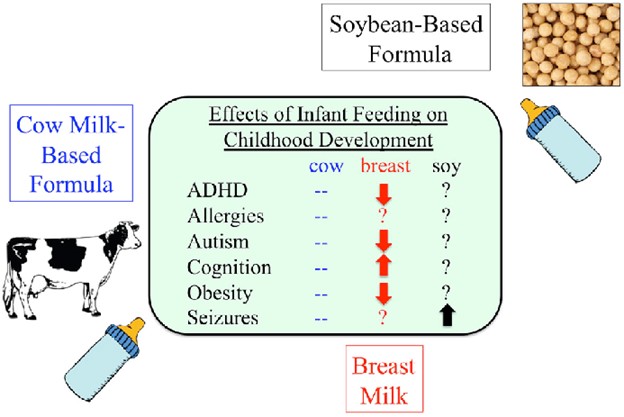
- Infant formula is made from cow’s milk or soy protein that has been modified to resemble breast milk in terms of nutrients, calories, and composition
-
Infant formula has some disadvantages compared to breast milk, such as:
-
It does not contain antibodies, hormones, enzymes, or growth factors that protect the infant from infections and promote development
-
It is more expensive, less convenient, and less environmentally friendly than breast milk
-
It may increase the risk of allergies, asthma, diabetes, obesity, and other chronic diseases in infants
-
It may cause more digestive problems, such as constipation, gas, spit-up, diarrhea, or colic in infants
-
-
Infant formula comes in three forms: ready-to-use, liquid concentrate, and powdered
-
Ready-to-use formula is the most convenient but also the most expensive. It does not need to be mixed with water and can be fed directly to the infant after opening
-
Liquid concentrate formula needs to be mixed with equal parts of water before feeding. It is cheaper than ready-to-use formula but still more costly than powdered formula
-
Powdered formula is the cheapest and most widely used form of formula. It needs to be mixed with a specific amount of water according to the instructions on the label. It can be stored for longer periods of time than the other forms of formula
-
-
Infant formula should be iron-fortified to prevent iron deficiency anemia in infants
-
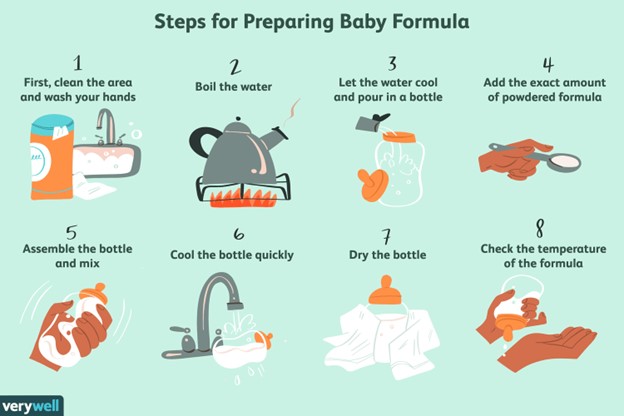
Infant formula should be prepared and stored carefully to prevent contamination and spoilage
-
Formula should be prepared with clean water that has been boiled for one minute and cooled before mixing
-
Formula should be mixed well to avoid clumps or air bubbles that can cause choking or gas in infants
-
Formula should be fed to the infant within one hour of preparation or refrigerated for up to 24 hours
-
Formula should not be microwaved as it can cause hot spots that can burn the infant’s mouth or throat
-
Formula should not be reused or rewarmed once it has been fed to the infant as it can harbor bacteria that can cause illness
-
Nursing Test Bank
Naxlex Comprehensive Predictor Exams
Questions on Infant Formula