
naxlex image logo

Naxlex

  • Nursing School Content
  • TEAS Content
  • HESI Content
  • Register
  • Sign Up
How it Works
Naxlex
  • Mental Health
  • Disorders of Anxiety
  • Post-traumatic stress disorder (PTSD)
Try Naxlex NCLEX-RN (14-day Free-Trial)

Post-traumatic stress disorder (PTSD)

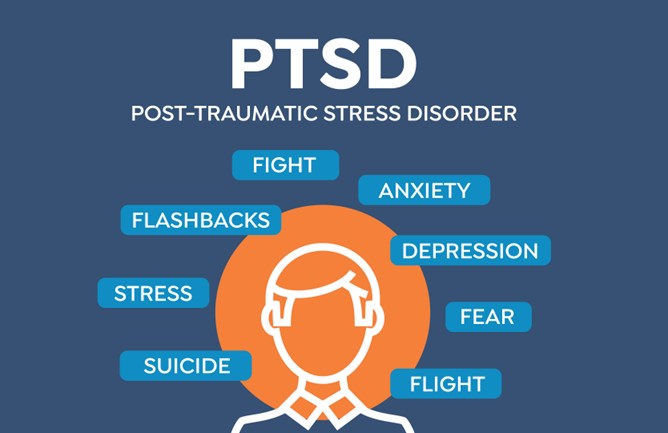
- Post-traumatic stress disorder (PTSD) is a psychiatric disorder that occurs in some people who have experienced or witnessed a traumatic event, such as war, violence, abuse, accident, disaster, or death of a loved one.

- PTSD is characterized by four types of symptoms: re-experiencing, avoidance, negative alterations in cognition and mood, and alterations in arousal and reactivity.

- Re-experiencing symptoms include intrusive and distressing memories, nightmares, flashbacks, or emotional and physical reactions to reminders of the trauma.

- Avoidance symptoms include avoiding thoughts, feelings, people, places, or activities that are associated with the trauma.

- Negative alterations in cognition and mood include persistent negative beliefs and emotions, diminished interest or participation in activities, detachment or estrangement from others, or inability to experience positive emotions.

- Alterations in arousal and reactivity include hypervigilance, exaggerated startle response, irritability, anger, aggression, difficulty concentrating or sleeping, or reckless or self-destructive behavior.

- To be diagnosed with PTSD, a person must have experienced or witnessed a traumatic event that involved actual or threatened death, serious injury, or sexual violence; have at least one re-experiencing symptom, one avoidance symptom, two negative alterations in cognition and mood symptoms, and two alterations in arousal and reactivity symptoms; have symptoms that last for more than one month; and have symptoms that cause significant distress or impairment in social, occupational, or other areas of functioning.
Nursing Test Bank

Test Bank #1: RN Pharmacology Exams Test Bank #2: RN Medical-Surgical Exams Test Bank #3: RN Fundamentals Exams Test Bank #4: RN Maternal-Newborn Exams Test Bank #5: RN Anatomy and Physiology Exams Test Bank #6: RN Obstetrics and Pediatrics Exams Test Bank #7: RN Fluid and Electrolytes Exams Test Bank #9: RN Adult Health Test Bank #10: RN Dosage Calculation Test Bank #11: RN Community Health Exams Test Bank #12: RN Psychology Exams Test Bank #13: RN Nursing Care Of Children Test Bank #14: RN Foundations of Nursing Exams

Naxlex Comprehensive Predictor Exams

Exam #1: RN Comprehensive predictor 2023 proctored exam Exam #2: Ati rn vati comprehensive predictor proctored exam Exam #3: Ati Rn Comprehensive Predictor Proctored Exam 2023 Exam #4: Rn Comprehensive Predictor 2023 Proctored Exam - St. Joseph Exam #5: RN Comprehensive Predictor Proctored Exam (National U CA San Diego) Exam #6: Ati rn comprehensive predictor 2023 retake proctored exam Exam #7: RN Hesi Exit Proctored Exam Exam #8: Hesi RN Exit proctored exam Exam #9: Hesi rn exit proctored exam Exam #10: Hesi Rn compass exit B proctored exam

Questions on Post-traumatic stress disorder (PTSD)

Correct Answer is D

Explanation

"None of the above" is not the correct answer since each of the factors mentioned can indeed impact the effectiveness of treatment in various ways.

Correct Answer is C

Explanation

Hypnosis is not considered a first-line therapy for PTSD. While some limited studies have explored its potential benefits, it lacks the robust evidence that other therapies like meditation and cognitive-behavioral therapies possess.

Correct Answer is C

Explanation

<p>Acceptance and commitment therapy (ACT) and dialectical behavior therapy (DBT) are therapies often used for conditions like depression and anxiety but may not have as robust a body of evidence for PTSD treatment as EMDR or certain cognitive-behavioral therapies.</p>

Correct Answer is C

Explanation

Feeling detached or estranged from others is a symptom of PTSD but is not considered a re-experiencing symptom. It falls under the category of alterations in arousal and reactivity, affecting the individual's ability to connect with others emotionally.

Correct Answer is B

Explanation

<p>Lamotrigine (Choice D) is an anticonvulsant primarily used in the treatment of epilepsy and bipolar disorder. It is not a typical medication for managing PTSD symptoms.</p>

Correct Answer is C

Explanation

<p>Biofeedback (Choice D) is a technique that teaches individuals to control physiological functions, such as heart rate and muscle tension, through relaxation techniques. While it can aid in stress management, it is not a trauma-focused psychotherapy.</p>

Correct Answer is ["A","B","C"]

Explanation

While it is true that individuals with a history of mental illness are generally more susceptible to developing various mental health conditions, this statement is not wholly accurate. PTSD can affect anyone exposed to traumatic events, regardless of their mental health history.

Correct Answer is B

Explanation

Having good social support is actually a protective factor against developing PTSD. Adequate social support can buffer the impact of trauma and contribute to better resilience and recovery. It is not a risk factor but rather a positive factor that can help mitigate the effects of trauma.

The statement "I believe that the world is completely dangerous." indicates the presence of negative alterations in cognition and mood symptoms, which are another facet of PTSD. These symptoms often involve a distorted perception of the world, including beliefs about danger and an inability to trust

<p>Facilitating exposure therapy is a key intervention for PTSD. It involves safely and gradually exposing the client to trauma-related stimuli, helping them process traumatic memories, reduce avoidance behaviors, and diminish the emotional impact of the trauma over time.</p>

Referring the client to a support group for individuals with anxiety disorders might not be the most suitable intervention for PTSD. While anxiety disorders and PTSD share some similarities, they are distinct conditions with different treatment approaches. A support group specifically focused on PTS

Mirtazapine is another antidepressant with different pharmacological properties compared to SSRIs. However, like venlafaxine, it is typically considered a second-line option for treating PTSD.

Assessing the client's past trauma history is relevant for understanding the context of the disorder, but it might not be the priority in the moment. Trauma history can be explored in therapy sessions, but addressing immediate physical and emotional needs comes first.

"I have reintegration into society and relationships" also reflects progress, but it pertains to the social aspects of recovery rather than the individual's internal coping mechanisms. Social reintegration is crucial, but it may not directly correlate with better management of PTSD symptoms.

No explanation
Try Naxlex NCLEX-RN
(14 Day Free-Trial)

Search Here

More on Nursing

  • Eating and Obsessive-Compulsive Disorders
  • Abuse, Violence, Trauma, and Stressor Related Disorders
  • Mood Disorders and Suicide
  • Somatic Symptom Illnesses and Sleep/Wakefulness Disorders

Free Nursing Study Materials

Access to all study guides and practice questions for nursing for free.

  • Free Nursing Study Trials
  • Free Nursing Video tutorials
  • Free Nursing Practice Tests
  • Free Exam and Study Modes
  • Free Nursing Revision Quizlets
Join Us Today
naxlex-logo-footer

Designed to assess a student's preparedness for entering the health science fields.

Email Address: [email protected]

Company

  • Contact us
  • How it Works
  • Blog

Resources

  • Privacy Policy
  • Terms of use
  • Help Center

© 2026 Naxlex.com