naxlex image logo

Naxlex

  • Nursing School Content
  • TEAS Content
  • HESI Content
  • Register
  • Sign Up
How it Works
Naxlex
  • Fundamentals
  • Fluid and Electrolytes
  • Techniques of Peripheral and Central Vascular Access
Try Naxlex NCLEX-RN (14-day Free-Trial)

Techniques of Peripheral and Central Vascular Access

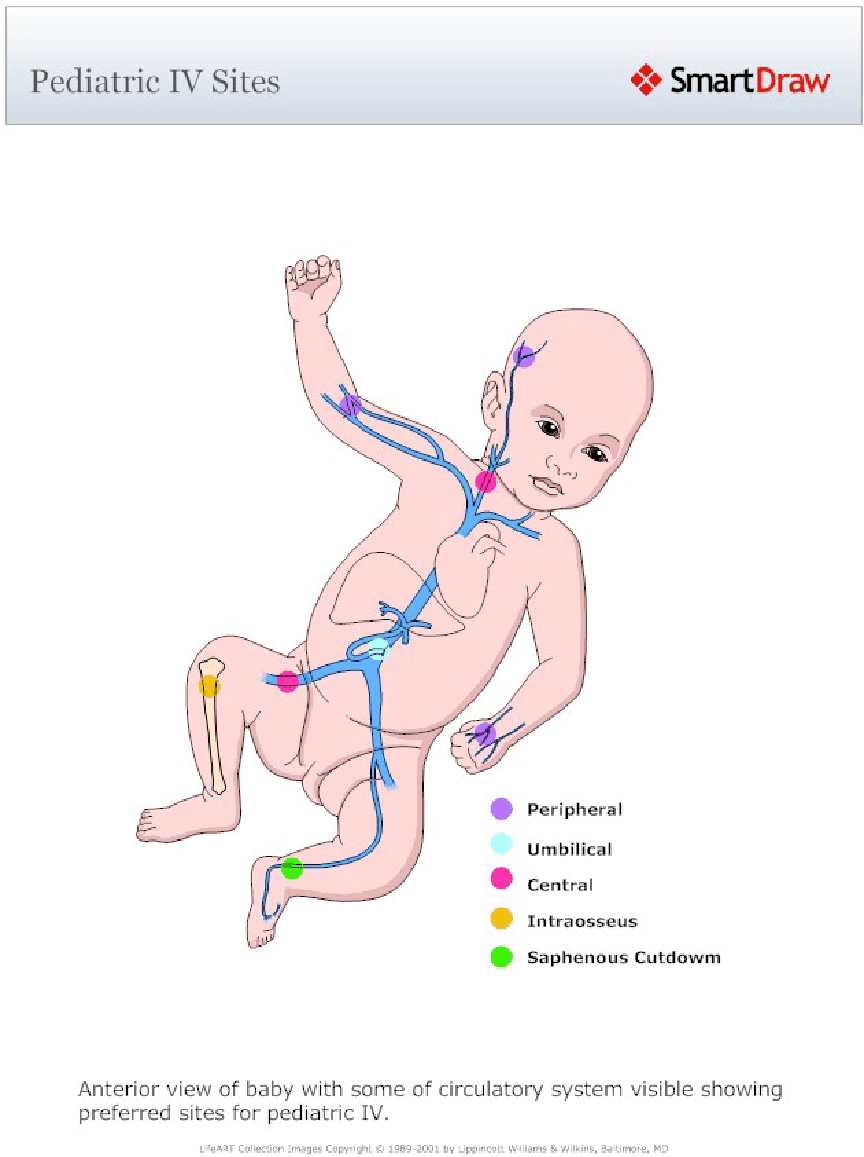
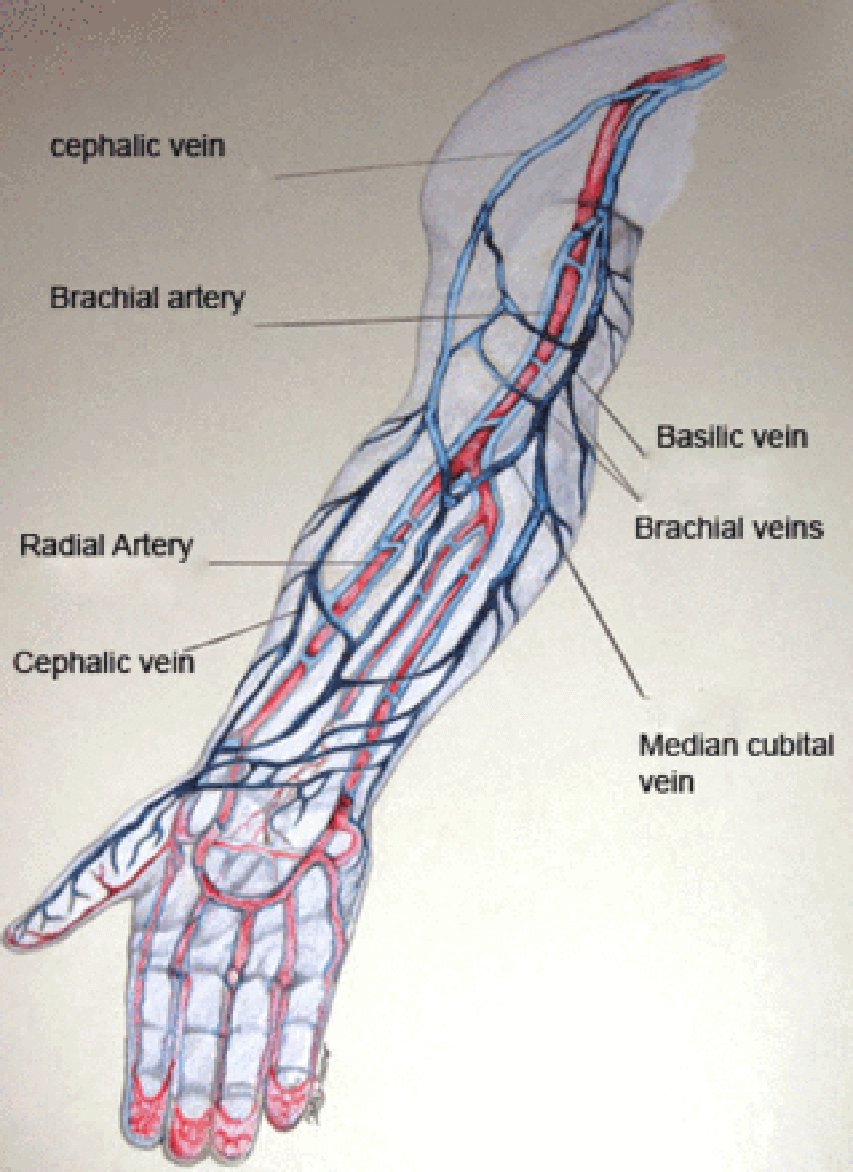
A peripheral venous access:

  • Is placed into a peripheral vein in order to administer medication or fluids.

  • Cephalic, basilic, median, humeral and femoral vein.


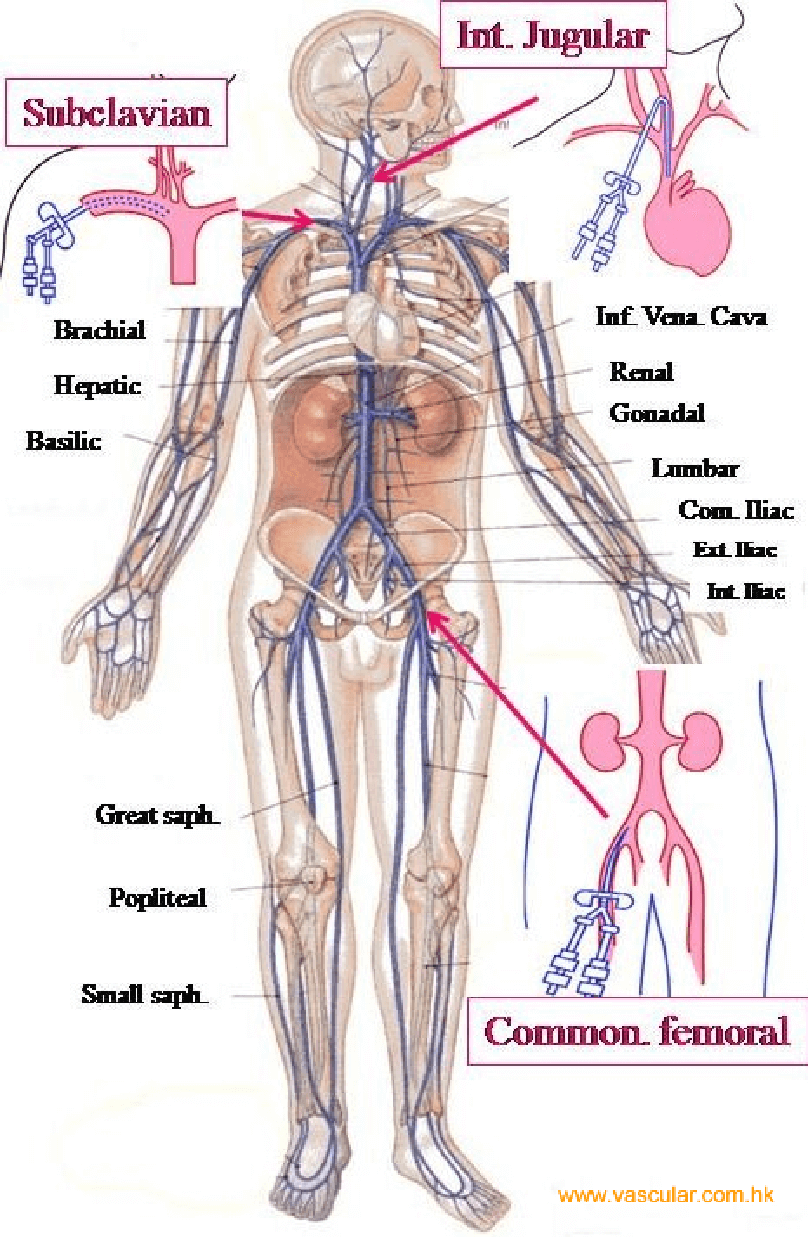
Central venous access:

  • Inserted in a central vein

  • Usually internal jugular vein of the neck or the subclavian vein of the chest.
  1. Common Complications of Intravenous Fluid Infusion Phlebitis/Thrombophlebitis:

  • Occur more frequently.

  • Phlebitis is inflammation of the vein.

  • Thrombophlebitis is inflammation associated with a thrombus.

  1. Infiltration:

  • Infusion of fluid and/or medication outside the intravascular space, into the surrounding soft tissue.

  • Swelling of the soft tissue surrounding the IV, the skin feels cool, firm and pale.

  1. Extravasation

  • The leaking of solution or vesicant drugs(antineoplastics) into surrounding tissue.

  • Cause severe local tissue damage.

  • Result in:

  1. Delayed healing

  2. Infection

  3. Tissue necrosis

  4. Deformity

  5. Loss of function

  6. Amputation.

Nursing Test Bank

Quiz #1: RN Exams Pharmacology Exams Quiz #2: RN Exams Medical-Surgical Exams Quiz #3: RN Exams Fundamentals Exams Quiz #4: RN Exams Maternal-Newborn Exams Quiz #5: RN Exams Anatomy and Physiology Exams Quiz #6: RN Exams Obstetrics and Pediatrics Exams Quiz #7: RN Exams Fluid and Electrolytes Exams Quiz #8: RN Exams Community Health Exams Quiz #9: RN Exams Promoting Health across the lifespan Exams Quiz #10: RN Exams Multidimensional care Exams

Naxlex Comprehensive Predictor Exams

Quiz #1: Naxlex RN Comprehensive online practice 2019 B with NGN Quiz #2: Naxlex RN Comprehensive Predictor 2023 Quiz #3: Naxlex RN Comprehensive Predictor 2023 Exit Exam A Quiz #4: Naxlex HESI Exit LPN Exam Quiz #5: Naxlex PN Comprehensive Predictor PN 2020 Quiz #6: Naxlex VATI PN Comprehensive Predictor 2020 Quiz #8: Naxlex PN Comprehensive Predictor 2023 - Exam 1 Quiz #10: Naxlex HESI PN Exit exam Quiz #11: Naxlex HESI PN EXIT Exam 2

Questions on Techniques of Peripheral and Central Vascular Access

Correct Answer is C

Explanation

<p>Thrombophlebitis. This is when a blood clot forms in the vein, causing inflammation and obstruction. This can cause pain, swelling, redness, warmth, and a palpable cord along the vein. However, this is more likely to occur in larger veins such as the femoral or saphenous veins, not in the cephalic vein.</p>

Correct Answer is ["B","D","E"]

Explanation

<p>Correct. Changing the dressing and tubing according to facility protocol is another important action for the nurse to take to maintain the patency and integrity of the CVAD and prevent complications. The dressing should be changed every 5 to 7 days or more frequently if it becomes loose, wet, or soiled. The tubing should be changed every 72 to 96 hours or per manufacturer&#39;s recommendations.</p>

Correct Answer is C

Explanation

<p>This is incorrect because difficulty moving the arm is more likely to indicate nerve damage or compartment syndrome, which are serious complications of IV therapy, rather than infiltration.</p>

<p>Hypotension and tachycardia are not specific signs of extravasation, but rather of shock or hemorrhage. The nurse should monitor the client&#39;s vital signs and report any abnormal findings to the primary health care provider.</p>

<p>Hypertension is not a risk factor for thrombophlebitis, although it can increase the risk of other cardiovascular problems, such as stroke and heart failure. Hypertension can increase the pressure and stress on the arterial walls, but this does not affect the venous system where thrombophlebitis
Try Naxlex NCLEX-RN
(14 Day Free-Trial)

Search Here

Related Topics

  • Effects of Immobility on Body Systems - Fluid and Electrolytes
  • Assessment and Prevention of Immobility Complications - Fluid and Electrolytes
  • Positioning Techniques - Fluid and Electrolytes
  • Mobilization and Safe Transfer Techniques - Fluid and Electrolytes
  • Collaborative Care - Fluid and Electrolytes
  • Critical Thinking - Fluid and Electrolytes

More on Nursing

  • Mobility, Immobility and Positioning
  • Critical Thinking and Nursing Process
  • Oxygen Therapy and Respiratory Care (Oxygenation and Perfusion)
  • Care of Patients with Chronic Illnesses
  • Patient Assessment and Documentation
  • End-of-life Care and Palliative Care
  • Vital Signs Measurement
  • Safety Fall
  • Skin integrity and Basic wound care and dressing changes
  • Nursing Ethics and Professionalism

Free Nursing Study Materials

Access to all study guides and practice questions for nursing for free.

  • Free Nursing Study Trials
  • Free Nursing Video tutorials
  • Free Nursing Practice Tests
  • Free Exam and Study Modes
  • Free Nursing Revision Quizlets
Join Us Today
naxlex-logo-footer

Designed to assess a student's preparedness for entering the health science fields.

Email Address: [email protected]

Phone No: +18175082244

Company

  • Contact us
  • How it Works
  • Blog

Resources

  • Privacy Policy
  • Terms of use
  • Help Center

© 2025 Naxlex.com