
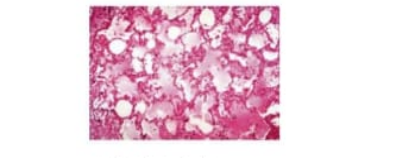
A 70-year-old woman with progressive dyspnea dies in her sleep. The lungs are examined at autopsy (shown). What was the most likely cause of this patient's lung pathology?
Bacterial endocarditis
Bronchial asthma
Congestive heart failure
Myocardial infarction
Pulmonary thromboembolism
The Correct Answer is C
A. Bacterial endocarditis: Bacterial endocarditis causes vegetations on heart valves, fever, and potential embolic events. It does not typically lead to chronic pulmonary congestion with hemosiderin-laden macrophages in alveoli, making it an unlikely cause of this lung pathology.
B. Bronchial asthma: Asthma is characterized by reversible airway obstruction, eosinophilic inflammation, and bronchospasm. It does not produce hemosiderin-laden macrophages or chronic pulmonary congestion associated with heart failure.
C. Congestive heart failure: In left-sided heart failure, elevated pulmonary venous pressure leads to chronic passive congestion. Red blood cells leak into alveoli and are phagocytosed by macrophages, forming hemosiderin-laden “heart failure cells.” The presence of these cells indicates chronic pulmonary congestion due to congestive heart failure.
D. Myocardial infarction: Myocardial infarction can lead to acute left ventricular dysfunction, but the presence of chronic hemosiderin-laden macrophages suggests a long-standing process rather than an acute event. While MI can precipitate heart failure, the autopsy finding reflects chronic congestion.
E. Pulmonary thromboembolism: Pulmonary embolism causes sudden obstruction of pulmonary arteries, leading to acute dyspnea, hypoxemia, or infarction. It does not typically result in chronic hemosiderin deposition in alveolar macrophages.
Nursing Test Bank
Naxlex Comprehensive Predictor Exams
Related Questions
Correct Answer is E
Explanation
A. Alcoholism:Chronic alcoholism can lead to dilated cardiomyopathy due to direct toxic effects on the myocardium, resulting in ventricular dilation rather than concentric hypertrophy. It does not typically produce the thickened, muscular left ventricular wall seen here.
B. Atherosclerosis:Atherosclerosis may cause ischemic heart disease and myocardial infarction, but it does not directly cause concentric left ventricular hypertrophy. It primarily affects the coronary arteries rather than creating a pressure overload stimulus.
C. Cigarette smoking:Smoking is a risk factor for atherosclerosis, coronary artery disease, and pulmonary hypertension, but it is not a direct cause of chronic pressure overload leading to massive concentric left ventricular hypertrophy.
D. Rheumatic fever:Rheumatic fever can lead to valvular heart disease, often causing volume overload from regurgitation, which typically produces eccentric rather than concentric hypertrophy.
E. Systemic hypertension:Chronic systemic hypertension increases afterload on the left ventricle, forcing it to generate higher pressures to overcome elevated arterial resistance. This persistent pressure overload leads to concentric left ventricular hypertrophy as an adaptive response, thickening the ventricular wall while preserving chamber size.
Correct Answer is B
Explanation
A. Diffuse alveolar damage:Diffuse alveolar damage (DAD) presents with widespread interstitial involvement, alveolar edema, and hyaline membrane formation, typically causing diffuse infiltrates rather than discrete “coin lesions.” It does not manifest as multiple nodules on imaging.
B. Metastatic cancer:Multiple “coin lesions” on chest x-ray are characteristic of hematogenous spread of metastatic tumors to the lungs. CT-guided biopsy would likely reveal malignant cells consistent with secondary pulmonary involvement, making metastatic cancer the most probable diagnosis in a patient with multiple discrete nodules.
C. Nodular silicosis:Nodular silicosis presents with upper lobe nodules and may calcify, but it usually occurs in individuals with long-term occupational silica exposure and produces a more diffuse nodular pattern rather than well-circumscribed coin lesions.
D. Primary lung cancer:Primary lung cancer usually presents as a single mass or nodule rather than multiple discrete coin-shaped lesions. While it can metastasize, the primary presentation of multiple coin lesions is more consistent with secondary metastases.
E. Pulmonary abscess:Pulmonary abscesses are localized collections of pus that usually appear as cavitary lesions, often with air-fluid levels, rather than multiple well-circumscribed coin lesions. They are typically unilateral and associated with infection, fever, and purulent sputum.
Whether you are a student looking to ace your exams or a practicing nurse seeking to enhance your expertise , our nursing education contents will empower you with the confidence and competence to make a difference in the lives of patients and become a respected leader in the healthcare field.
Visit Naxlex, invest in your future and unlock endless possibilities with our unparalleled nursing education contents today