
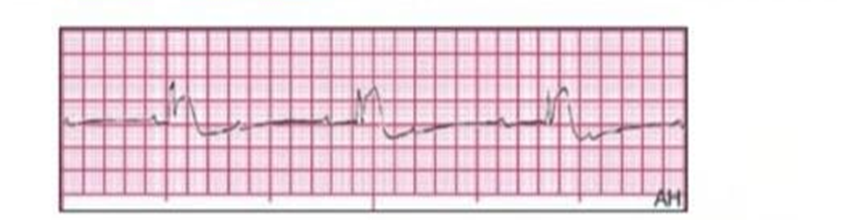
A client admitted to the telemetry unit with a diagnosis of syncopal episodes has a sitting blood pressure of 80/50 mm Hg, a regular apical pulse, and a cardiac rhythm as shown on the monitor. The nurse should prepare the client for which procedure?
Transcutaneous pacing.
Mechanical ventilation.
Chest tube insertion.
Synchronized cardioversion.
The Correct Answer is A
Rationale:
A. Transcutaneous pacing: The ECG rhythm demonstrates a third-degree (complete) heart block. This results in severe bradycardia and hypotension (80/50 mm Hg), placing the client at risk for syncope and cardiac arrest. Transcutaneous pacing is the immediate intervention to maintain cardiac output until a permanent pacemaker can be placed.
B. Mechanical ventilation: Although hypotension and bradycardia can lead to hypoxia, the client’s issue is primarily electrical conduction failure, not respiratory compromise. Ventilatory support would not correct the underlying cause of hemodynamic instability.
C. Chest tube insertion: Chest tube insertion is indicated for pneumothorax or hemothorax, not cardiac conduction abnormalities. There is no evidence of respiratory distress or pleural injury requiring this intervention.
D. Synchronized cardioversion: Cardioversion is used for tachydysrhythmias such as atrial fibrillation or supraventricular tachycardia. It is contraindicated in complete heart block, where electrical pacing not shock is required to restore effective cardiac rhythm and perfusion
Nursing Test Bank
Naxlex Comprehensive Predictor Exams
Related Questions
Correct Answer is B
Explanation
Rationale:
A. Administer a benzodiazepine: Sedation may worsen respiratory drive and cause hypoventilation in a recently extubated client. Benzodiazepines should only be used if agitation persists after addressing environmental and safety concerns, and under provider direction.
B. Apply wrist restraints: The client’s confusion and attempt to climb out of bed pose a high risk for accidental self-injury or removal of oxygen equipment. Applying soft wrist restraints temporarily ensures safety while further assessing for causes of confusion and notifying the healthcare provider.
C. Notify the rapid response team: The client is hemodynamically stable with normal oxygen saturation and respiratory effort. Calling the rapid response team is unnecessary unless there is evidence of acute deterioration, such as respiratory distress or loss of consciousness.
D. Increase oxygen to 60%: The oxygen saturation of 98% indicates adequate oxygenation at the current FiO₂. Increasing oxygen unnecessarily could suppress respiratory drive and does not address the underlying cause of confusion or unsafe behavior.
Correct Answer is C
Explanation
Rationale:
A. Skeletal traction misalignment: While misalignment can cause discomfort and complications in spinal cord injury clients, it is not the most common or immediate trigger of autonomic dysreflexia. Assessment of alignment is secondary to more urgent causes of sympathetic overactivity.
B. Profuse forehead diaphoresis: Sweating is a symptom of autonomic dysreflexia but is a manifestation rather than a precipitating factor. Identifying the cause of the dysreflexia takes priority over treating symptoms alone.
C. An acutely distended bladder: Bladder distension is the most common precipitating factor for autonomic dysreflexia in clients with lesions at T6 or above. Immediate assessment and relief of urinary retention are critical to prevent severe hypertension, stroke, or other life-threatening complications.
D. A severe pounding headache: Headache is a classic symptom of autonomic dysreflexia, reflecting elevated blood pressure. While important to recognize, it indicates the presence of the condition rather than identifying the cause that must be addressed first.
Whether you are a student looking to ace your exams or a practicing nurse seeking to enhance your expertise , our nursing education contents will empower you with the confidence and competence to make a difference in the lives of patients and become a respected leader in the healthcare field.
Visit Naxlex, invest in your future and unlock endless possibilities with our unparalleled nursing education contents today