
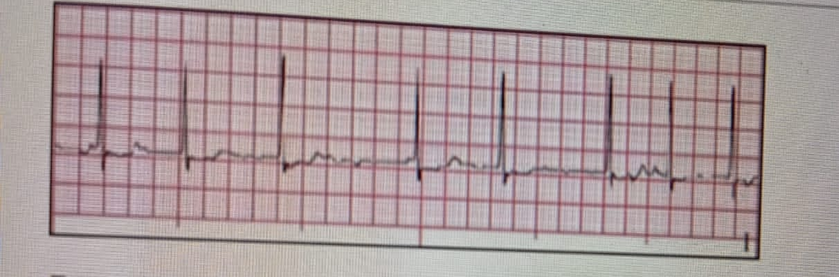
Based on this strip, which is the correct interpretation of this rhythm?
Accelerated junctional rhythm.
Premature atrial contractions (PAC).
Atrial fibrillation (A-fib).
Wenckebach, Mobitz Type I atrioventricular (AV) block.
The Correct Answer is D
A. Accelerated junctional rhythm: An accelerated junctional rhythm originates in the AV junction (40-100 bpm), typically has absent, inverted, or hidden P waves (before, during, or after QRS), and a regular rhythm. This strip has clear, upright P waves, an irregular rhythm, and a lengthening PR interval.
B. Premature atrial contractions (PAC): PACs are single ectopic beats that occur earlier than expected, originating in the atria. While they involve P waves, they don't show a pattern of progressively lengthening PR intervals or dropped beats in the characteristic Wenckebach pattern.
C. Atrial fibrillation (A-fib): Atrial fibrillation is characterized by irregularly irregular R-R intervals, chaotic atrial activity with no discernible P waves, and a variable ventricular rate. This strip clearly shows discernible P waves.
D. Wenckebach, Mobitz Type I atrioventricular (AV) block: This rhythm is defined by a progressive lengthening of the PR interval until a QRS complex is dropped. The cycle then repeats. This is what is observed in the ECG strip.
Nursing Test Bank
Naxlex Comprehensive Predictor Exams
Related Questions
Correct Answer is D
Explanation
A. PaO₂ 60 mm Hg: A PaO₂ of 60 mm Hg indicates moderate hypoxemia, which is concerning but not the most direct marker of respiratory depression. It reflects impaired oxygenation, but CO₂ retention is more closely associated with respiratory arrest risk.
B. pH 7.30: A pH of 7.30 shows mild acidemia, which may result from respiratory or metabolic causes. While this indicates some imbalance, it does not specifically point to the severity of respiratory depression as much as rising CO₂ levels do.
C. HCO₃ 26 mEq/L (26 mmol/L): This bicarbonate value is within the normal range and does not suggest acute metabolic compensation or decompensation. It offers limited insight into the acute respiratory depression caused by sedatives like midazolam and fentanyl.
D. PaCO₂ 80 mm Hg: This significantly elevated PaCO₂ indicates severe hypoventilation and respiratory depression. Such a high carbon dioxide level can suppress central respiratory drive, impair consciousness, and quickly progress to respiratory arrest if not promptly reversed.
Correct Answer is ["A","B","E"]
Explanation
- Agitation: Agitation may indicate hypoxia or reduced cerebral perfusion due to cardiac compromise. In a patient with chest pain and borderline hypoxia, it can be an early warning sign of clinical deterioration that requires follow-up.
- Chest pain described as pressure tightness unrelieved by rest: Unrelieved chest pain lasting longer than 20 minutes is strongly suggestive of myocardial infarction rather than stable angina. Immediate cardiac workup and intervention are needed to prevent myocardial damage.
- Pain rated 7/10: A moderate to severe pain rating in the chest warrants urgent evaluation, especially when consistent with cardiac characteristics like tightness and pressure. High pain intensity is often correlated with worsening ischemia.
Whether you are a student looking to ace your exams or a practicing nurse seeking to enhance your expertise , our nursing education contents will empower you with the confidence and competence to make a difference in the lives of patients and become a respected leader in the healthcare field.
Visit Naxlex, invest in your future and unlock endless possibilities with our unparalleled nursing education contents today