
A client at 35 weeks gestation with preeclampsia with severe features is receiving corticosteroids. What is the purpose of this medication?
Prevent seizures
Increase maternal BP
Enhance fetal lung maturity
Reduce contractions
The Correct Answer is C
Antenatal corticosteroids, such as betamethasone or dexamethasone, are administered to women at risk of preterm birth to stimulate surfactant synthesis. These steroids induce the maturation of type 2 pneumocytes within the fetal lungs. This pharmacological intervention significantly reduces the incidence of respiratory distress syndrome.
A. Prevent seizures: Magnesium sulfate is the agent of choice for seizure prophylaxis in preeclampsia. Corticosteroids have no anticonvulsant properties and do not alter the cerebral irritability caused by hypertension. They are strictly focused on fetal organ maturation.
B. Increase maternal BP: Corticosteroids can occasionally cause a transient increase in blood pressure or blood glucose, which is an undesired side effect in preeclampsia. The clinical goal is never to raise the arterial pressure further. Careful monitoring of maternal hemodynamics is required post-administration.
C. Enhance fetal lung maturity: The primary indication is to prepare the fetus for potential early delivery necessitated by severe preeclampsia. Steroids decrease the risk of intraventricular hemorrhage and necrotizing enterocolitis in the neonate. They provide a critical survival advantage for preterm infants.
D. Reduce contractions: Corticosteroids do not possess tocolytic properties and cannot halt the labor process. While they are often given alongside tocolytics, their role is purely developmental. They do not interact with myometrial receptors to inhibit uterine activity or contractions.
Nursing Test Bank
Naxlex Comprehensive Predictor Exams
Related Questions
Correct Answer is A
Explanation
Umbilical cord prolapse occurs when the cord descends through the cervix ahead of the fetal presenting part. This mechanical compression leads to immediate fetal hypoxia due to the interruption of umbilical vein and artery blood flow. It constitutes an obstetric emergency requiring rapid decompression and surgical delivery.
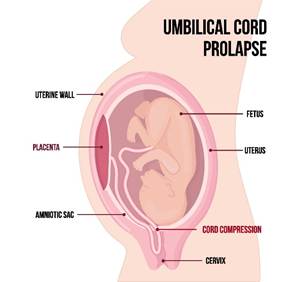
A. Elevate the presenting part: Manual upward pressure on the fetal head or breech relieves the mechanical compression on the prolapsed cord. This action preserves fetal oxygenation by maintaining patent umbilical vessels while preparing for an emergency cesarean section. It is the most critical immediate intervention to prevent fetal death.
B. Delay intervention: Any hesitation in a prolapse scenario leads to prolonged asphyxiation and irreversible neurological damage or intrauterine demise. The time between diagnosis and delivery must be minimized to ensure neonatal survival. Delaying treatment is a failure of standard clinical practice in emergency obstetrics.
C. Encourage pushing: Increasing maternal bearing-down efforts forces the fetus further into the pelvis, worsening the vascular occlusion of the cord. Pushing accelerates fetal distress and reduces the chances of a successful rescue. Efforts should focus on relieving pressure rather than advancing the second stage of labor.
D. Reposition to supine: The supine position allows gravity to further compress the cord against the pelvic brim and may cause aortocaval compression. Patients should instead be placed in a Trendelenburg or knee-chest position to help move the fetus away from the cervix. Supine positioning is detrimental in this clinical context.
Correct Answer is D
Explanation
Hepatitis B is a highly infectious DNA virus that causes hepatic inflammation and potential chronic cirrhosis. It replicates within hepatocytes and is shed in high concentrations into the circulatory system and serous secretions. Transmission occurs through percutaneous or mucosal exposure to infected biological materials.
A. Only sexual contact: While sexual intercourse is a major route of transmission, the virus is also spread through parenteral exposure, such as needle sharing or accidental sticks. It can also be transmitted perinatally from mother to child during birth. This choice is too restrictive to be correct.
B. Foodborne: Hepatitis B is not transmitted through the ingestion of contaminated food or water, which is the primary route for Hepatitis A. The virus does not survive the digestive process to cause systemic infection via the enteral route. It requires direct entry into the bloodstream or mucosa.
C. Airborne: There is no evidence that the virus is transmitted via respiratory droplets or aerosolized particles. Close casual contact, such as coughing or sneezing, does not pose a transmission risk for Hepatitis B. It is not an atmospheric or respiratory pathogen.
D. Blood and body fluids: The virus is primarily found in blood, semen, and vaginal secretions, making these the principal infectious vehicles. Contact with infected blood through broken skin or mucous membranes facilitates viral entry. This encompasses the broad spectrum of documented transmission modes.
Whether you are a student looking to ace your exams or a practicing nurse seeking to enhance your expertise , our nursing education contents will empower you with the confidence and competence to make a difference in the lives of patients and become a respected leader in the healthcare field.
Visit Naxlex, invest in your future and unlock endless possibilities with our unparalleled nursing education contents today