
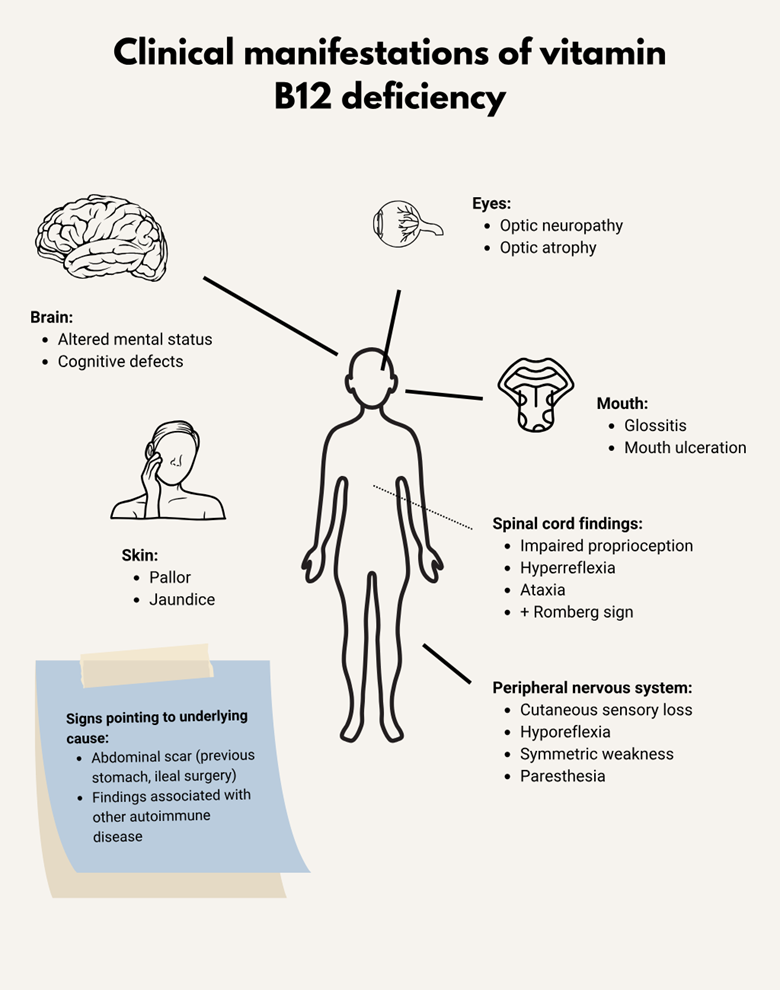
A client comes into the emergency room with complaints of an enlarged tongue. The tongue appears smooth and beefy red in color. The nurse also observes a 5-cm incision on the upper left quadrant of the abdomen. When questioned, the patient states, "I had a partial gastrostomy 2 years ago." Based on this information, the nurse attributes these symptoms to which of the following problems?
Vitamin A deficiency
Folic acid deficiency
Vitamin B12 deficiency
Vitamin C deficiency
The Correct Answer is C
A. Vitamin A Deficiency:
Symptoms: Enlarged tongue and smooth, beefy red appearance.
Relevance: Vitamin A deficiency is not typically associated with an enlarged tongue. It is more commonly linked to night blindness and skin issues.
B. Folic Acid Deficiency:
Symptoms: Enlarged tongue and smooth, beefy red appearance.
Relevance: Folic acid deficiency can lead to megaloblastic anemia and glossitis (inflammation of the tongue), which may present as an enlarged, smooth, and red tongue.
C. Vitamin B12 Deficiency:
Symptoms: Enlarged tongue and smooth, beefy red appearance.
Relevance: Vitamin B12 deficiency can cause pernicious anemia and glossitis, resulting in an enlarged, smooth, and red tongue.
D. Vitamin C Deficiency:
Symptoms: Not typically associated with an enlarged tongue.
Relevance: Vitamin C deficiency is more commonly associated with symptoms like scurvy, which includes bleeding gums, joint pain, and skin issues, but not specifically an enlarged tongue.
Nursing Test Bank
Naxlex Comprehensive Predictor Exams
Related Questions
Correct Answer is D
Explanation
A. Flushed skin: Flushed or warm skin is more characteristic of hyperthyroidism, where there is an excess of thyroid hormones.
B. Palpitations: Palpitations or a rapid heartbeat are more characteristic of hyperthyroidism, where there is an excess of thyroid hormones.
C. Bulging eyes: Bulging or protruding eyes, known as exophthalmos, is a characteristic sign of Graves' disease, which is a specific type of hyperthyroidism.
D. Fatigue: This is correct. Fatigue is a common symptom of hypothyroidism, reflecting the overall slowing down of the body's processes.
Correct Answer is D
Explanation
A. It is rapidly absorbed, has a fast onset of action:
Explanation: This statement is incorrect. Glargine (Lantus) actually has a slow onset of action and a prolonged duration of action. It is formulated to provide a steady level of insulin in the body over an extended period.
B. Administer the total daily dosage in two doses:
Explanation: This is not the recommended administration for glargine. It is typically administered once daily to provide basal insulin coverage over a 24-hour period.
C. Draw up the drug first, then add regular insulin:
Explanation: Mixing glargine with other insulins is not recommended. Glargine should be administered separately to maintain its extended duration of action. It should not be mixed with other insulins in the same syringe.
D. Do not mix with other insulins:
Explanation: This is the correct statement. Glargine should not be mixed with other insulins. It should be administered alone to maintain its "peakless" basal coverage. Mixing it with other insulins could alter its pharmacokinetics and compromise its effectiveness.
Whether you are a student looking to ace your exams or a practicing nurse seeking to enhance your expertise , our nursing education contents will empower you with the confidence and competence to make a difference in the lives of patients and become a respected leader in the healthcare field.
Visit Naxlex, invest in your future and unlock endless possibilities with our unparalleled nursing education contents today