
A client is admitted following a motor vehicle collision.
When assessing the client's level of consciousness, the nurse notes that the client no longer responds to commands.
The nurse initiates a painful stimulus and the client responds by pulling the arms inward with elbows and wrists flexed and extending the legs with the toes pointed downward.
Which action should the nurse implement?
Report the finding to the healthcare provider.
Document the purposeful response to pain.
Initiate seizure precautions immediately.
Administer a prescribed PRN analgesic.
The Correct Answer is A
The correct answer is **a. Report the finding to the healthcare provider.**
Choice A rationale:
The nurse should report the finding of the client's response to a painful stimulus to the healthcare provider. This response, known as a decorticate posturing, is an abnormal motor response that indicates a severe brain injury or dysfunction. It is a sign of impaired consciousness and requires immediate medical attention and intervention.
Choice B rationale:
While documenting the client's response to pain is important, the primary action the nurse should take is to report the finding to the healthcare provider. Decorticate posturing is a neurological emergency that requires prompt medical evaluation and treatment.
Choice C rationale:
Initiating seizure precautions is not the appropriate action in this case. Decorticate posturing is not a seizure, but rather an abnormal motor response indicating a severe brain injury or dysfunction. Seizure precautions would not be the appropriate intervention.
Choice D rationale:
Administering a prescribed PRN analgesic is not the appropriate action in this case. Decorticate posturing is a neurological emergency that requires immediate medical attention, not just pain management. Administering an analgesic would not address the underlying neurological issue.
Nursing Test Bank
Naxlex Comprehensive Predictor Exams
Related Questions
Correct Answer is ["1"]
Explanation
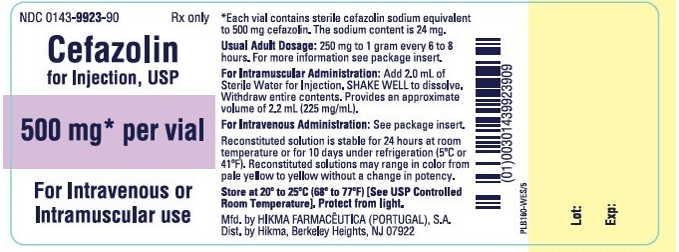
This is the correct answer because the concentration of cefazolin after reconstitution is 1 gram/2.5 mL, which is equivalent to 400 mg/1 mL. Therefore, to administer 400 mg of cefazolin, the PN should draw up 1 mL of the reconstituted solution. This can be calculated using the formula:
Desired dose / Available dose = Volume to administer
400 mg / 1000 mg = x mL / 2.5 mL
x = (400 x 2.5) / 1000
x = 1 mL
Correct Answer is D
Explanation
The correct answer is Choice D.
Choice A rationale: Asking about expected visitors may help identify potential suspects, but it delays immediate containment. In suspected infant abduction, time-sensitive security actions take precedence over information gathering.
Choice B rationale: Matching ID bands verifies infant identity and prevents misidentification, but it is a secondary step. It does not prevent unauthorized exit or secure the facility during a potential abduction.
Choice C rationale: Checking the nursery may locate the infant, but without lockdown, the baby could be removed from the unit. Search efforts must follow immediate security containment to prevent escape.
Choice D rationale: Lockdown procedures secure all exits, preventing unauthorized removal of the infant. It is the first and most critical action in suspected abduction, aligning with hospital emergency protocols
Whether you are a student looking to ace your exams or a practicing nurse seeking to enhance your expertise , our nursing education contents will empower you with the confidence and competence to make a difference in the lives of patients and become a respected leader in the healthcare field.
Visit Naxlex, invest in your future and unlock endless possibilities with our unparalleled nursing education contents today