
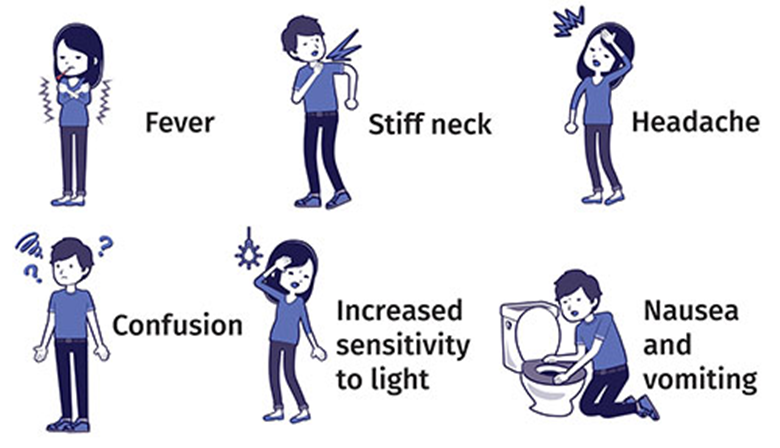
A client presents with the onset of a severe headache, fever, nuchal rigidity, and a petechial rash on arms and legs. The nurse recognizes the client is exhibiting symptoms of which condition?
Rocky Mountain spotted fever.
Intracerebral hemorrhage.
Cerebrovascular accident (CVA).
Meningococcal meningitis.
The Correct Answer is D
Choice A reason: Rocky Mountain spotted fever is not the most likely condition for the client who has a severe headache, fever, nuchal rigidity, and a petechial rash on arms and legs. Rocky Mountain spotted fever is a bacterial infection transmitted by ticks that causes a distinctive rash that usually begins on the wrists and ankles and spreads to the rest of the body. The rash is not limited to the arms and legs, and the client may also have other symptoms such as nausea, vomiting, abdominal pain, and muscle aches.
Choice B reason: Intracerebral hemorrhage is not the most likely condition for the client who has a severe headache, fever, nuchal rigidity, and a petechial rash on arms and legs. Intracerebral hemorrhage is a type of stroke that occurs when a blood vessel bursts inside the brain, causing bleeding and swelling. The rash is not a typical sign of intracerebral hemorrhage, and the client may also have other symptoms such as weakness, numbness, vision loss, confusion, and loss of consciousness.
Choice C reason: Cerebrovascular accident (CVA) is not the most likely condition for the client who has a severe headache, fever, nuchal rigidity, and a petechial rash on arms and legs. CVA is another term for stroke, which occurs when the blood supply to a part of the brain is interrupted, causing brain tissue damage. The rash is not a common sign of CVA, and the client may also have other symptoms such as facial drooping, slurred speech, difficulty swallowing, paralysis, and cognitive impairment.
Choice D reason: Meningococcal meningitis is the most likely condition for the client who has a severe headache, fever, nuchal rigidity, and a petechial rash on arms and legs. Meningococcal meningitis is a bacterial infection that causes inflammation of the membranes that cover the brain and spinal cord. The rash is a characteristic sign of meningococcal meningitis, which can appear as small red or purple spots that do not fade when pressed. The client may also have other symptoms such as nausea, vomiting, sensitivity to light, confusion, and seizures.
Nursing Test Bank
Naxlex Comprehensive Predictor Exams
Related Questions
Correct Answer is B
Explanation
a) The client's age: The client is 70 years old, which puts her at a higher risk of having a stroke or other cardiovascular problems. Stroke is a medical emergency that requires prompt treatment to prevent brain damage and disability.
b) The client's facial droop: The client has a noticeable facial droop, which is a sign of facial nerve weakness or paralysis. This can be caused by a stroke, Bell's palsy, or other neurological conditions. Facial droop can affect the client's ability to speak, eat, and express emotions.
c) The client's garbled speech: The client has garbled speech, which means she has difficulty producing or understanding words. This can be caused by a stroke, brain injury, or other disorders that affect the language areas of the brain. Garbled speech can impair the client's communication and cognition.
d) The client's alcohol consumption: The client had a few drinks at a seafood restaurant, which may have interacted with her medications or medical conditions. Alcohol can increase the risk of bleeding, lower blood pressure, and worsen dehydration. Alcohol can also impair the client's judgment and coordination.
e) The client's seafood intake: The client ate seafood at a restaurant, which may have triggered an allergic reaction or food poisoning. Seafood allergies can cause symptoms such as hives, swelling, breathing difficulties, and anaphylaxis. Food poisoning can cause symptoms such as nausea, vomiting, diarrhea, and dehydration.
Correct Answer is D
Explanation
Choice A reason: This is incorrect because consuming a high protein diet is not a recommended strategy to reduce risk factors for BPH. In fact, some studies have suggested that a high protein intake may increase the risk of BPH by stimulating the production of insulin-like growth factor-1 (IGF-1), which may promote prostate growth.
Choice B reason: This is incorrect because obtaining a prostate-specific antigen blood level test is not a preventive measure for BPH, but rather a diagnostic tool to detect prostate cancer or monitor its treatment. Prostate-specific antigen (PSA) is a protein produced by the prostate gland that can be elevated in both BPH and prostate cancer. However, PSA levels alone cannot distinguish between these two conditions and need to be interpreted along with other factors, such as age, race, family history, and digital rectal examination.
Choice C reason: This is incorrect because taking vitamin supplements is not a proven method to reduce risk factors for BPH. While some vitamins, such as vitamin D and vitamin E, may have some beneficial effects on prostate health, there is not enough evidence to support their use as preventive agents for BPH. Moreover, some vitamins, such as vitamin A and vitamin B6, may have adverse effects on prostate health and increase the risk of BPH or prostate cancer.
Choice D reason: This is correct because increasing physical activity is a helpful way to reduce risk factors for BPH. Physical activity can help maintain a healthy weight, lower blood pressure, improve blood circulation, reduce inflammation, and regulate hormone levels. All of these factors can contribute to preventing or delaying the development of BPH.
Whether you are a student looking to ace your exams or a practicing nurse seeking to enhance your expertise , our nursing education contents will empower you with the confidence and competence to make a difference in the lives of patients and become a respected leader in the healthcare field.
Visit Naxlex, invest in your future and unlock endless possibilities with our unparalleled nursing education contents today