
A client who has bipolar disorder approaches the nurse and reveals fresh, self-inflicted, superficial cuts going up and down his right arm. Which of the following actions should the nurse take first?
Implement the client's behavioral modification plan
Document the size and location of the cuts
Administer a tetanus antitoxin.
inspect the cuts for debris
The Correct Answer is D
A. Implement the client's behavioral modification plan:
While addressing the client's behavioral modification plan is important, it may not be the immediate priority when the client has self-inflicted cuts. Ensuring physical safety and assessing the extent of the injury take precedence.
B. Document the size and location of the cuts:
Documentation is important, but it is not the first action to be taken. The immediate concern is to assess the physical condition of the cuts and address any potential risks.
C. Administer a tetanus antitoxin:
Administering a tetanus antitoxin may be necessary depending on the nature and depth of the cuts. However, it is not the first action. First, a thorough inspection of the cuts is needed to determine the appropriate course of action.
D. Inspect the cuts for debris:
This is the most appropriate first action. Inspecting the cuts for debris helps determine the severity of the wounds and whether there is a risk of infection. It also allows the nurse to assess the need for further medical intervention.
Nursing Test Bank
Naxlex Comprehensive Predictor Exams
Related Questions
Correct Answer is A
No explanation
Correct Answer is C
Explanation
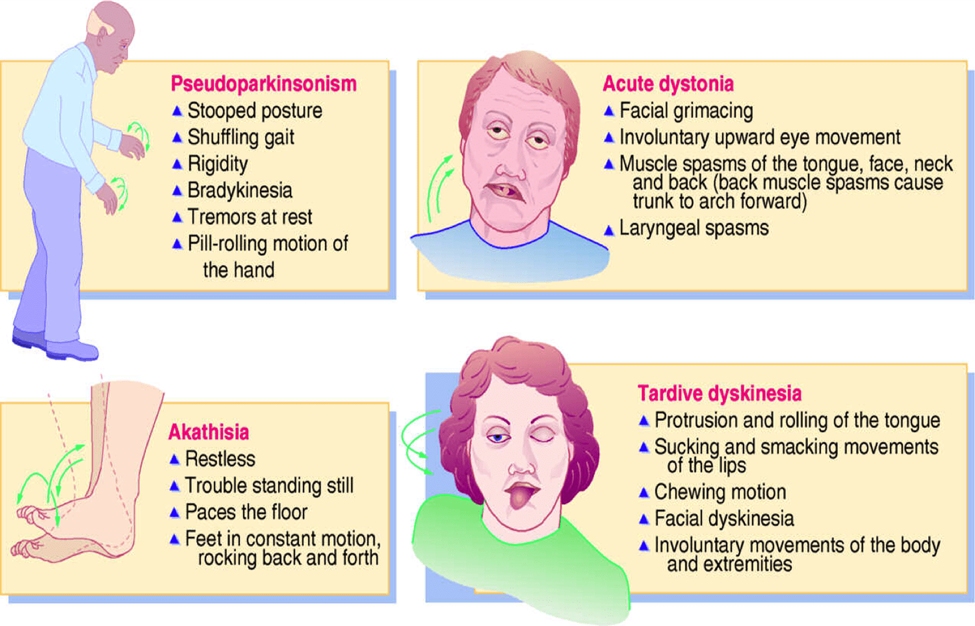
A. Neuroleptic malignant syndrome, treated by discontinuing antipsychotic medications: The symptoms described (uncontrollable tongue movements, stiff neck, difficulty swallowing) are more indicative of tardive dyskinesia than neuroleptic malignant syndrome. Neuroleptic malignant syndrome is characterized by hyperthermia, autonomic dysregulation, altered mental status, and generalized muscle rigidity. Treatment involves discontinuing antipsychotic medications and supportive care.
B. Agranulocytosis treated by administration of clozapine (Clozaril): Agranulocytosis is a rare but serious side effect of clozapine, not a treatment for the symptoms described. The symptoms presented are more consistent with tardive dyskinesia.
C. Tardive dyskinesia treated by discontinuing antipsychotic medication: This is the correct answer. Tardive dyskinesia is a movement disorder characterized by involuntary and abnormal movements, including tongue protrusion and facial grimacing. It can result from long-term use of antipsychotic medications, and discontinuing or reducing the dose of the antipsychotic is a primary intervention.
D. Headache treated by administration of Hydrochlorothiazide: Hydrochlorothiazide is a diuretic used to treat conditions like high blood pressure and edema, not headache or the symptoms described, which are more indicative of tardive dyskinesia.
Whether you are a student looking to ace your exams or a practicing nurse seeking to enhance your expertise , our nursing education contents will empower you with the confidence and competence to make a difference in the lives of patients and become a respected leader in the healthcare field.
Visit Naxlex, invest in your future and unlock endless possibilities with our unparalleled nursing education contents today