
A client with systemic lupus erythematosus (SLE) is receiving nonsteroidal anti- inflammatory drug (NSAID) therapy. Which side effect of NSAID therapy should the nurse immediately report to the health care provider?
Melena
Decreased vision
Pancytopenia
Hyperglycemia
The Correct Answer is C
Pancytopenia refers to a decrease in all three major blood cell types: red blood cells (anemia), white blood cells (leukopenia), and platelets (thrombocytopenia). It is a potentially serious side effect that can lead to increased susceptibility to infections, anemia-related symptoms (fatigue, weakness), and an increased risk of bleeding. Prompt reporting is necessary for further
evaluation and appropriate management.
While melena (dark, tarry stools) is a concerning side effect, it typically indicates gastrointestinal bleeding, which should also be reported promptly but may not require immediate action unless the bleeding is severe or accompanied by other symptoms.
Decreased vision can be a side effect of certain medications, including NSAIDs, but it does not usually require immediate reporting unless it is severe or rapidly progressive. Hyperglycemia (high blood sugar) can occur with NSAID therapy, especially in individuals with preexisting diabetes or impaired glucose tolerance. While it should be monitored and managed appropriately, it does not typically require immediate reporting unless it is extremely high or associated with other concerning symptoms.
Nursing Test Bank
Naxlex Comprehensive Predictor Exams
Related Questions
Correct Answer is B
Explanation
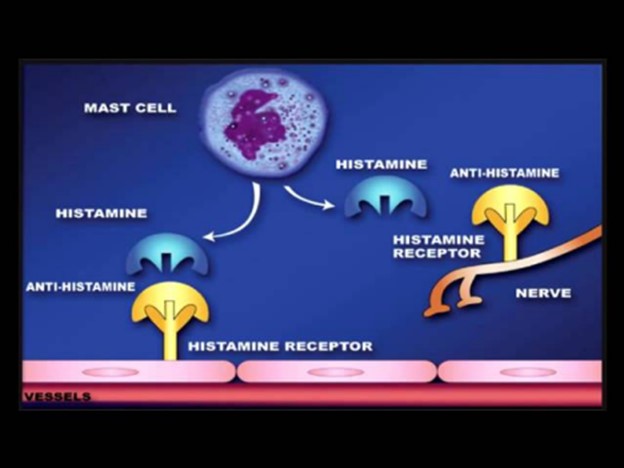
Antihistamines primarily work by blocking the H1 receptors, which are the receptors responsible for mediating the actions of histamine in the body. By blocking these receptors, antihistamines prevent or reduce the effects of histamine, such as itching, sneezing, runny nose, and watery eyes. This is the main mechanism by which antihistamines provide their therapeutic effects. "Antihistamines block release of histamine from mast cells and basophils." This statement is incorrect. Antihistamines do not block the release of histamine; instead, they block the histamine receptors to prevent the effects of histamine.
"H1 antagonists can bind to H1 receptors, H2 receptors, and muscarinic receptors." This statement is incorrect. H1 antagonists, or H1 receptor blockers, specifically bind to H1 receptors and do not have significant affinity for H2 receptors or muscarinic receptors. "First-generation antihistamines are more selective than second-generation antihistamines." This statement is incorrect. First-generation antihistamines are generally less selective and can have more sedating and anticholinergic effects compared to second-generation antihistamines, which are designed to be more selective for H1 receptors and have reduced sedative properties.
Correct Answer is D
Explanation
To calculate the milliliters per hour (mL/hr) for the IV infusion, you divide the total volume (in milliliters) by the total time (in hours).
In this case, the total volume is 1 liter, which is equal to 1000 milliliters, and the total time is 6 hours.
So, you divide 1000 mL by 6 hours:
1000 mL / 6 hours = 166.67 mL/hr
Rounding off, the nurse will program the IV infusion device to infuse at approximately 167 mL/hr.
Whether you are a student looking to ace your exams or a practicing nurse seeking to enhance your expertise , our nursing education contents will empower you with the confidence and competence to make a difference in the lives of patients and become a respected leader in the healthcare field.
Visit Naxlex, invest in your future and unlock endless possibilities with our unparalleled nursing education contents today