
A nurse in an urgent care center is assessing a client who reports sudden-onset palpitations, fatigue, and dizziness. The nurse assesses a rapid, irregular heart rate with a significant pulse deficit and no definitive P-waves. Which dysrhythmia does the nurse expect to find on the cardiac monitor?
A
B
The Correct Answer is B
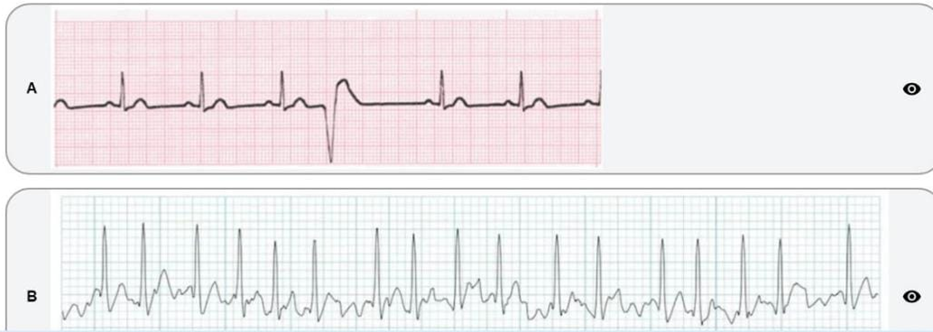
A. The rhythm strip shown in A exhibits a regular underlying rhythm interrupted by a Premature Ventricular Contraction (PVC), which is a wide, bizarre QRS complex occurring earlier than expected. While PVCs can cause palpitations, they do not typically present as a sustained "rapid, irregular" heart rate with a total absence of P-waves across the entire strip.
B. The rhythm strip in B represents Atrial Fibrillation (AFib), characterized by a "normally irregular" ventricular response and the replacement of distinct P-waves with chaotic fibrillatory waves. In AFib, the atria quiver rather than contract, leading to a significant pulse deficit because not every electrical impulse results in a ventricular contraction strong enough to produce a peripheral pulse.
Nursing Test Bank
Naxlex Comprehensive Predictor Exams
Related Questions
Correct Answer is D
Explanation
A. Prepare for transcutaneous pacing: Transcutaneous pacing is used to treat symptomatic bradycardia or heart block, which are not primary concerns in hypertrophic cardiomyopathy. HCM typically involves obstruction of ventricular outflow and risk for arrhythmias, but pacing is not a first-line intervention.
B. Instructing the client to start an aerobic exercise plan: Aerobic exercise may increase the risk of sudden cardiac death in clients with HCM due to potential arrhythmias and increased myocardial oxygen demand. Exercise recommendations are usually individualized and often limited rather than broadly prescribed.
C. Instruct the client to perform a Valsalva maneuver: The Valsalva maneuver transiently decreases venous return and can exacerbate left ventricular outflow obstruction in HCM, potentially worsening symptoms. It is generally contraindicated rather than recommended.
D. Preparing for a cardiac catheterization: Cardiac catheterization may be indicated to assess the severity of left ventricular outflow obstruction, measure intracardiac pressures, and evaluate coronary anatomy in HCM. It is a diagnostic intervention that guides treatment planning, making it an anticipated order for newly admitted clients.
Correct Answer is A
Explanation
A. Tell me more about your concerns about the surgery: This response uses therapeutic communication by encouraging the client to express feelings and fears. It is open-ended, acknowledges the client’s anxiety, and allows the nurse to assess specific concerns.
B. Would you like to speak with a chaplain prior to surgery: While spiritual support may be helpful, this option changes the focus away from exploring the client’s expressed fear. The nurse should first assess the client’s concerns before offering additional resources.
C. What support systems do you have to assist you: This question may be appropriate later, but it does not directly address the client’s immediate fear of dying. The priority is to explore the expressed anxiety.
D. This is a routine surgery and the risk of death is very low: Providing false reassurance dismisses the client’s feelings and may undermine trust. Emergent aortic aneurysm repair is a high-risk surgery, so minimizing the risk is inappropriate and nontherapeutic.
Whether you are a student looking to ace your exams or a practicing nurse seeking to enhance your expertise , our nursing education contents will empower you with the confidence and competence to make a difference in the lives of patients and become a respected leader in the healthcare field.
Visit Naxlex, invest in your future and unlock endless possibilities with our unparalleled nursing education contents today