
A nurse is assessing a client who has prolonged and obstructed labor.
Which of the following findings is a sign of obstructed labor?
Cervical dilation of 4 cm after 8 hours of active labor
Fetal heart rate of 140 beats per minute
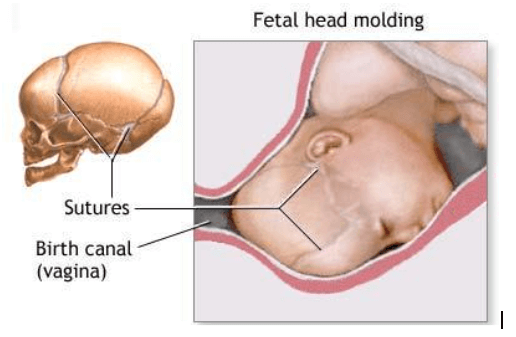
Moulding of the fetal skull bones
Uterine contractions of 3 in 10 minutes.
The Correct Answer is C
is a sign of obstructed labour, which occurs when the baby cannot pass through the birth canal due to a mismatch between the size or position of the baby and the pelvis.
Moulding is the process of overlapping of the skull bones to reduce the diameter of the head and facilitate its passage. However, excessive moulding can indicate that the head is too large or the pelvis is too small for a normal delivery.
Nursing Test Bank
Naxlex Comprehensive Predictor Exams
Related Questions
Correct Answer is ["A","C","D"]
Explanation
1. The cervix must be fully dilated and effaced.
2. The fetal head must be engaged and well-flexed.
3. The maternal pelvis must be adequate for vaginal delivery.
These are the criteria that must be met before performing a vacuum extraction for a client who has prolonged and obstructed labor.
Correct Answer is A
Explanation
To record the maternal and fetal data during labor on a single sheet of paper.This is the main purpose of using a partograph, which is a tool for monitoring maternal and fetal wellbeing during the active phase of labor, and a decision-making aid when abnormalities are detected.
Whether you are a student looking to ace your exams or a practicing nurse seeking to enhance your expertise , our nursing education contents will empower you with the confidence and competence to make a difference in the lives of patients and become a respected leader in the healthcare field.
Visit Naxlex, invest in your future and unlock endless possibilities with our unparalleled nursing education contents today