
A nurse is assessing a school-age child who has heart failure and is taking furosemide.
Which of the following findings should the nurse identify as an indication that the medication is effective?
decrease in peripheral edema.
decrease in cardiac output.
increase in venous pressure.
increase in potassium levels.
The Correct Answer is A
A decrease in peripheral edema is an indication that the furosemide medication is effective.
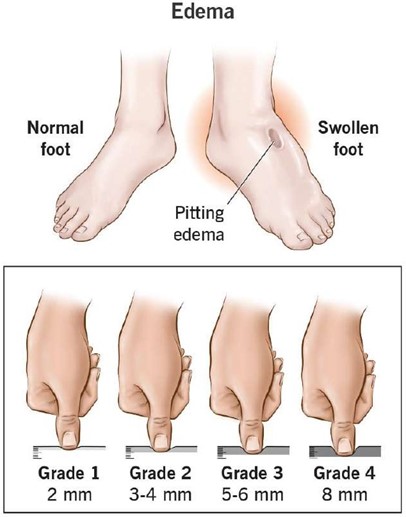
Furosemide is a diuretic that helps to reduce fluid buildup in the body, including peripheral edema, which is a common symptom of heart failure.
Choice B is wrong because furosemide does not directly decrease cardiac output.
Choice C is wrong because furosemide does not increase venous pressure.
Choice D is wrong because furosemide can actually cause a decrease in potassium levels, not an increase.
Nursing Test Bank
Naxlex Comprehensive Predictor Exams
Related Questions
Correct Answer is A
Explanation
An adolescent who has sickle cell anemia and slurred speech should be assessed first.
Slurred speech can be a sign of a stroke, which is a known complication of sickle cell anemia.

This requires immediate medical attention.
Choice B is wrong because while pain management is important, it is not as urgent as a potential stroke.
Choice C is wrong because while administering medication is important, it is not as urgent as a potential stroke.
Choice D is wrong because while wound care is important, it is not as urgent as a potential stroke.
Correct Answer is C
Explanation
People with lactose intolerance can replace milk and dairy products with nondairy sources of calcium such as calcium-fortified products, fish with soft bones, broccoli and leafy green vegetables, oranges, almonds, Brazil nuts, and dried beans.
Choice A is wrong because “You can drink milk on an empty stomach” is not an answer because it may worsen symptoms of lactose intolerance.
Choice B is wrong because “You might tolerate plain milk better than chocolate milk” is not an answer because both plain and chocolate milk contain lactose.
Choice D is wrong because “You should consume flavored yogurt instead of plain yogurt” is not an answer because both flavored and plain yogurt contain lactose.
Whether you are a student looking to ace your exams or a practicing nurse seeking to enhance your expertise , our nursing education contents will empower you with the confidence and competence to make a difference in the lives of patients and become a respected leader in the healthcare field.
Visit Naxlex, invest in your future and unlock endless possibilities with our unparalleled nursing education contents today