
A nurse is caring for a client who has cardiomyopathy and is experiencing sensory overload. Which of the following actions should the nurse take?
Ensure the blinds in the client's room remain open.
Place the client in a room near the nurses' station.
Play quiet music in the client's room.
Break up nursing care into small, frequent sessions.
The Correct Answer is D
Choice A Reason:
Ensure the blinds in the client's room remain open is not appropriate. Bright light can contribute to sensory overload. It's better to create a subdued and calming environment, so keeping the blinds closed or partially closed might help reduce excess stimuli.
Choice B Reason:
Place the client in a room near the nurses' station is not appropriate. Being near the nurses' station could increase the noise and activity around the client, potentially worsening sensory overload. It's advisable to place the client in a quieter area away from high-traffic zones to minimize auditory and visual stimulation.
Choice C Reason:
Play quiet music in the client's room is incorrect. While soothing music might help some individuals relax, for someone experiencing sensory overload, even low-volume music could add to the stimuli. Silence or minimal ambient noise might be more beneficial.
Choice D Reason:
Break up nursing care into small, frequent sessions is correct. This action is beneficial for managing sensory overload. Breaking up care into smaller sessions allows for adequate rest periods between activities, reducing the overall sensory input at any given time.
Nursing Test Bank
Naxlex Comprehensive Predictor Exams
Related Questions
Correct Answer is A
Explanation
Choice A Reason:
Administering a prescribed oral dose of trazodone to the client is correct. Trazodone is sometimes used to manage agitation in patients with Alzheimer's disease, as it has calming effects and can help reduce agitation and anxiety. However, the use of any medication should be based on the client's individualized treatment plan and prescribed by a healthcare provider.
Choice B Reason:
Encouraging ambulation might not be suitable if the client is agitated, as it could potentially escalate the situation or increase the risk of falls or injury. Safety should be a priority, and ambulation might not be advisable during a state of agitation.
Choice C Reason:
Isolating the client in their room is incorrect. Isolating the client might increase feelings of confusion, fear, or distress, potentially worsening the agitation. It's important to engage and support the client rather than isolate them, which can be distressing for someone with Alzheimer's disease.
Choice D Reason:
Applying bilateral wrist restraints to the client is incorrect. The use of restraints should only be considered as a last resort when all other measures have failed and when there's an immediate risk of harm to the client or others. Restraints can be physically and psychologically harmful, leading to increased agitation, anxiety, and potential injury. They should be used only under strict guidelines and with proper authorization when all other interventions have been exhausted.
Correct Answer is A
Explanation
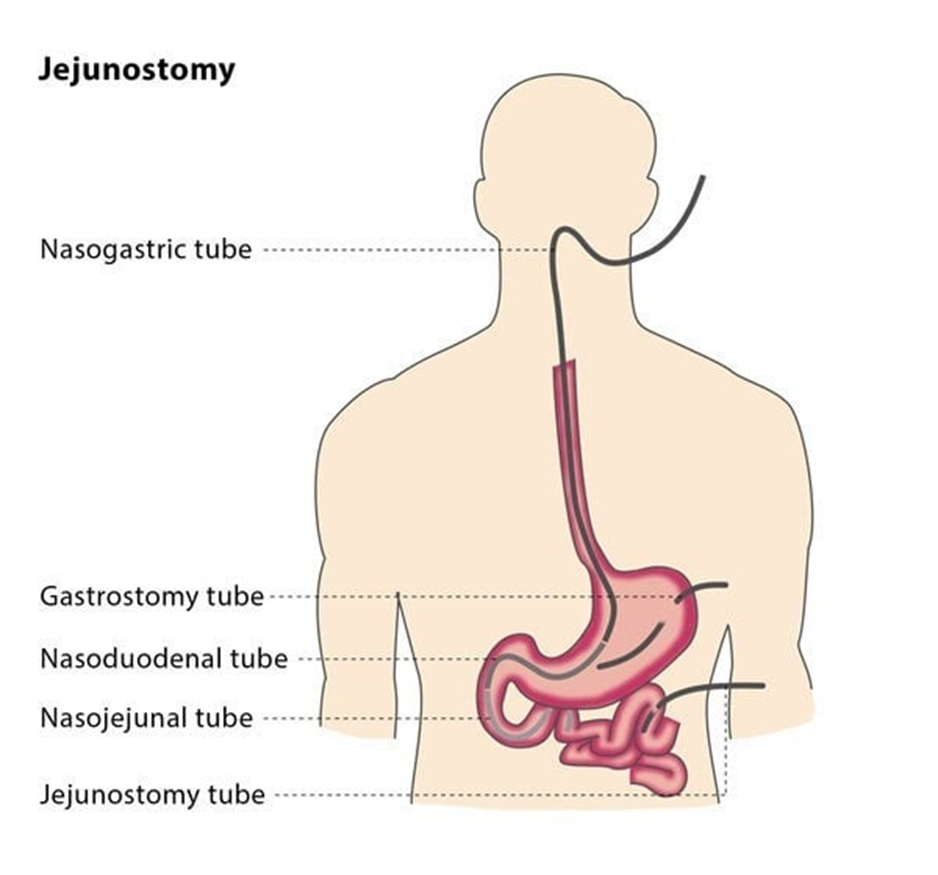
A. Elevate the head of the client's bed for 1 hr after the feeding:Elevating the head of the bed helps prevent aspiration and promotes proper digestion by using gravity to keep the feeding solution in the stomach or jejunum.
B. Administer the feeding solution at a cold temperature: Feeding solutions should be administered at room temperature to prevent gastrointestinal discomfort or cramping.
C. Rotate the jejunostomy tube once per day:
Rotation of the jejunostomy tube is not a standard practice. Jejunostomy tubes are typically secured in place, and rotation is not necessary.
D. Flush the tube with 90mL of sterile water before and after the feeding:
Typically, the tube is flushed with about 30 mL of water before and after feedings to ensure patency and prevent clogging, not 90 mL.
Whether you are a student looking to ace your exams or a practicing nurse seeking to enhance your expertise , our nursing education contents will empower you with the confidence and competence to make a difference in the lives of patients and become a respected leader in the healthcare field.
Visit Naxlex, invest in your future and unlock endless possibilities with our unparalleled nursing education contents today