
A nurse is caring for a patient with limited mobility and notices a stage I pressure injury on the sacrum. What would be the most appropriate nursing intervention?
Reposition the patient every 2 hours and use pressure redistribution devices.
Apply alcohol-based cream to the area.
Elevate the head of the bed to 45°.
Gently rub the area to increase circulation.
The Correct Answer is A
A. Reposition the patient every 2 hours and use pressure redistribution devices: The formation of a Stage I pressure injury means the current pressure relief regimen is inadequate. The immediate priority is to offload the pressure (repositioning every 2 hours or more frequently) and utilize pressure redistribution devices (e.g., specialized mattresses or cushions) to prevent further tissue damage and allow the skin to recover.
B. Apply alcohol-based cream to the area: Alcohol is drying and irritating and can damage the already compromised skin.
C. Elevate the head of the bed to 45°: Elevating the head of the bed above 30 degrees increases shear and friction on the sacrum, which is a major contributing factor to pressure injury formation.
D. Gently rub the area to increase circulation: Massaging a reddened, nonblanchable area can cause further deep tissue injury by damaging capillaries and underlying tissue.
Nursing Test Bank
Naxlex Comprehensive Predictor Exams
Related Questions
Correct Answer is A
Explanation
A. Cover the affected eye with a protective shield and seek immediate ophthalmic consultation: With a penetrating eye injury, the foreign object must never be removed, as this can cause further damage or extrusion of ocular contents. The priority is to immobilize the object and protect the eye using a rigid shield or cup (like a paper cup) and then obtain immediate specialist consultation (ophthalmologist). Both eyes should be covered to limit involuntary movement of the injured eye.
B. Administer analgesics to manage pain before addressing the eye injury: While pain management is important, the priority is preventing permanent vision loss or increasing the injury, which is a life-changing emergency. Pain medication can be administered after the protective shield is placed and the physician is notified.
C. Apply pressure to the eye to prevent bleeding: This is absolutely contraindicated. Applying pressure to an eye with a penetrating injury can increase intraocular pressure, potentially forcing the contents of the eye out and causing permanent damage.
D. Irrigate the eye with sterile saline to remove the foreign object: Irrigation is appropriate for chemical burns or superficial debris, but for a penetrating object, any attempt at removal or irrigation can cause movement, leading to severe damage.
Correct Answer is A
Explanation
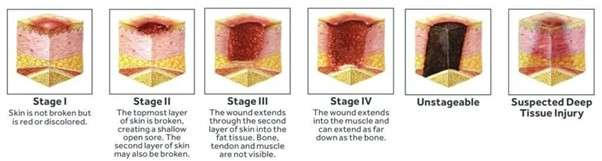
A. Full-thickness tissue loss extending to bone or tendon: A Stage 4 pressure injury is characterized by full-thickness tissue loss where fascia, muscle, tendon, ligament, cartilage, or bone are directly exposed or directly palpable. Undermining and tunneling are often extensive at this stage.
B. Intact skin with nonblanchable erythema: This describes a Stage 1 pressure injury.
C. Full-thickness skin loss with visible fat: This describes a Stage 3 pressure injury, which extends through the dermis and involves the subcutaneous fat but does not expose bone, tendon, or muscle.
D. Partial-thickness skin loss involving the dermis and epidermis: This describes a Stage 2 pressure injury, which involves only the partial loss of skin layers.
Whether you are a student looking to ace your exams or a practicing nurse seeking to enhance your expertise , our nursing education contents will empower you with the confidence and competence to make a difference in the lives of patients and become a respected leader in the healthcare field.
Visit Naxlex, invest in your future and unlock endless possibilities with our unparalleled nursing education contents today