
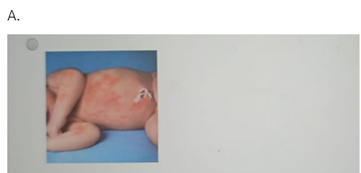
A nurse is collecting data from a newborn who was born 24 hr ago. Which of the following images should the nurse identify as an indication that the newborn has erythema toxicum?
A
B
C
D
The Correct Answer is A
Erythema toxicum neonatorum is a common, benign newborn rash that typically appears within the first 24 to 72 hours of life. It presents as erythematous macules, papules, and sometimes pustules that can appear anywhere on the body, most commonly the trunk and proximal extremities. The condition is self-limiting and resolves without treatment. Recognizing its characteristic appearance helps differentiate it from infectious or pathological neonatal skin conditions.
Rationale:
A. The first image shows diffuse erythematous macules and papules on the newborn’s trunk, which is characteristic of erythema toxicum neonatorum. The lesions may appear blotchy and can include small pustules on a red base. This benign condition is common in healthy term newborns and typically resolves spontaneously within days without intervention.
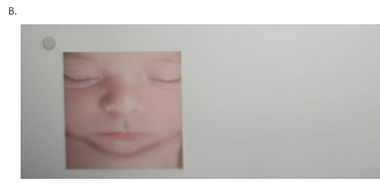
B. The second image shows a newborn with a normal facial appearance without erythematous papules, pustules, or blotchy rash. This does not represent erythema toxicum but rather normal neonatal skin. There are no inflammatory lesions or characteristic distribution consistent with the condition.
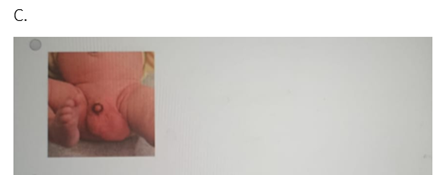
C. The third image shows erythema localized to the diaper area, which is more consistent with diaper dermatitis or irritation rather than erythema toxicum neonatorum. Diaper rash is usually confined to areas exposed to moisture and friction and does not present with scattered pustules on the trunk. This is a localized irritant condition rather than a generalized neonatal rash.
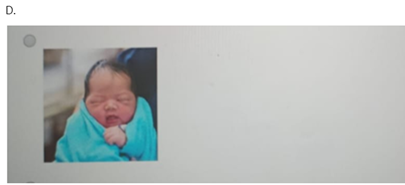
D. The fourth image shows a newborn with a flushed facial appearance, which may be related to normal physiologic changes, mild jaundice, or transient newborn coloration. It does not demonstrate the characteristic papules or pustules of erythema toxicum. The distribution and lesion type are not consistent with this benign neonatal rash.
Nursing Test Bank
Naxlex Comprehensive Predictor Exams
Related Questions
Correct Answer is B
Explanation
Home management of a client with dementia focuses on maintaining safety, promoting orientation, and reducing confusion caused by progressive cognitive decline associated with Dementia. Clients often experience impaired memory, disorientation, and difficulty recognizing familiar environments. Care strategies emphasize simplification of the environment, use of visual cues, and consistent routines to support remaining cognitive function. Nursing education for caregivers should prioritize interventions that enhance orientation and reduce environmental stressors.
Rationale:
A. Giving the client several food choices increases cognitive burden and may lead to confusion or frustration. Clients with dementia benefit from simplified decision-making to reduce anxiety and improve cooperation. Limiting choices supports independence while preventing overwhelming stimuli.
B. Labeling the bathroom door with a symbol provides clear visual cues that support orientation and independence in activities of daily living. In Dementia, visual-spatial recognition is often impaired, and symbolic cues help compensate for memory deficits. This intervention promotes safety and reduces incontinence-related accidents by facilitating timely bathroom access.
C. Increasing environmental stimuli is inappropriate because excessive noise, clutter, or activity can worsen confusion and agitation in clients with dementia. A calm, structured, and predictable environment helps reduce sensory overload. Minimizing unnecessary stimuli supports better cognitive functioning and behavioral stability.
D. Avoiding eye contact is incorrect because eye contact helps establish trust, communication, and reassurance. Clients with dementia rely heavily on nonverbal cues to interpret interactions. Maintaining appropriate eye contact supports engagement and reduces feelings of isolation or fear.
Correct Answer is D
Explanation
Interprofessional team meetings focus on sharing relevant clinical changes that affect a client’s overall function, safety, and plan of care. Information provided should support coordinated decision-making among healthcare professionals such as physicians, nurses, physical therapists, and occupational therapists. Priority communication includes changes in the client’s condition that may require modification of treatment goals or additional interventions. Functional decline is especially important because it directly impacts mobility, safety, and discharge planning.
Rationale:
A. The client having state-sponsored health insurance is administrative information that does not influence immediate clinical decision-making or care planning. While it may be relevant for discharge planning or billing purposes, it does not affect interprofessional treatment strategies. Therefore, it is not essential for the team meeting focused on clinical care.
B. Vital signs being checked every 8 hours is a routine nursing task and does not represent a change in the client’s condition. It reflects standard monitoring rather than a clinical issue requiring interprofessional input. Such information is typically documented in nursing records rather than discussed in team meetings.
C. The next dressing change scheduled in 4 hours is a task-specific nursing detail rather than a multidisciplinary concern. Although wound care is important, timing of dressing changes does not typically require input from multiple disciplines unless complications arise. Therefore, it is not a priority for interprofessional discussion.
D. Development of difficulty ambulating is a significant functional change that requires interprofessional collaboration. It may indicate neurological decline, musculoskeletal impairment, medication effects, or deconditioning. In a condition such as Impaired physical mobility, this finding would prompt involvement of physical therapy, reassessment of safety risks, and possible modification of the care plan to prevent falls and promote rehabilitation.
Whether you are a student looking to ace your exams or a practicing nurse seeking to enhance your expertise , our nursing education contents will empower you with the confidence and competence to make a difference in the lives of patients and become a respected leader in the healthcare field.
Visit Naxlex, invest in your future and unlock endless possibilities with our unparalleled nursing education contents today