
A nurse is monitoring an older adult client who has an exacerbation of chronic lymphocytic leukemia.
The nurse notes petechiae on the client's skin.
Which of the following actions should the nurse take?
Implement airborne precautions.
Determine the client's blood type.
Institute bleeding precautions.
Avoid administering IV pain medication.
The Correct Answer is C
The nurse should institute bleeding precautions for the client.
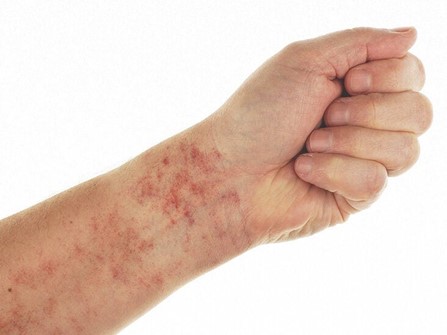
Petechiae are small red or purple spots on the skin caused by broken capillaries, which can be a sign of low platelet count (thrombocytopenia) and an increased risk of bleeding.
Bleeding precautions include measures such as using a soft-bristled toothbrush, avoiding injections, and avoiding activities that could result in injury.
Choice A is incorrect because airborne precautions are used to prevent the spread of infectious diseases that are transmitted through the air, and are not necessary in this situation.
Choice B is incorrect because determining the client’s blood type is not necessary in this situation.
Choice D is incorrect because avoiding IV pain medication is not necessary in this situation; however, the nurse should monitor the client for signs of bleeding and bruising.
Nursing Test Bank
Naxlex Comprehensive Predictor Exams
Related Questions
Correct Answer is C
Explanation
A saw-tooth pattern with an atrial rate of 250 to 400/min is a characteristic finding on a cardiac rhythm strip of a client who has atrial flutter.
Choice A is incorrect because progressively longer PR durations are characteristic of a Mobitz type I second-degree AV block, not atrial flutter.
Choice B is incorrect because undetectable P waves are characteristic of atrial fibrillation, not atrial flutter.
Choice D is incorrect because absent PR intervals with a ventricular rate of 40 to 60/min are characteristic of third-degree AV block, not atrial flutter.
Correct Answer is B
Explanation
A client reports having a fever, night sweats, and cough for 2 days.
These symptoms are associated with infectious diseases such as tuberculosis.
In order to prevent the spread of infection to other patients, this client would require a private room.
A client with diabetes mellitus and acute ketoacidosis does not require a private room based on their diagnosis.
C)A client with a compound fracture of the right femur does not require a private room based on their diagnosis.
D)An older adult client with aspiration pneumonia does not require a private room based on their diagnosis.
Whether you are a student looking to ace your exams or a practicing nurse seeking to enhance your expertise , our nursing education contents will empower you with the confidence and competence to make a difference in the lives of patients and become a respected leader in the healthcare field.
Visit Naxlex, invest in your future and unlock endless possibilities with our unparalleled nursing education contents today