
A nurse is preparing to set up a sterile field to change a sterile dressing on a client's abdominal wound. Identify the sequence of steps the nurse should take. (Placethem in the order of performance. Use all the steps.)
Open the innermost lower flap of the sterile kit while standing away from the sterile field.
Open each side flap of the sterile kit individually while pulling to the side.
Open the outside cover of the sterile kit and remove the dust cover.
Grasp the outermost flap of the sterile kit while opening away from the body.
Prepare a dry work surface above the waist level.
The Correct Answer is E,C,D,B,A
Choice E Reason:
Preparing a dry work surface above the waist level. It's crucial to start by selecting and preparing an appropriate area for setting up the sterile field. This surface needs to be clean, dry, and above the waist level to maintain sterility and prevent contamination.
Choice C Reason:
Opening the outside cover of the sterile kit and remove the dust cover. This step involves opening the sterile kit without touching the inside contents to maintain sterility. Removing the outer cover exposes the sterile packaging and prepares for further steps.
Choice D Reason:
Grasping the outermost flap of the sterile kit while opening away from the body. By carefully opening the outermost flap, the nurse ensures that the sterile contents remain protected. Opening away from the body helps prevent accidental contamination from clothing or movements.
Choice B Reason:
Opening each side flap of the sterile kit individually while pulling to the side. Sequentially opening the side flaps maintains the sterile field and allows access to the inner contents without compromising sterility.
Choice A Reason:
Opening the innermost lower flap of the sterile kit while standing away from the sterile field. This final step involves accessing the innermost contents of the sterile kit while maintaining a safe distance to avoid accidental contamination. It ensures the contents within the sterile field remain protected until needed for the dressing change.
Nursing Test Bank
Naxlex Comprehensive Predictor Exams
Related Questions
Correct Answer is C
Explanation
Choice A Reason:
"Opioids will be restricted if your partner develops respiratory distress." This statement might cause unnecessary concern or confusion. While opioid use might be adjusted based on the client's condition and symptoms, framing it in terms of restriction might not be the most appropriate way to communicate about pain management in end-of-life care.
Choice B Reason:
"Encourage your partner to eat three large meals each day." Encouraging large meals might not align with the typical dietary approach for someone in end-of-life care, especially if they have reduced appetite or are unable to eat comfortably. End-of-life care often focuses on providing smaller, more manageable meals based on the individual's preferences and capabilities.
Choice C Reason:
"Assume your partner can hear you, even if they do not respond. “This statement encourages the partner to communicate with their loved one, acknowledging the potential for the person to hear even if they are not responsive. Many studies suggest that hearing may persist even in individuals who are unresponsive or in a comatose state, so speaking to them can provide comfort and connection.
Choice D Reason:
"We will use an electric blanket to keep your partner warm." The use of an electric blanket might not be suitable, as the client's sensitivity to temperature might change in end-of-life care. Other methods, such as blankets or adjusting the room temperature, could be more appropriate to ensure comfort without the risks associated with electric blankets.
Correct Answer is D
Explanation
Choice A Reason:
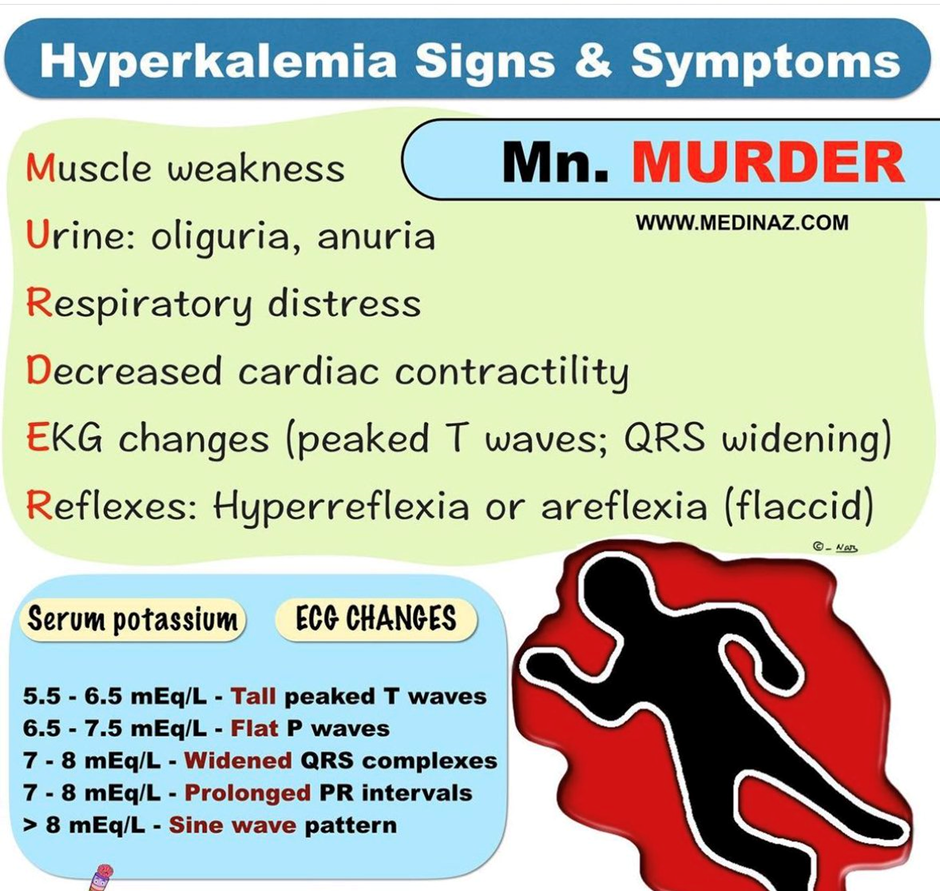
Muscle weakness is incorrect. Muscle weakness can be a symptom of hyperkalemia (elevated potassium levels). However, it is not the most urgent symptom, and the provider should be informed to address the underlying cause.
Choice B Reason:
Paresthesias is incorrect. Paresthesias (tingling or numbness) can also occur with hyperkalemia. While important to assess, it may not be the most urgent symptom requiring immediate attention.
Choice C Reason:
Abdominal cramps is incorrect. Abdominal cramps can be associated with hyperkalemia, but they are not the most critical symptom. It's essential to address the underlying cause, but it may not require immediate intervention compared to other symptoms.
Choice D Reason:
Palpitations is correct. Palpitations are a concerning symptom, especially in the context of hyperkalemia. Elevated potassium levels can lead to cardiac arrhythmias, and palpitations may be indicative of serious cardiac complications. This is a critical finding that requires immediate attention from the healthcare provider.
Whether you are a student looking to ace your exams or a practicing nurse seeking to enhance your expertise , our nursing education contents will empower you with the confidence and competence to make a difference in the lives of patients and become a respected leader in the healthcare field.
Visit Naxlex, invest in your future and unlock endless possibilities with our unparalleled nursing education contents today