
A nurse is providing teaching to a client who is at 14 weeks of gestation about findings to report to the provider.
Which of the following findings should the nurse include in the teaching
Bleeding gums
Urinary frequency
preeclampsia
faintness upon rising
The Correct Answer is C
This is a sign of preeclampsia, a serious complication of pregnancy that can cause high blood pressure, proteinuria, and seizures.
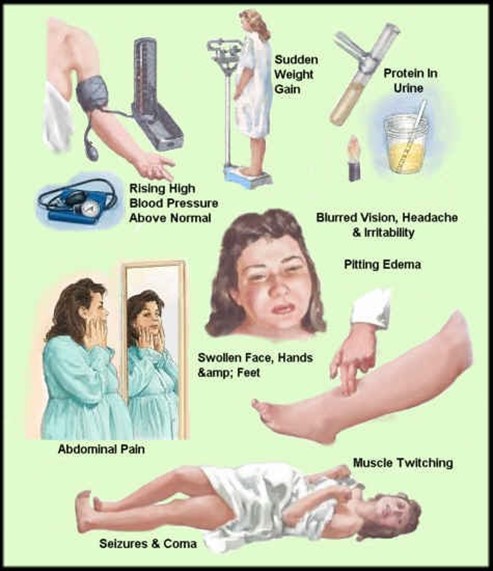
Preeclampsia can affect the placenta, the kidneys, the liver, and the brain of the mother and the fetus. It requires immediate medical attention and may lead to early delivery.
Choice A, bleeding gums, is wrong because it is a common occurrence during pregnancy due to hormonal changes that increase blood flow to the gums. It is not a cause for concern unless it is excessive or accompanied by other symptoms.
Choice B, urinary frequency, is wrong because it is also a normal finding during pregnancy due to the growing uterus putting pressure on the bladder. It is not a sign of infection or kidney problems unless it is associated with pain, burning, or blood in the urine.
Choice D, faintness upon rising, is wrong because it is usually caused by orthostatic hypotension, a drop in blood pressure when changing positions.
This can happen during pregnancy due to the dilation of blood vessels and the increased blood volume. It can be prevented by rising slowly, drinking enough fluids, and avoiding prolonged standing.
Nursing Test Bank
Naxlex Comprehensive Predictor Exams
Related Questions
Correct Answer is A
Explanation
The correct answer is choice A, hematuria.
Hematuria is the presence of red blood cells in the urine, which can make it appear pink or cola-colored. Hematuria is a common sign of glomerulonephritis, which is inflammation of the tiny filters in the kidneys (glomeruli) that remove waste and excess fluid from the blood.
Hematuria occurs because the inflamed glomeruli allow some blood cells to leak into the urine.
Choice B, polyuria, is wrong because polyuria is the production of abnormally large amounts of urine. Polyuria is not a typical feature of acute glomerulonephritis, which may actually cause reduced urine output due to fluid retention and decreased kidney function.
Choice C, weight loss, is wrong because weight loss is not a common symptom of acute glomerulonephritis. On the contrary, weight gain may occur due to fluid retention and edema (swelling) in the face, hands, feet and abdomen.
Choice D, hypotension, is wrong because hypotension is low blood pressure. Hypotension is not usually associated with acute glomerulonephritis, which may cause high blood pressure (hypertension) due to fluid overload and impaired sodium excretion by the kidneys.
Normal ranges for blood pressure are less than 120/80 mmHg for adults.
Normal ranges for urine output are about 800 to 2000 mL per day for adults.
Normal ranges for protein in the urine are less than 150 mg per day for adults. Normal ranges for red blood cells in the urine are less than 3 per high-power field for men and less than 5 per high-power field for women.
Correct Answer is B
Explanation
Choice A reason:
Completing an incident report is not the correct action. An incident report should be completed as part of the hospital's protocol to document the medication error and ensure appropriate follow-up and investigation.
Choice B reason:
Checking the client for indications of bleeding is the correct action to be taken. In this situation, the nurse's first priority should be to assess the client for indications of bleeding, as the client received a significantly higher dose of IV heparin than prescribed. Heparin is an anticoagulant medication used to prevent blood clots, and an overdose can increase the risk of bleeding.
After administering the wrong dose of medication, the nurse's immediate concern is the client's safety and well-being. Checking for signs of bleeding, such as petechiae, ecchymosis, hematomas, bleeding gums, melena (black, tarry stools), haematuria (blood in urine), or any other unusual bleeding, is crucial.
Choice C reason:
Monitor the client's aPTT levels: This is not the correct action to be taken. Monitoring the client's activated partial thromboplastin time (aPTT) levels is essential to assess the client's coagulation status and determine if the overdose of heparin has affected their clotting ability. The healthcare provider may adjust the heparin dosage based on the aPTT levels.
Choice D reason:
Notify the risk manager: This is not the correct action to be taken. The risk manager or appropriate supervisor should be informed about the medication error as soon as possible to initiate a thorough review of the incident and take necessary steps to prevent similar errors in the future.
Whether you are a student looking to ace your exams or a practicing nurse seeking to enhance your expertise , our nursing education contents will empower you with the confidence and competence to make a difference in the lives of patients and become a respected leader in the healthcare field.
Visit Naxlex, invest in your future and unlock endless possibilities with our unparalleled nursing education contents today